Phong Nha Travel Guide: Vietnam’s Underground World of Caves, Jungle & Rivers
In Central Vietnam, where limestone mountains rise from dense tropical forest and rivers disappear beneath the earth, Phong Nha feels less like a conventional destination and more like the entrance to another world. The region is home to one of the most extraordinary karst landscapes on Earth, with enormous cave systems, underground rivers, jungle-covered mountains and valleys shaped over hundreds of millions of years. The discovery and exploration of Son Doong brought international attention to Phong Nha, but the world’s largest cave is only one part of a much bigger story.
Today, the Phong Nha-Ke Bang National Park and Hin Nam No National Park form a transboundary UNESCO World Heritage property spanning Vietnam and Laos. UNESCO describes the area as one of the world’s most exceptional and well-preserved limestone karst landscapes, with geological formations dating back around 400 million years and more than 220 kilometers of documented caves and underground waterways. The World Heritage property was significantly expanded in 2025 to include Hin Nam No National Park in Laos.
Yet Phong Nha is not only for serious cavers. You can drift into Phong Nha Cave by boat, walk through the immense chambers of Paradise Cave, kayak across the Chay River, cycle through rural valleys, hike beneath tropical forest or spend several days camping deep inside the mountains. The remarkable thing about Phong Nha is the range of experiences: it can be gentle enough for families and adventurous enough for experienced expedition travelers.
Where Is Phong Nha?
Phong Nha lies in central Vietnam, in the region historically known as Quang Binh Province, around the Son River and the entrance to Phong Nha-Ke Bang National Park. The nearest major city is Dong Hoi, which provides the region’s principal airport and railway connections.
The village of Phong Nha itself is relatively small. Most accommodation, restaurants, cafés and tour operators are concentrated along the river and the main roads leading toward the national park.
This compact scale is part of the destination’s charm. Unlike Vietnam’s major cities and coastal resorts, Phong Nha feels rural. Limestone peaks rise behind the village, farmers work fields along the roads and the Son River provides the visual center of the community.
The Cave Kingdom of Vietnam
Phong Nha is often called Vietnam’s “Cave Kingdom,” and the description is justified.
Official tourism sources state that Quang Binh is home to more than 350 caves, while the broader Phong Nha-Ke Bang landscape contains hundreds of known caves and underground rivers.
These caves are not simply variations of the same geological formation.
Some contain underground rivers.
Some are enormous dry chambers.
Some require swimming.
Others involve jungle trekking, climbing, river crossings and overnight camping.
The result is one of the world’s most diverse destinations for cave exploration.
A Landscape Hundreds of Millions of Years Old
The mountains around Phong Nha are part of an ancient limestone karst system.
UNESCO identifies the karst formations here as having developed beginning around 400 million years ago, making the geological history of the region extraordinary even by global standards. Rainwater, rivers and geological movement gradually dissolved and shaped the limestone, producing cliffs, sinkholes, valleys, caves and underground waterways.
What you see above ground is therefore only part of the landscape.
Beneath the forest are rivers and chambers that may extend for kilometers.
A mountain that looks solid from the road may contain an enormous subterranean network.
That is the central idea behind Phong Nha: the landscape has two worlds, one above the forest and another below it.
Phong Nha Cave
For first-time visitors, Phong Nha Cave is usually the natural starting point.
The cave is reached by boat from the Phong Nha tourism center, with the journey along the Son River forming part of the experience. As the boat approaches the cave entrance, the limestone mountains close around the river and the entrance appears as a dark opening in the cliff.
Inside, the river continues underground.
The transition from bright tropical landscape to darkness is immediate.
The Underground River
Phong Nha Cave is particularly famous for its underground river system.
The river has helped shape the cave over geological time, creating chambers, passages and formations that are still being studied.
The official Quang Binh tourism authority describes Phong Nha Cave as approximately 7.7 kilometers long in its surveyed system and highlights its underground river, cave formations and large entrance.
For ordinary visitors, only a portion of this immense system is accessible.
That is precisely what makes the experience intriguing.
You are seeing an entrance into something much larger than the tourist route itself.
Phong Nha Cave and History
The cave system is not only geologically significant.
The surrounding area also has a connection with the wartime history of Vietnam and the Ho Chi Minh Trail. Some caves and river corridors were used strategically during the conflict, taking advantage of the area’s natural protection.
This adds another layer to the experience.
The same mountains that appear peaceful today once formed part of a difficult and strategically important landscape.
Paradise Cave
If Phong Nha Cave introduces visitors to underground rivers, Paradise Cave reveals the grandeur of a dry cave.
Known in Vietnamese as Động Thiên Đường, Paradise Cave is one of the region’s most spectacular accessible caves. The cave extends for more than 30 kilometers, although ordinary visitors explore only a carefully managed section. A wooden walkway leads through immense chambers filled with stalactites and stalagmites.
The scale becomes apparent gradually.
At first, the entrance feels relatively narrow.
Then the passage expands.
And expands again.
Suddenly you are standing inside a cavern where the ceiling disappears into darkness.
Why Paradise Cave Is Ideal for First-Time Visitors
Paradise Cave is particularly suitable for travelers who want a spectacular cave experience without undertaking a demanding expedition.
There is walking involved, but the route is far more accessible than the multi-day jungle and cave adventures for which Phong Nha is famous.
Vietnam Tourism specifically identifies Phong Nha Cave and Paradise Cave as straightforward half-day experiences suitable for families as well as general travelers.
For couples or families on a premium itinerary, Paradise Cave can therefore provide the dramatic cave experience without requiring specialized equipment or significant physical preparation.
Son Doong Cave: The World’s Largest Cave
No discussion of Phong Nha can avoid Hang Son Doong.
Son Doong is regarded as the world’s largest cave passage by volume and is one of the most extraordinary natural environments on Earth. Its enormous chambers are so large that they contain their own forests, underground rivers, weather patterns and collapsed sections of the cave roof known as dolines.
Inside, the scale is difficult to comprehend.
The cave is not simply a large tunnel.
It is a subterranean landscape.
There are forests beneath collapsed sections of the ceiling, clouds forming inside the cave and giant geological formations rising from the floor.
How Son Doong Was Discovered
The modern story of Son Doong begins with Ho Khanh, a local forest worker who encountered the cave entrance while moving through the Phong Nha jungle.
He noticed wind and clouds emerging from the opening and heard the sound of a river inside.
The entrance was later relocated and explored in detail by an international caving expedition in 2009.
The discovery transformed Phong Nha’s international reputation.
But the cave remains highly protected.
Visiting Son Doong
Son Doong is not a cave you simply arrive at and enter.
Access is strictly controlled because the ecosystem is exceptionally fragile. Expeditions require advance planning, physical preparation, specialized safety procedures and multi-day trekking through jungle and cave terrain.
Current information from Vietnam Tourism describes Son Doong expeditions as demanding and limited, while Quang Binh Tourism’s 2025 preparation guide describes a multi-day expedition involving jungle trekking, rivers, steep terrain and the famous Great Wall of Vietnam.
For most travelers, Son Doong is a bucket-list expedition rather than a normal sightseeing excursion.
The Great Wall of Vietnam
Deep inside Son Doong is one of its most famous formations: the Great Wall of Vietnam.
This immense calcite barrier rises roughly 90 meters and historically represented one of the most challenging sections of the expedition.
Its scale illustrates why Son Doong is so different from ordinary caves.
The journey is not simply about walking through underground chambers.
It involves navigating an enormous subterranean environment.
Son Doong’s Underground Jungle
Perhaps the most surreal feature of Son Doong is the existence of vegetation deep inside the cave.
Collapsed sections of the ceiling allow sunlight to enter.
Over time, these openings created conditions where plants and even substantial forest ecosystems could develop inside the cave.
This is one of the reasons Son Doong feels almost extraterrestrial.
You can stand underground surrounded by limestone walls hundreds of meters high while looking at vegetation growing beneath a distant opening in the cave roof.
Hang En Cave
If Son Doong is the ultimate expedition, Hang En, or Swallow Cave, offers one of the most spectacular alternatives.
Hang En is enormous, with multiple entrances, a huge chamber and an underground stream. Its interior contains a sandy area where expedition groups can camp beneath the cave’s towering walls.
The journey to Hang En is itself an adventure.
Travelers trek through jungle, cross streams and pass through Ban Doong, a settlement associated with the Bru-Van Kieu community.
The cave is therefore not just an underground attraction.
It is a journey through the landscape.
Camping Inside Hang En
One of the most memorable experiences in Phong Nha is spending a night inside Hang En.
The campsite sits on sand beside the underground river.
As darkness arrives, the enormous chamber becomes almost completely silent.
The cave’s scale is difficult to appreciate until you are standing inside it with no artificial city lights around you.
For photographers and adventure travelers, this can be one of the most extraordinary overnight experiences in Vietnam.
Tu Lan Cave System
Beyond the main Phong Nha village lies another major cave region: the Tu Lan Cave System.
Tu Lan is known for its combination of jungle trekking, cave exploration, river crossings, swimming and underground passages.
Vietnam Tourism describes Tu Lan as a network where travelers may wade, swim, climb and crawl through cave passages, with experiences ranging from shorter moderate adventures to multi-day expeditions.
This is not the same experience as visiting Paradise Cave.
Tu Lan is about active exploration.
You get wet.
You walk through forests.
You cross rivers.
You squeeze through passages.
And you spend time in places that feel far removed from conventional tourism.
Who Should Visit Tu Lan?
Tu Lan is ideal for travelers who want more physical adventure than a standard cave visit provides.
The difficulty varies between routes, so choosing an expedition that matches your fitness and experience is essential.
This is particularly important because cave environments are different from normal hiking trails.
Wet rocks can be slippery.
Water levels can change.
The terrain is uneven.
And underground navigation requires experienced guides.
Hang Tien
Within the wider Tu Lan system, Hang Tien is another spectacular destination.
It is known for its large dry chambers and distinctive geological formations, including terraces created by mineral deposits.
Longer expeditions can combine Hang Tien with other caves in the system.
For experienced travelers, these routes provide a deeper alternative to the better-known caves around Phong Nha village.
Dark Cave
Dark Cave, or Hang Toi, offers a completely different kind of adventure.
Instead of walking along illuminated paths, visitors enter a cave with no artificial lighting.
Activities can include ziplining, swimming, kayaking and moving through muddy passages using headlamps.
The official Quang Binh tourism site describes the experience as including a zipline over the river, swimming into the cave, navigating the dark passages and enjoying the cave’s mud bath before kayaking back across the river.
It is messy.
It is active.
And it is deliberately very different from the polished experience of Paradise Cave.
Chay River
The Chay River runs through the landscape near Dark Cave and provides opportunities for kayaking and water-based activities.
Its turquoise color contrasts dramatically with the surrounding limestone and jungle.
On a sunny day, the river can look almost impossibly blue-green.
Kayaking also offers another perspective on the karst landscape.
Instead of looking down into the river from a road or boat, you are directly on the water, surrounded by mountains.
Mooc Spring
Mooc Spring is another popular nature attraction around Phong Nha.
The spring emerges from the limestone landscape and creates a series of clear pools surrounded by dense vegetation.
It is particularly attractive during warmer months when travelers want to combine cave exploration with swimming and relaxation.
The environment is more open and leisurely than the demanding cave expeditions.
For families, it can provide a welcome change of pace.
The Jungle Above the Caves
The caves may receive the headlines, but the forest above them is equally important.
Phong Nha-Ke Bang contains large areas of tropical forest, limestone mountains and habitats supporting rare species.
UNESCO’s current World Heritage description highlights the diversity of ecosystems in the property, including dry karst forest and moist lowland forest, with many rare, endangered and endemic species.
The landscape therefore needs to be understood as an interconnected ecosystem.
The caves depend on the forest.
The rivers depend on the mountains.
And the wildlife depends on both.
Wildlife in Phong Nha
Phong Nha-Ke Bang is home to an impressive range of wildlife.
The protected landscape contains rare mammals, birds, reptiles and plant species, many of which are difficult for ordinary travelers to see.
This is not necessarily a wildlife safari destination.
The forest is dense.
Animals are elusive.
And responsible tourism means observing wildlife without disturbing it.
For travelers interested in biodiversity, guided conservation experiences can provide a much deeper understanding than simply hoping to encounter an animal on a trail.
Phong Nha Botanical Garden
The Phong Nha Botanical Garden provides a relatively accessible introduction to the forest environment.
Walking trails lead through tropical vegetation and toward waterfalls and forest viewpoints.
It is a useful option for travelers who want some hiking but do not want a demanding cave expedition.
The garden can also work well on a day when weather or physical energy makes a longer adventure less attractive.
Bong Lai Valley
Away from the main cave attractions, Bong Lai Valley provides a gentler rural experience.
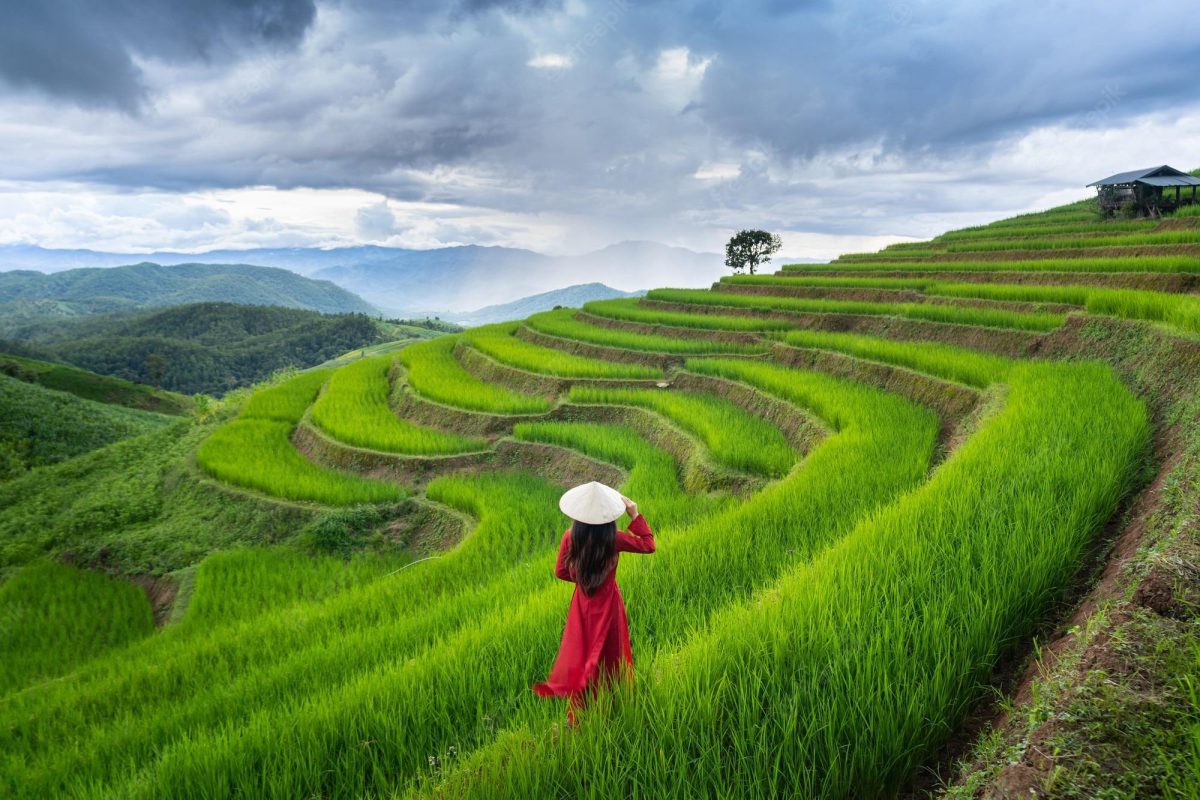
The valley is surrounded by karst mountains and agricultural land, with small roads winding through villages and fields.
Cycling is one of the best ways to explore this area.
The landscape is not spectacular because of one single viewpoint.
Its appeal lies in the accumulation of small scenes.
Rice fields.
Limestone cliffs.
Farmhouses.
Water buffalo.
Garden paths.
And quiet roads disappearing toward the mountains.
Cycling Around Phong Nha
Cycling is an excellent complement to cave exploration.
After spending hours underground, returning to daylight and riding through the countryside provides a completely different sensory experience.
The roads around Phong Nha are relatively peaceful outside the busiest areas, making short countryside rides particularly enjoyable.
For a private journey, routes can be adjusted according to fitness and weather.
A gentle morning ride can be combined with a village lunch, while more active travelers can spend several hours exploring the rural valleys.
The Son River
The Son River is central to Phong Nha’s identity.
It flows directly through the village and leads toward the entrance of Phong Nha Cave.
The river changes character throughout the day.
In the morning, mist can hover above the water.
At midday, the surrounding mountains are reflected in the surface.
At sunset, the limestone landscape becomes darker and more dramatic.
Staying near the river allows travelers to experience this changing atmosphere without having to travel anywhere.
Phong Nha Village
The village itself is small enough to explore on foot.
Restaurants, cafés, hotels and tour offices line the main roads, while the river provides a quieter backdrop.
It is not a destination for nightlife or shopping.
Its attraction is the opposite.
Phong Nha is somewhere to wake early, spend the day outdoors and return in the evening for a quiet meal beside the river.
That simplicity is part of its appeal.
Phong Nha Food
The food scene is more understated than in Hanoi or Ho Chi Minh City, but the region offers plenty of satisfying Central Vietnamese dishes.
Fresh river fish, grilled meats, noodles, rice dishes and regional specialties are common.
The best meals may be found outside the most obvious tourist restaurants.
A private culinary experience can also combine a countryside setting with traditional Vietnamese dishes and ingredients from the region.
After a day of trekking, even a simple bowl of noodles can taste extraordinary.
Phong Nha and the Ho Chi Minh Trail
The landscape around Phong Nha is closely connected to the history of the Ho Chi Minh Trail.
The mountains and caves provided natural shelter and strategic routes during wartime.
Today, roads and paths through the region allow travelers to encounter landscapes that were once associated with one of the most important logistical networks of the conflict.
This history should be approached with context rather than simply as another sightseeing attraction.
The mountains carry memories that extend beyond their natural beauty.
The Best Time to Visit Phong Nha
Weather matters more in Phong Nha than in many Vietnamese destinations because caves and jungle trails can become inaccessible during periods of heavy rain.
Vietnam Tourism notes that many caves are inaccessible during the rainy season, particularly from October to December, and recommends considering other periods for cave-focused travel.
For most travelers, the drier months provide the greatest flexibility.
However, conditions vary from year to year, and cave operators make decisions based on water levels and safety rather than calendar dates alone.
Phong Nha in Spring
Spring generally offers pleasant conditions for combining cave visits, cycling and outdoor activities.
The countryside becomes increasingly green and temperatures are usually manageable.
This can be an excellent period for travelers who want both adventure and relaxation.
Phong Nha in Summer
Summer can be hot, but the caves provide a naturally cooler environment.
This makes underground exploration particularly attractive.
Outside the caves, however, heat and humidity can make long jungle treks physically demanding.
Early starts are useful for active itineraries.
Phong Nha in Autumn and Winter
The wetter months can bring significant changes to the landscape.
Rivers rise, trails become muddy and some caves may become temporarily inaccessible.
This does not mean the region is necessarily closed to visitors, but travelers should build flexibility into their itinerary.
If cave exploration is the main purpose of the journey, weather and operator availability should be checked before confirming a fixed schedule.
How Long Should You Stay in Phong Nha?
A single day can cover Phong Nha Cave and Paradise Cave.
But that only scratches the surface.
Two nights provide enough time for the major accessible caves and a little countryside exploration.
Three or four nights are better for travelers who want to combine caves, cycling, jungle walks and adventure activities.
Longer stays make sense for travelers undertaking multi-day expeditions such as Son Doong, Hang En or Tu Lan.
Phong Nha is one of those destinations where an extra night can make a significant difference.
How to Get to Phong Nha From Hanoi
Phong Nha is considerably farther from Hanoi than destinations such as Ninh Binh or Sapa.
For a premium private journey, flying from Hanoi to Dong Hoi and continuing by private vehicle is usually the most efficient approach when flights are available and schedules align.
The drive from Dong Hoi to Phong Nha takes roughly an hour depending on the exact location and road conditions.
This allows travelers to reach the cave region without losing an entire day to overland travel.
For premium multi-destination journeys, flying can therefore make the itinerary considerably more comfortable.
Phong Nha for Families
Families do not need to be extreme adventurers to enjoy Phong Nha.
Phong Nha Cave and Paradise Cave are relatively accessible compared with multi-day cave expeditions.
The river, countryside and botanical attractions also provide variety.
Families with older children can consider Dark Cave or other moderate adventure experiences, while younger children may prefer boat trips, countryside cycling and easier walks.
A private itinerary makes it possible to choose the right level of activity each day.
Phong Nha for Couples
For couples, Phong Nha offers a rare combination of adventure and tranquility.
Spend the morning underground.
Cycle through the countryside in the afternoon.
Return to a riverside hotel before sunset.
Have dinner beside the Son River.
The destination feels intimate because the village itself is small and the surrounding landscape is enormous.
For adventurous couples, an overnight cave expedition can become the centerpiece of the journey.
For others, simply exploring Paradise Cave and the countryside provides more than enough.
Phong Nha for Adventure Travelers
This is where Phong Nha truly stands apart.
Few destinations in Southeast Asia offer such a concentration of serious cave adventures within one region.
Son Doong.
Hang En.
Tu Lan.
Hang Va.
Hang Tien.
Nuoc Nut.
These experiences range from moderate to extremely demanding.
Vietnam Tourism currently lists numerous multi-day cave adventures and notes that access to several caves is restricted and organized through specialized operators.
This is not an area where you should simply arrive and attempt to explore caves independently.
Professional guidance is essential for the more demanding expeditions.
Choosing the Right Cave Experience
The best cave is not necessarily the biggest.
For a first-time visitor, Phong Nha Cave provides an easy introduction.
For dramatic formations with minimal adventure, choose Paradise Cave.
For action, Dark Cave adds ziplining, swimming and mud.
For an overnight expedition, Hang En offers an extraordinary introduction to expedition-style caving.
For serious adventure, Tu Lan and other expedition routes offer significantly more physical challenge.
And for the ultimate experience, there is Son Doong.
The important thing is matching the cave to your interests rather than simply choosing the most famous name.
Responsible Tourism in Phong Nha
The reason Phong Nha is extraordinary is also the reason it is fragile.
The caves developed over geological timescales.
The ecosystems inside them are highly specialized.
The underground rivers connect to the wider landscape.
And many species found in the national park are threatened or rare.
UNESCO’s current World Heritage framework emphasizes the exceptional ecological and geological value of the combined Phong Nha-Ke Bang and Hin Nam No property.
Visitors should therefore follow guide instructions, avoid touching cave formations, carry waste out of natural areas and respect restrictions designed to protect sensitive environments.
Why Conservation Matters
A cave formation that takes thousands or millions of years to develop can be damaged in seconds.
A rare species can disappear from an area because of repeated disturbance.
A river system can be affected by pollution far beyond the point where the pollution entered it.
This is why controlled tourism is not an inconvenience.
It is part of protecting the destination.
The future of Phong Nha depends on keeping the caves, forests and rivers healthy enough for the next generation to experience them.
Phong Nha and the New UNESCO Landscape
There is an important development travelers should know about when reading older Phong Nha guides.
In 2025, UNESCO approved a significant boundary modification connecting the Vietnamese World Heritage property with Hin Nam No National Park in Laos. The resulting transboundary World Heritage property covers approximately 217,447 hectares.
This is more than a change of name.
It recognizes that the karst landscape and ecosystems do not stop at an international border.
The mountains, caves, forests and hydrological systems are part of a much larger natural landscape extending across Vietnam and Laos.
A Sample 3-Day Private Phong Nha Journey
Day 1 — Hanoi to Phong Nha and Paradise Cave
Begin your journey in Hanoi and travel to Central Vietnam by the most convenient premium connection, continuing by private vehicle toward Phong Nha. After arriving and enjoying lunch, head into Phong Nha-Ke Bang National Park for an afternoon visit to Paradise Cave, exploring its enormous chambers and extraordinary limestone formations along the managed walkway. Return to Phong Nha village in the late afternoon and check into your riverside accommodation. Enjoy dinner beside the Son River and a relaxed evening after the journey.
Day 2 — Phong Nha Cave, Chay River and Dark Cave
After breakfast, travel to the boat station and cruise along the Son River toward Phong Nha Cave, entering the spectacular underground river system by boat. After exploring the cave, continue into the national park for lunch before spending the afternoon around the Chay River and Dark Cave. Depending on your chosen experience and current conditions, activities can include kayaking, swimming, ziplining and exploring the cave with a headlamp. Return to your hotel for dinner and an evening overlooking the river.
Day 3 — Jungle, Countryside and Return Journey
Begin with breakfast before exploring the landscape above ground rather than below it. Take a private cycling or walking route through the countryside around Phong Nha, passing rice fields, villages, rivers and limestone mountains before continuing toward a forest or conservation experience. Enjoy a relaxed lunch before beginning your onward journey, either returning toward Dong Hoi for your flight or continuing by private vehicle as part of a longer Central Vietnam itinerary.
A Longer 4-Day Phong Nha Experience
For travelers with four days, the itinerary can become much more adventurous.
Day one can focus on arrival and Paradise Cave.
Day two can combine Phong Nha Cave with the Chay River and countryside.
Day three can be dedicated to a jungle trek or a moderate cave expedition.
Day four can be used for cycling, conservation or a relaxed morning before continuing onward.
Travelers undertaking Son Doong, Hang En or Tu Lan expeditions will require additional time and should build their itinerary around the expedition schedule.
Phong Nha and Hue
Phong Nha combines naturally with Hue because the two destinations provide completely different experiences.
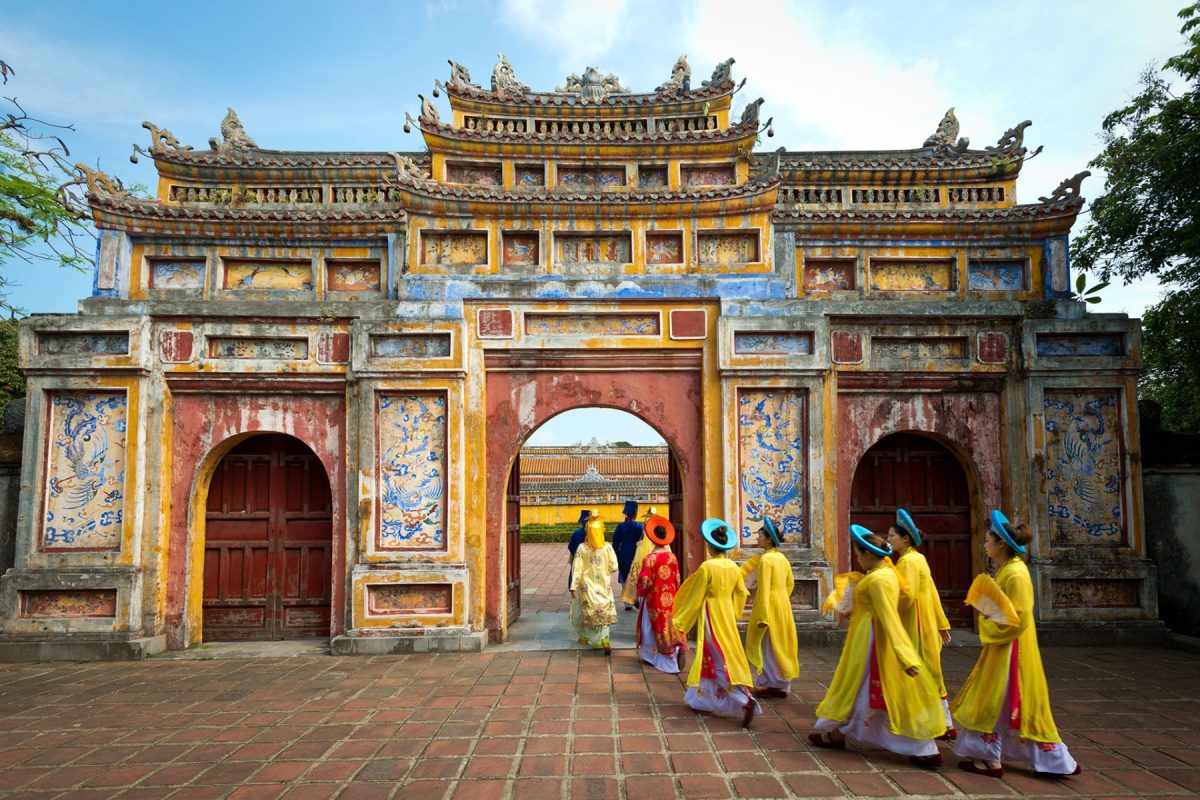
Hue is about imperial history, royal architecture, gardens and cuisine.
Phong Nha is about limestone mountains, forests, rivers and caves.
The contrast is powerful.
A journey can begin among the palaces and temples of Hue before moving into the underground world of Phong Nha.
Phong Nha and Central Vietnam
Phong Nha can also be incorporated into a broader Central Vietnam journey connecting Hanoi, Hue, Hoi An and onward destinations.
Its position makes it an excellent geographical bridge between northern and central Vietnam.
Rather than treating it as a short detour, give it enough time to experience both the caves and the countryside.
That is when the destination starts to make sense.
The World Beneath Your Feet
Most travel destinations are experienced horizontally.
You walk through streets.
You climb mountains.
You cross valleys.
Phong Nha adds another dimension.
You travel downward.
A river disappears into a mountain.
The light fades.
The temperature changes.
The sound of the outside world disappears.
Then the cave opens into a chamber so enormous that the scale becomes difficult to understand.
This is the experience that makes Phong Nha unforgettable.
The Beauty Above Ground
Yet the lesson of Phong Nha is not to spend all your time underground.
Some of the most beautiful moments happen in daylight.
Cycling through a valley.
Watching clouds gather above limestone peaks.
Floating along the Son River.
Walking beneath tropical forest.
Watching farmers work in the fields.
Sitting beside the river after sunset.
The caves are extraordinary.
But the landscape around them gives the caves their meaning.
Why Choose Vietnam Women Travel for Phong Nha?
Vietnam Women Travel – Premium Private Tours Led by Women creates private journeys for travelers who want to experience Phong Nha with comfort, flexibility and a carefully considered pace.
Our approach is not simply to take travelers to the most famous cave and move on.
A private Phong Nha journey can combine spectacular caves with countryside cycling, carefully selected accommodation, private transportation, regional cuisine and experiences adapted to your interests and physical ability.
For couples, the itinerary can combine adventure with quiet riverside evenings.
For families, accessible caves and countryside experiences can be balanced with comfortable accommodation and flexible travel times.
For active travelers, the focus can shift toward jungle trekking and cave expeditions.
And for luxury travelers, Phong Nha can become a carefully designed private escape rather than a rushed stop between major cities.
The Women-Led Difference
Vietnam Women Travel – Premium Private Tours Led by Women is built around private journeys rather than large group sightseeing.
That difference matters in a destination such as Phong Nha.
A private guide can slow down when you want to photograph the mountains.
Change the day’s rhythm according to weather.
Adjust walking distances.
Recommend a quieter countryside route.
Or simply give you more time to enjoy the river after a demanding day underground.
The goal is not to see everything.
It is to experience the right things well.
The Luxury of Going Slowly
Phong Nha is not a destination that rewards rushing.
You cannot understand a cave in five minutes.
You cannot appreciate the jungle from a car window.
You cannot experience the Son River by checking it off a list.
The real luxury is having enough time.
Time to explore.
Time to rest.
Time to photograph.
Time to eat.
Time to listen.
And time to let the landscape reveal itself.
Plan Your Phong Nha Journey
Phong Nha is one of the rare places in Vietnam where the boundary between adventure travel and nature travel almost disappears.
Above ground, there are ancient forests, limestone mountains, rivers, villages and wildlife.
Below ground, there are enormous chambers, underground rivers, forests, stalagmites and ecosystems that have evolved in darkness.
The 2025 UNESCO expansion connecting Phong Nha-Ke Bang with Hin Nam No in Laos further emphasizes the scale and international importance of this extraordinary karst landscape.
You do not have to enter Son Doong to appreciate Phong Nha.
You do not have to become an expert caver.
You can simply take a boat into Phong Nha Cave, walk beneath the formations of Paradise Cave, cycle through the countryside and watch the limestone mountains change color at sunset.
Or, if adventure is what brought you here, you can go much deeper.
Into the jungle.
Across underground rivers.
Through Hang En.
Into Tu Lan.
Or, for the ultimate expedition, toward Son Doong.
With Vietnam Women Travel – Premium Private Tours Led by Women, your Phong Nha journey can begin in Hanoi and continue into one of the most extraordinary natural landscapes in Southeast Asia, combining private transportation, carefully selected accommodation, women-led travel experiences and a carefully paced itinerary designed around your interests.
Come for the caves.
Stay for the mountains.
Explore the rivers.
Walk through the jungle.
And discover why Phong Nha is not simply a place with spectacular caves, but one of the world’s great landscapes for understanding the hidden relationship between geology, water, forest and life.
Vietnam Women Travel – Premium Private Tours Led by Women
Private journeys. Women guides. Authentic Vietnam.