Ninh Binh Travel Guide: Limestone Mountains, Ancient Capitals & the Quiet Beauty of Northern Vietnam
Just a couple of hours south of Hanoi, Ninh Binh unfolds as one of northern Vietnam’s most extraordinary landscapes. Here, enormous limestone mountains rise almost vertically from rice fields, rivers wind through caves, temples appear between forested cliffs and small boats move quietly through landscapes that seem almost too perfectly composed to be real. It is often called “Ha Long Bay on land,” but Ninh Binh deserves to be understood on its own terms. Its character comes from the combination of karst mountains, waterways, agriculture, wildlife and more than a thousand years of Vietnamese history.
At the heart of the region is the Trang An Landscape Complex, a UNESCO World Heritage Site recognized for both its cultural and natural importance. The protected property covers more than 6,200 hectares and contains limestone towers, enclosed valleys, subterranean waterways, caves and archaeological evidence of human occupation stretching back more than 30,000 years. It is one of the rare places where geology, ecology and human history are so closely intertwined.
Yet the most memorable way to experience Ninh Binh is not by rushing from one attraction to another. It is by slowing down. Paddle through Trang An, cycle between rice fields, climb above the landscape at Hang Mua, walk through the remains of Vietnam’s first imperial capital and spend an evening in the countryside after the day-trippers have left. The quieter you travel, the more Ninh Binh reveals.
A Landscape Created by Limestone and Water
The defining feature of Ninh Binh is its limestone karst landscape. Towering formations rise from broad valleys and wetlands, their steep sides covered in vegetation and shaped by millions of years of geological processes.
The landscape around Trang An is particularly remarkable because water has carved an intricate network through the limestone. Rivers disappear into caves and emerge on the other side, connecting valleys that would otherwise be separated by enormous rock walls. UNESCO describes Trang An as an outstanding tropical tower-karst landscape containing interconnected caves, waterways, valleys and limestone formations.
From the ground, the mountains appear almost vertical. From the water, they become even more impressive because there is no urban skyline to interrupt the view.
Trang An: The Heart of Ninh Binh
For many travelers, Trang An is the defining experience of Ninh Binh.
The traditional boat journey takes visitors through a network of waterways surrounded by towering limestone cliffs. The route passes through caves and beneath rock formations before emerging into open valleys where temples and forests appear beside the river.
Unlike a conventional sightseeing cruise, the experience is remarkably quiet. The boats are small, the waterways are narrow and much of the journey takes place inside a landscape protected from major development.
Lonely Planet describes Trang An as a relaxing boat journey through limestone caves and notes that several different routes are available, offering different combinations of caves and temples.
What Makes Trang An Different?
The magic of Trang An comes from the transitions.
One moment you are floating across an open stretch of water beneath enormous mountains. Then the boat enters a cave and the landscape becomes dark and silent. A few minutes later, you emerge into another valley that seems completely separated from the world you just left.
These transitions are what make the journey feel almost dreamlike.
UNESCO considers the combination of limestone towers, rain forest, enclosed basins and subterranean waterways one of the property’s outstanding qualities.
The Trang An Boat Experience
The traditional boats are small and low to the water, making them ideal for navigating the narrow passages between the mountains.
Depending on the selected route, the journey can include several caves and temples. Some passages are long and dark, while others are short enough that sunlight remains visible at the entrance.
Bring a hat, sunscreen and water because sections of the journey are completely exposed to the sun. Lonely Planet specifically recommends sun protection because the boats offer limited shade.
For photographers, morning and late afternoon can offer particularly beautiful light, although conditions vary throughout the year.
Tam Coc: Rice Fields Between the Mountains
If Trang An is defined by caves and enclosed valleys, Tam Coc is defined by open rice fields and the Ngo Dong River.
The traditional boat journey takes travelers between limestone formations and through several caves while the surrounding countryside changes with the agricultural season.
The name Tam Coc means “three caves,” referring to the three natural caves along the river route.
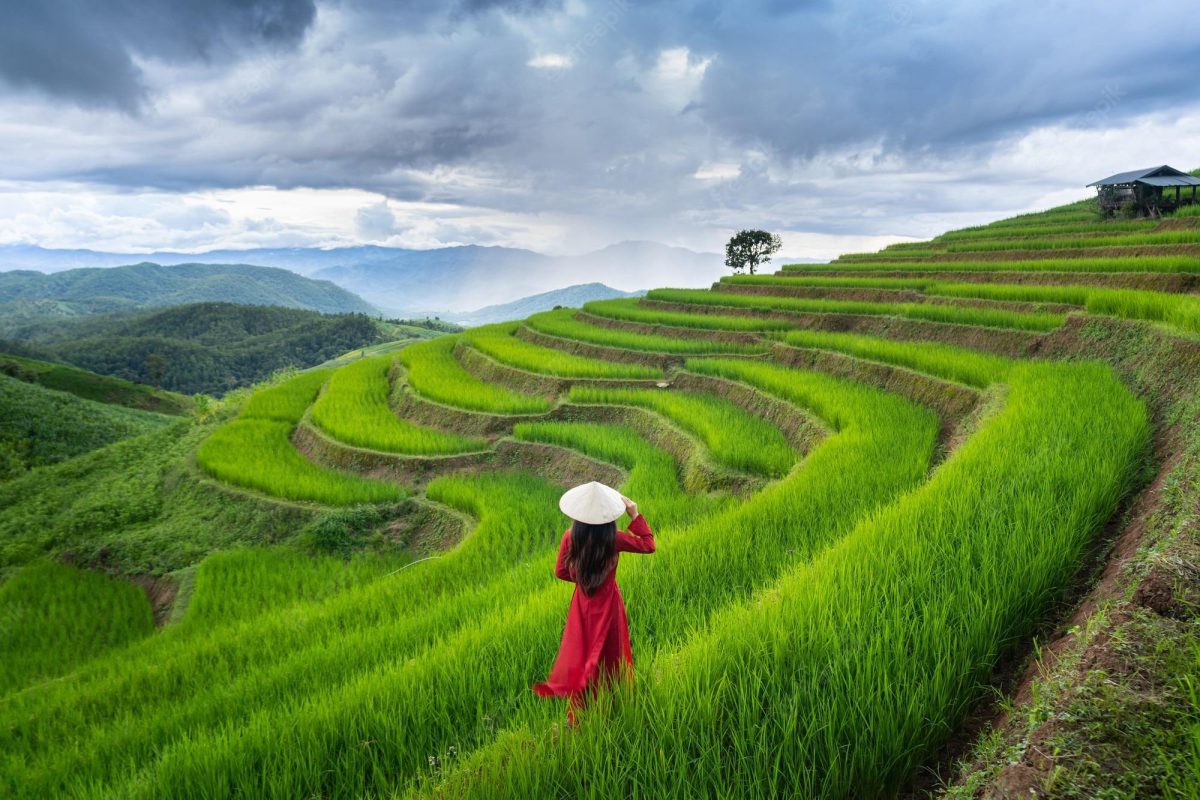
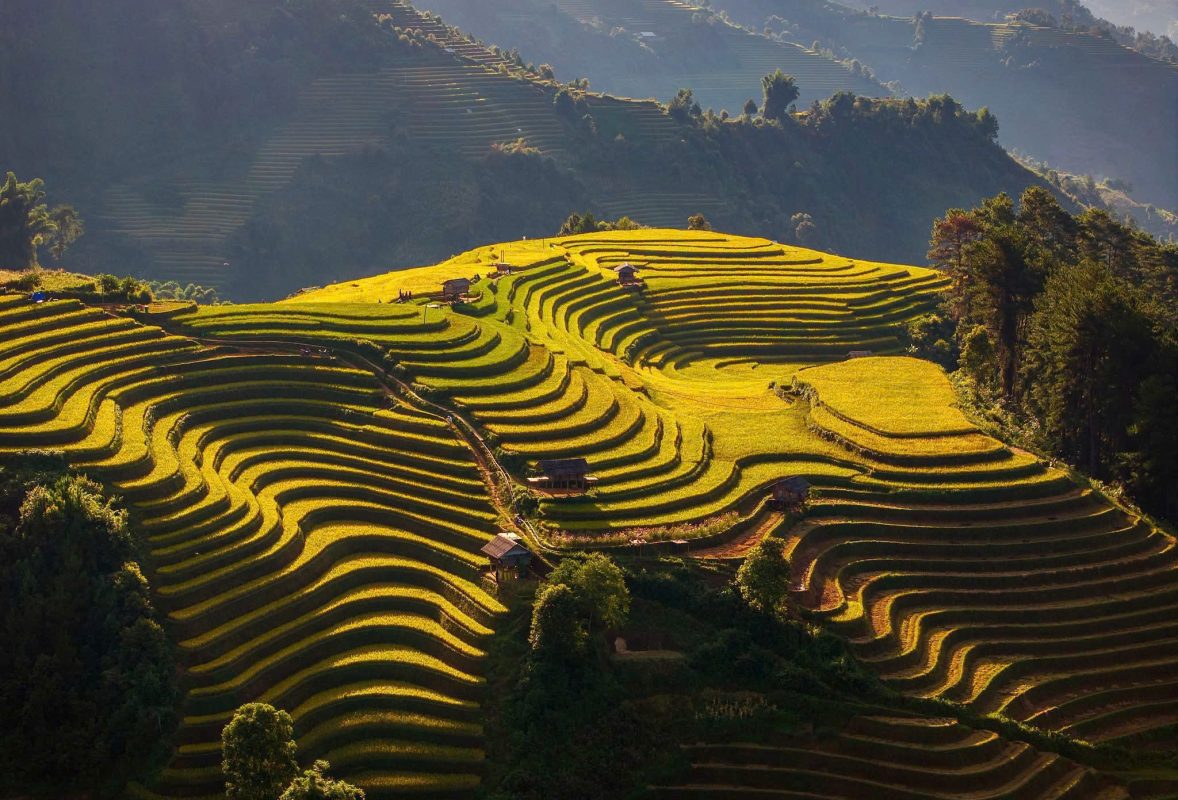
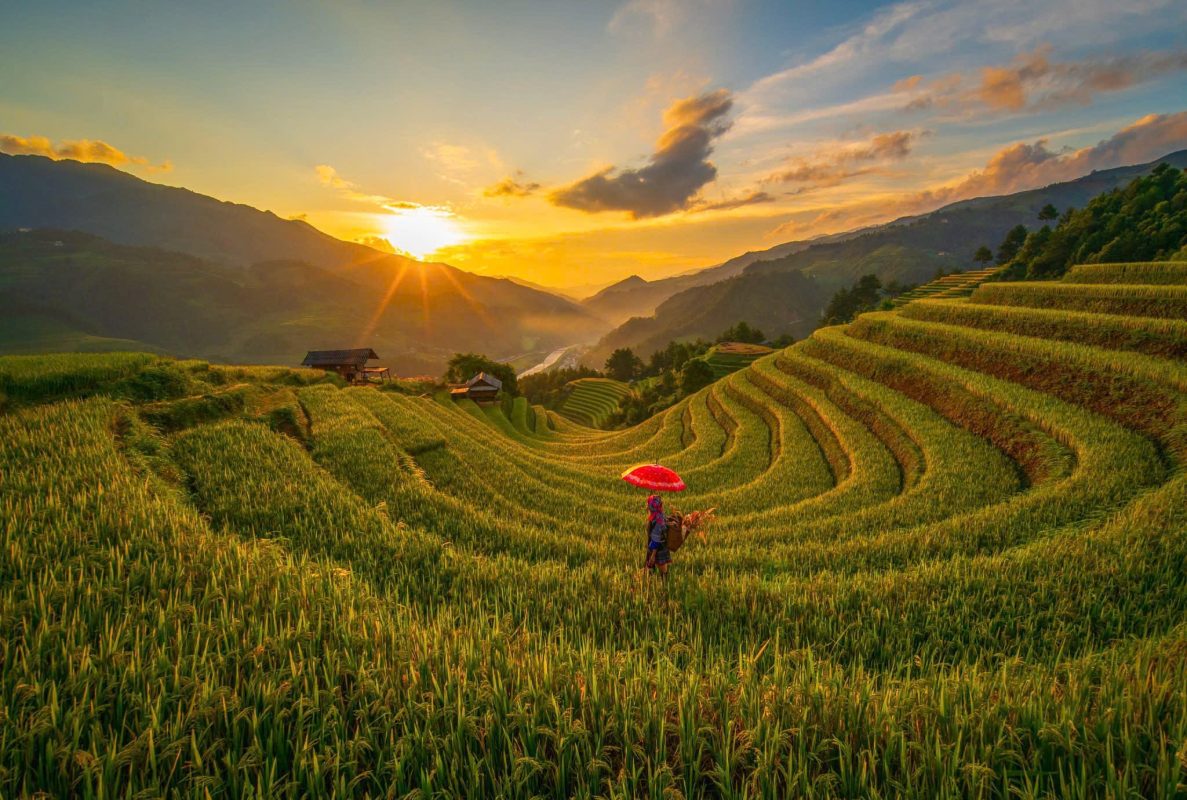
During the rice-growing season, the valley becomes a particularly beautiful combination of green or golden fields, water and limestone peaks.
Tam Coc in Different Seasons
Tam Coc changes dramatically throughout the year.
When rice is growing, the fields can be vivid green. Around harvest time, golden tones dominate the valley.
During periods when the fields are flooded, reflections can make the mountains appear to rise directly from the water.
This seasonal variation is one reason Ninh Binh rewards repeat visits.
The same river can look completely different depending on the month.
Trang An or Tam Coc?
Travelers often ask whether they should choose Trang An or Tam Coc.
The answer depends on what you want.
Trang An generally feels more enclosed and cinematic, with more caves, waterways and limestone cliffs surrounding the boat.
Tam Coc offers broader views across rice fields and is particularly beautiful when the paddies are green or golden.
If you have enough time, experience both.
If you only have one day, Trang An is often the stronger choice for a first visit because of the variety of its waterways, caves and landscape.
Hang Mua: Ninh Binh From Above
After seeing Ninh Binh from the river, climb above it.
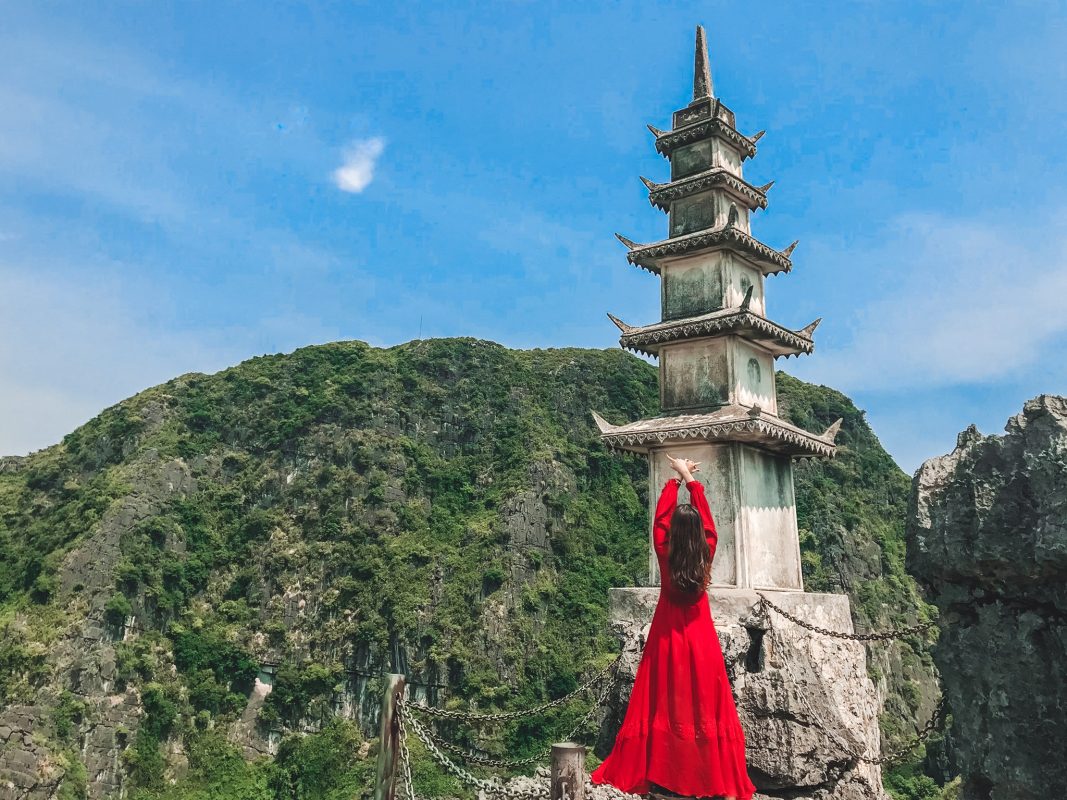
Hang Mua, or Mua Cave, has become one of the region’s most famous viewpoints. A steep staircase climbs the limestone mountain toward panoramic viewpoints overlooking the rice fields and karst landscape.
The climb is physically demanding, especially in hot weather.
But the view from the top explains why so many travelers make the effort.
Below, the countryside spreads across the valley like a patchwork of fields and waterways, while limestone mountains rise in every direction.
The Dragon on Mua Mountain
One of the two main peaks at Hang Mua is decorated with a long stone dragon.
The ridge leading toward it is narrow and uneven, so travelers should take care when climbing, especially when the stones are wet.
At the top, the dragon becomes part of the panorama.
It is a dramatic symbol within an already dramatic landscape.
The best approach is to climb slowly, stop when necessary and leave enough time to enjoy the view rather than treating the staircase as a race.
Sunrise or Sunset at Hang Mua?
Hang Mua is popular throughout the day, but early morning can provide cooler temperatures and softer light.
Sunset is equally attractive, particularly when the sky changes color above the limestone peaks.
For travelers staying overnight in Ninh Binh, an early climb can be one of the best ways to begin the day before the heat becomes intense.
The climb is not long in distance, but the steep stairs make temperature an important consideration.
Hoa Lu: Vietnam’s Ancient Capital
Ninh Binh is not only a natural destination.
It is also one of the most important historical landscapes in Vietnam.
Hoa Lu served as the capital of Vietnam during the 10th and early 11th centuries, when the country was consolidating itself after centuries of political upheaval.
The capital’s location was strategic.
Limestone mountains, rivers and natural barriers created a defensible landscape.
Today, the remains of Hoa Lu sit within the wider Trang An landscape, allowing visitors to experience history and nature within the same journey.
The Temples of Hoa Lu
The modern Hoa Lu historical area contains temples dedicated to important figures from Vietnam’s early dynastic period, including King Dinh Tien Hoang and King Le Dai Hanh.
The architecture reflects later restoration and reconstruction, but the significance of the location stretches back more than a thousand years.
Walking through the complex is particularly interesting after visiting Trang An because the relationship between geography and political power becomes clear.
The same mountains that create today’s spectacular scenery once helped protect a capital.
Dinh Tien Hoang and Le Dai Hanh
King Dinh Tien Hoang played a crucial role in reunifying the country and establishing the Dinh Dynasty.
His successor, Le Dai Hanh, continued the consolidation of the early Vietnamese state.
The temples at Hoa Lu commemorate both rulers and provide an introduction to one of the most formative periods in Vietnam’s history.
For travelers interested in Vietnamese history, Hoa Lu adds an important cultural dimension to a destination otherwise dominated by natural scenery.
Bai Dinh Pagoda
On a different scale entirely is Bai Dinh Pagoda, a vast Buddhist complex near Trang An.
Its monumental architecture, large statues and extensive grounds make it one of the most visually imposing religious sites in northern Vietnam.
The complex combines newer monumental structures with an older temple area associated with the original Bai Dinh site.
It is particularly impressive when approached as part of a broader Ninh Binh itinerary rather than as an isolated attraction.
Bich Dong Pagoda
Hidden among the limestone mountains near Tam Coc, Bich Dong Pagoda offers a much more intimate experience.
The pagoda complex is built into the mountainside, with different levels connected by stone steps.
Its architecture, caves and surrounding vegetation create a strong sense of harmony with the landscape.
Compared with the scale of Bai Dinh, Bich Dong is quiet and restrained.
That contrast is exactly what makes visiting both worthwhile.
The Three Levels of Bich Dong
Bich Dong is traditionally described as a three-level pagoda complex.
The lower temple sits near the entrance, while higher temples are built further into the mountain.
As you climb, the landscape becomes increasingly enclosed by limestone and vegetation.
At the upper levels, the architecture seems almost to disappear into the mountain.
This is one of those places where the setting is as important as the building itself.
Cycling Through the Countryside
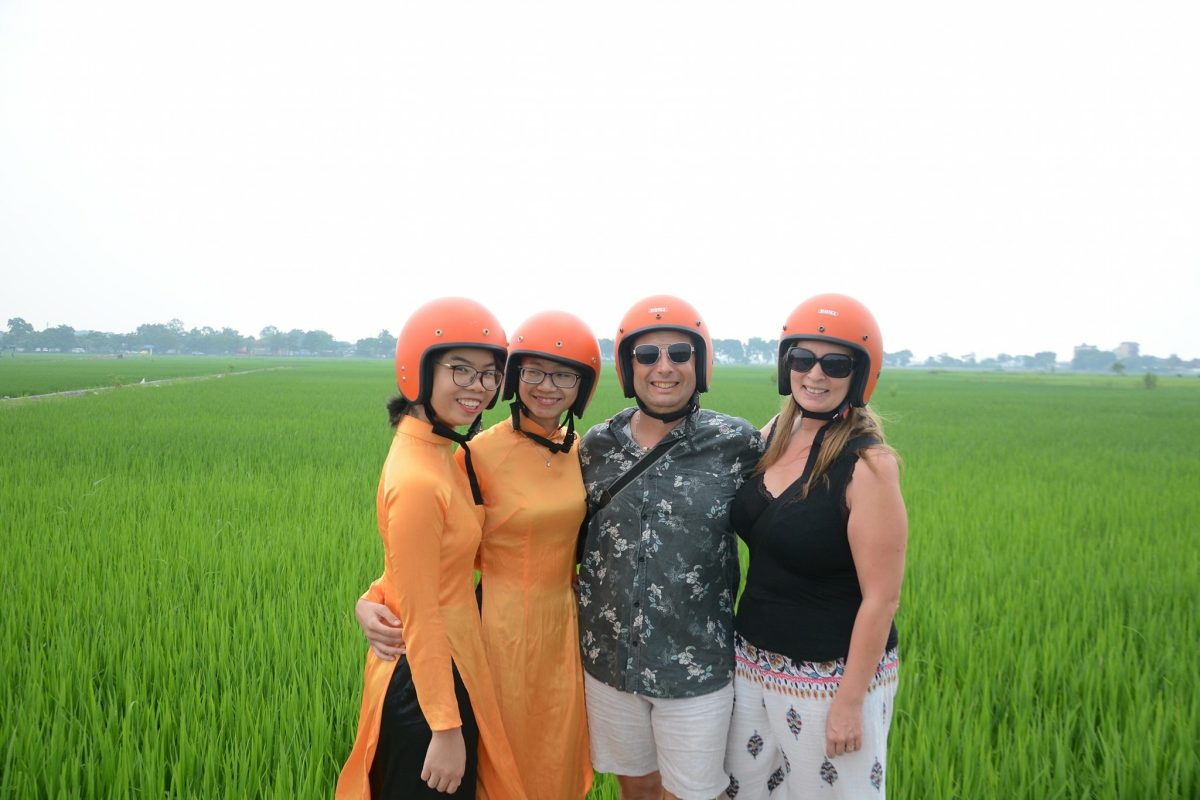
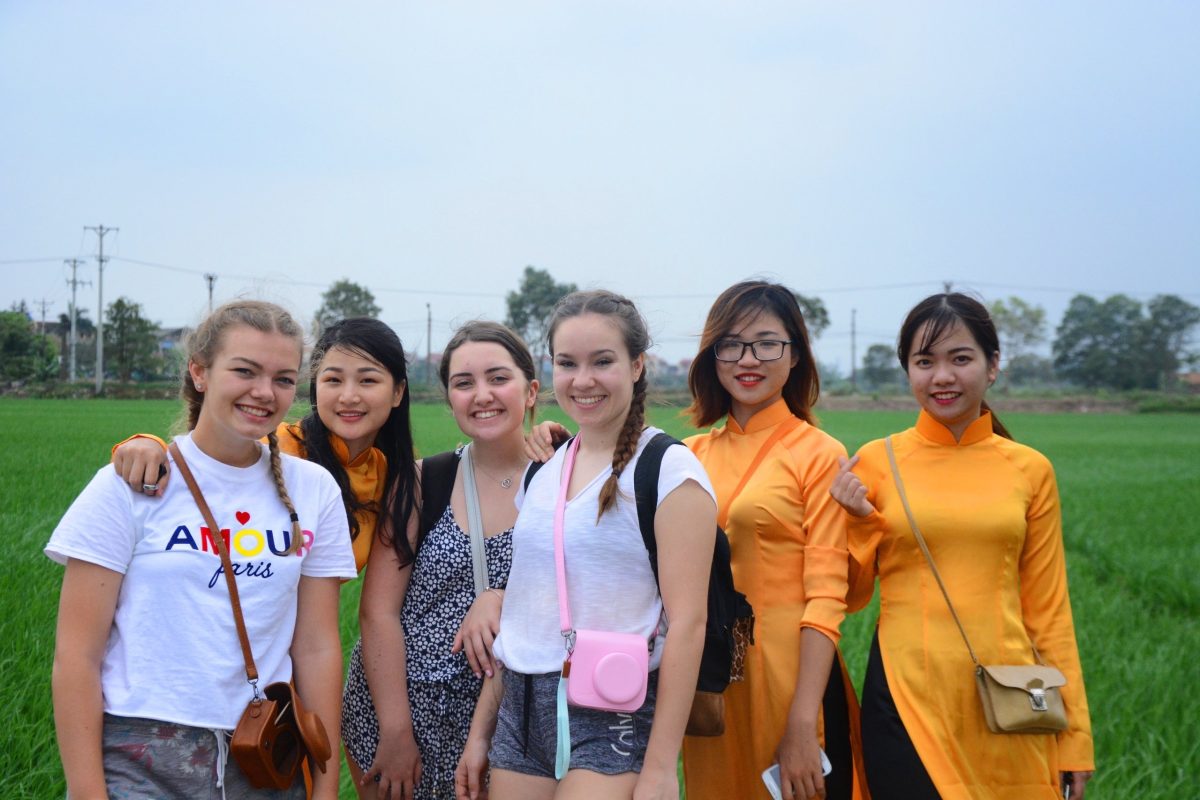
One of the best ways to experience Ninh Binh is on two wheels.
The countryside around Tam Coc, Trang An and Hoa Lu contains relatively quiet roads running between rice fields, villages and limestone formations.
Cycling allows you to move slowly enough to notice details that disappear from a car.
A farmer working beside a field.
A buffalo beside a pond.
A small temple hidden behind trees.
Children cycling home.
A narrow road disappearing between two mountains.
The journey becomes part of the attraction.
Why Cycling Works So Well Here
Ninh Binh is not a destination that needs to be conquered.
It rewards wandering.
A private cycling experience can be adapted according to fitness level, weather and interests, with shorter routes for families and longer countryside rides for active travelers.
For photographers, cycling also makes it easier to stop whenever the landscape changes.
You do not need to wait for the next official viewpoint.
The countryside is the viewpoint.
Cuc Phuong National Park
For travelers who want to explore beyond the karst landscapes, Cuc Phuong National Park offers an entirely different side of Ninh Binh.
Established in 1962, it was Vietnam’s first national park and remains one of the country’s most important protected forest areas.
The park contains limestone mountains covered in tropical forest, caves, biodiversity and archaeological sites.
It is a destination for travelers interested in hiking and wildlife rather than simply sightseeing.
Hiking in Cuc Phuong
Cuc Phuong offers trails ranging from relatively gentle walks to longer forest hikes.
The environment is completely different from Trang An.
Instead of open rice fields and towering cliffs reflected in water, you enter dense forest where the mountains are often hidden by vegetation.
The experience is quieter and more immersive.
For travelers spending three or more days in Ninh Binh, Cuc Phuong can be an excellent addition.
Endangered Primate Rescue Center
Cuc Phuong is also home to conservation programs, including the Endangered Primate Rescue Center.
The center works with endangered primates native to Vietnam and provides rehabilitation and conservation support.
A visit adds an important perspective to the region.
Ninh Binh is not only about scenery.
Its forests and wetlands are also habitats supporting species that face serious conservation pressures.
Travelers interested in wildlife should prioritize responsible conservation programs rather than attractions focused purely on animal entertainment.
Van Long Nature Reserve
Another important wetland landscape is Van Long Nature Reserve.
The reserve combines limestone mountains, wetlands and waterways, creating a quieter alternative to the better-known boat experiences at Trang An and Tam Coc.
It is particularly known for its biodiversity and birdlife.
The landscape is less enclosed than Trang An, creating broader views across wetlands and mountains.
For travelers who prefer quieter nature experiences, Van Long can be an excellent choice.
Birdwatching in Ninh Binh
Ninh Binh’s wetlands and forests support a diverse range of bird species.
Van Long and Cuc Phuong are particularly attractive for travelers interested in wildlife photography and birdwatching.
Early mornings are usually the most rewarding time to be outdoors.
The countryside is cooler, wildlife is more active and the light is softer.
This is another reason to stay overnight rather than treating Ninh Binh as a rushed day trip from Hanoi.
Ninh Binh Beyond the Famous Attractions
The biggest mistake visitors make is treating Ninh Binh as a checklist.
Trang An.
Tam Coc.
Hang Mua.
Hoa Lu.
Bai Dinh.
Done.
But Ninh Binh’s greatest strength is the landscape between these places.
A quiet road through rice fields can be more memorable than another formal attraction.
A bicycle ride at sunrise can be more rewarding than arriving at a viewpoint at midday.
A meal in the countryside can reveal more about the region than another souvenir shop.
The destination becomes richer when you slow down.
The Seasons of Ninh Binh
Ninh Binh is a year-round destination, but different seasons create very different landscapes.
Spring is often pleasant for sightseeing, with greenery and agricultural activity returning to the countryside.
Late spring and early summer can be particularly beautiful around Tam Coc when the rice fields take on vibrant colors.
Summer is hot and humid, with higher chances of rain.
Autumn brings more comfortable conditions and softer light.
Winter can be cooler and occasionally misty, creating an atmospheric landscape.
When to See the Golden Rice Fields
The exact rice harvest varies from year to year, but the Tam Coc landscape is particularly famous when the rice fields turn yellow.
This period can be extremely photogenic because the golden fields contrast with the dark green limestone mountains.
However, travelers should not assume that every field will be golden on the same day.
Agricultural timing differs between areas.
For a premium private journey, flexibility is useful because your guide can adjust the route according to what is happening in the countryside.
Ninh Binh in Spring
Spring is one of the most comfortable periods for exploring the region.
Temperatures are generally more manageable than the peak summer heat, making cycling and walking more enjoyable.
The countryside is fresh and green, while cultural sites and temples provide plenty of variety if weather conditions change.
It is also a good season for combining Ninh Binh with Hanoi and other destinations in northern Vietnam.
Ninh Binh in Summer
Summer brings intense greenery but also heat and humidity.
Boat rides should ideally be scheduled earlier in the day or later in the afternoon when possible.
Rain can arrive suddenly, but showers may also clear quickly and leave the landscape particularly vivid.
If you travel during summer, bring sun protection, water and lightweight clothing.
Ninh Binh in Autumn and Winter
Autumn can offer comfortable temperatures and attractive light for photography.
Winter is cooler, and mist can settle around the limestone mountains.
While the rice fields may not have the golden appearance associated with harvest season, the atmosphere can be incredibly beautiful.
The mountains emerging through morning mist can make Ninh Binh look more like an ink painting than a tropical landscape.
What to Eat in Ninh Binh
Ninh Binh’s cuisine reflects its agricultural surroundings and northern Vietnamese traditions.
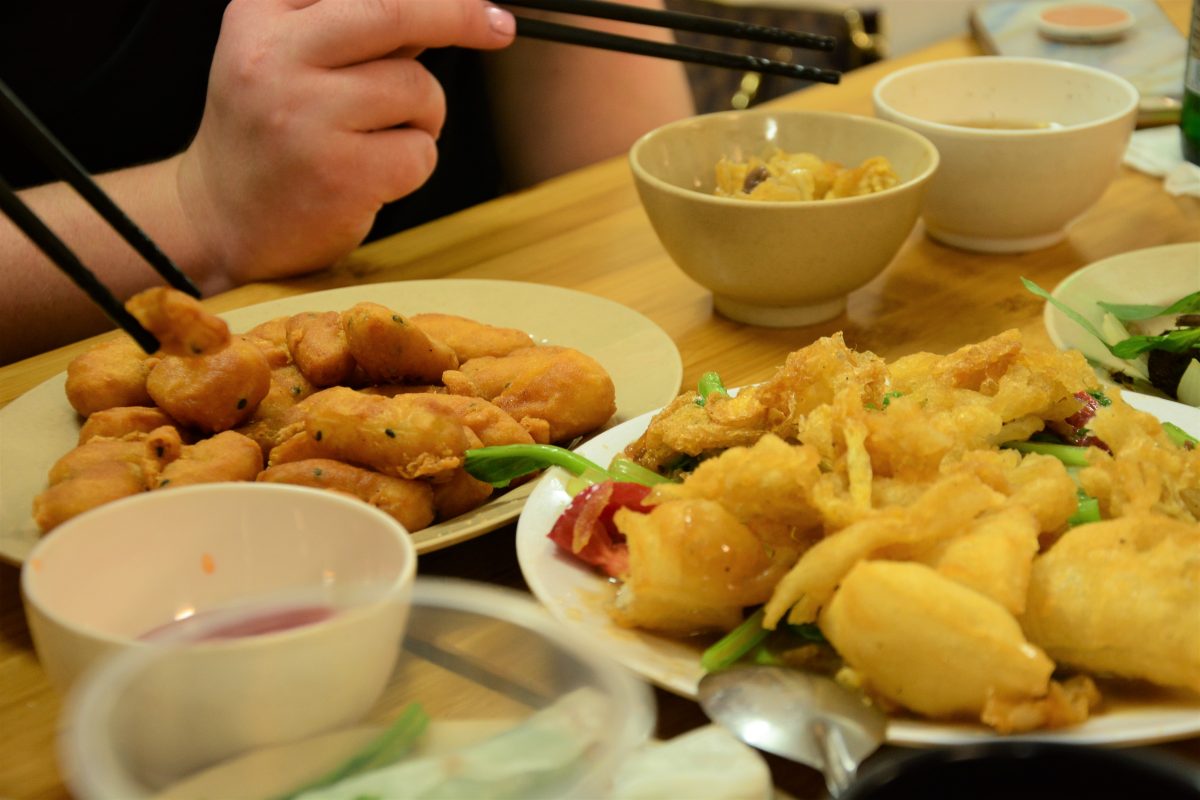
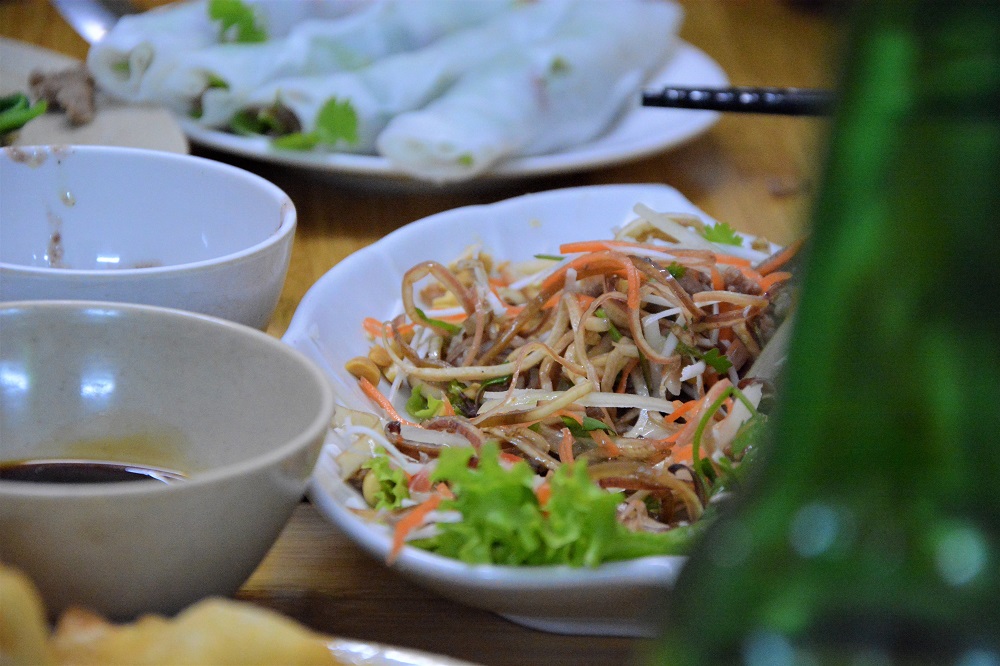
The province is particularly associated with goat meat, often prepared grilled, steamed or with herbs and dipping sauces.
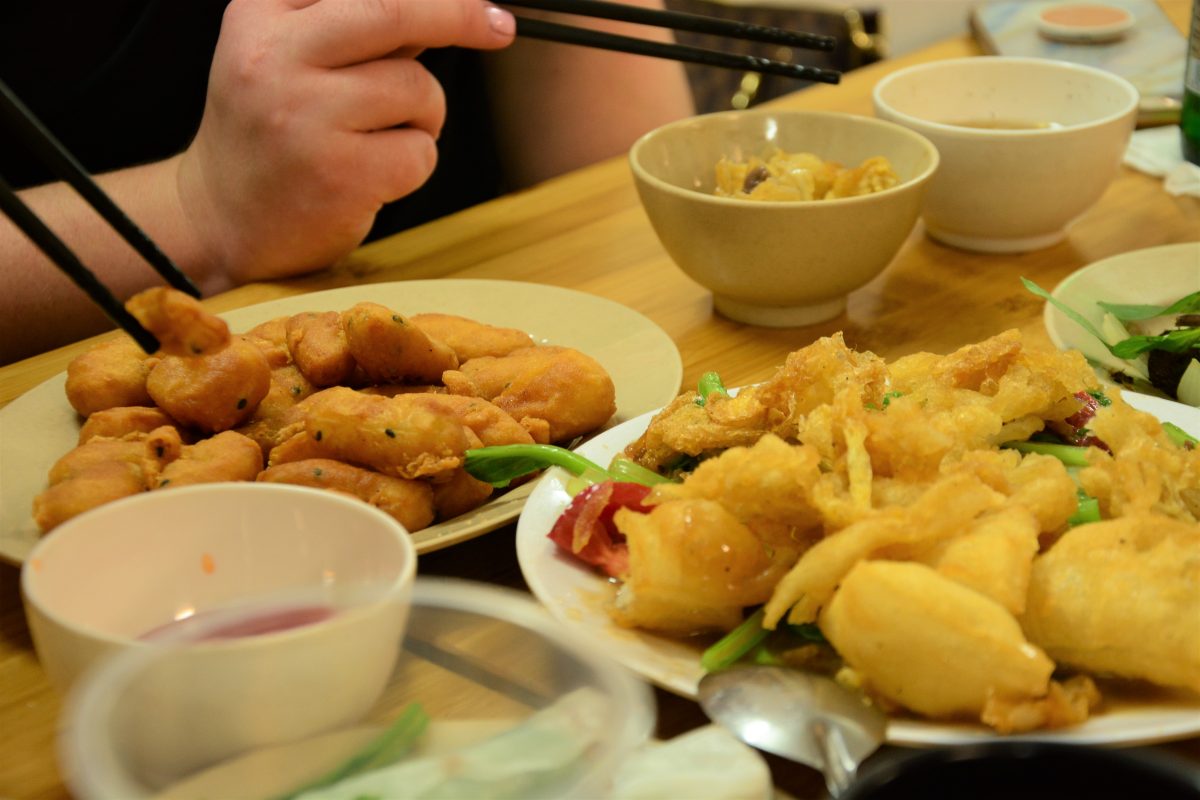
Cơm cháy, crispy scorched rice served with savory toppings or sauces, is another regional specialty.
Other dishes include mountain vegetables, freshwater fish and eel-based preparations.
Food is an important part of understanding the region because many dishes are connected to ingredients historically available in the surrounding countryside.
Ninh Binh Goat Meat
Goat has become one of Ninh Binh’s signature foods.
The meat is commonly served with herbs, sesame, fermented sauces or other accompaniments depending on the preparation.
For travelers unfamiliar with Vietnamese goat cuisine, it can be an interesting introduction to regional food traditions.
A private food-focused journey can combine a countryside lunch with visits to historical and natural attractions rather than treating food as an afterthought.
Cơm Cháy
Cơm cháy is perhaps the easiest Ninh Binh specialty for almost every traveler to enjoy.
Crispy rice forms the base, usually accompanied by a savory sauce or meat dish.
It is crunchy, salty and rich, making it a satisfying contrast to the fresh herbs and vegetables that accompany many Vietnamese meals.
It is also widely sold as a packaged specialty, although freshly prepared versions are generally more interesting.
Staying Overnight in Ninh Binh
A major advantage of staying overnight is being able to experience the countryside after the day-trippers have left.
The region around Trang An and Tam Coc has a growing selection of boutique hotels, resorts and countryside retreats.
A property overlooking rice fields or limestone mountains can transform the trip.
Instead of waking in a city and traveling into the countryside, you wake inside the landscape itself.
For premium travel, this is one of the strongest reasons to spend at least two nights.
Tam Coc or Trang An for Accommodation?
Tam Coc offers easy access to restaurants, cafés, cycling routes and the Ngo Dong River.
Trang An provides a quieter atmosphere surrounded by mountains and countryside.
If you want convenience and evening activity, Tam Coc can be a good base.
If you want peace, privacy and scenery, staying closer to Trang An can be more appealing.
The right choice depends on the kind of experience you want after the sightseeing ends.
How Long Should You Stay in Ninh Binh?
One day is enough to see the highlights, but it is not enough to truly experience the region.
A typical day trip can combine Trang An, Hoa Lu and Hang Mua.
But staying two nights allows you to add cycling, Bich Dong, countryside exploration or a slower boat experience.
Three nights is ideal for travelers who want to combine Trang An, Tam Coc, Hoa Lu, Hang Mua and either Cuc Phuong or Van Long without rushing.
For a premium private itinerary, two to three nights provides a much better balance than trying to compress everything into one day.
How to Get From Hanoi to Ninh Binh
Ninh Binh is one of the easiest countryside destinations to reach from Hanoi.
The journey by private vehicle generally takes around two hours depending on the exact destination, traffic and road conditions.
This accessibility is one reason Ninh Binh works so well at the beginning or end of a Northern Vietnam itinerary.
Travelers can leave Hanoi after breakfast and be surrounded by limestone mountains before lunchtime.
Why Private Transportation Is Better
Private transportation provides something particularly valuable in Ninh Binh: flexibility.
You can stop for photographs.
You can change the cycling route.
You can spend longer at a temple.
You can have lunch whenever you want.
And you do not have to return to Hanoi at the exact time dictated by a group schedule.
For families and couples, this can turn Ninh Binh from a rushed excursion into a genuine countryside experience.
Ninh Binh for Couples
Ninh Binh is naturally romantic.
A private boat gliding through the mountains.
Cycling together through rice fields.
Sunset from Hang Mua.
Dinner beside a lotus pond.
A quiet morning in a valley retreat.
The landscape creates atmosphere without needing elaborate entertainment.
For couples, two nights is often enough to create a relaxed private escape from Hanoi.
Ninh Binh for Families
Families can explore Ninh Binh comfortably because the region offers a wide range of activities.
Children can enjoy the boat rides, caves and mountain landscapes while parents can add history, cycling or food experiences.
The key is not to overload the itinerary.
One boat ride, one cultural site and one outdoor activity in a day is usually more enjoyable than trying to visit every attraction.
Private transportation also allows breaks whenever younger travelers need them.
Ninh Binh for Photographers
Ninh Binh is one of Vietnam’s strongest destinations for landscape photography.
The composition is naturally dramatic.
Limestone peaks.
Water.
Rice fields.
Boats.
Temples.
Caves.
Mist.
The challenge is not finding a beautiful subject.
It is finding the right light.
Early morning and late afternoon often produce softer conditions, while midday can create strong contrasts and harsh shadows.
A Responsible Way to Experience Ninh Binh
Ninh Binh’s popularity has created significant tourism pressure around its most famous attractions.
UNESCO’s conservation records have specifically identified tourism impacts, including concerns about potential overcrowding and environmental pressure, as management considerations for the Trang An World Heritage property.
Responsible travel therefore matters.
Avoid single-use plastic whenever possible.
Do not leave rubbish on boats or trails.
Stay within designated areas.
Do not climb fragile limestone formations.
Respect temples and religious sites.
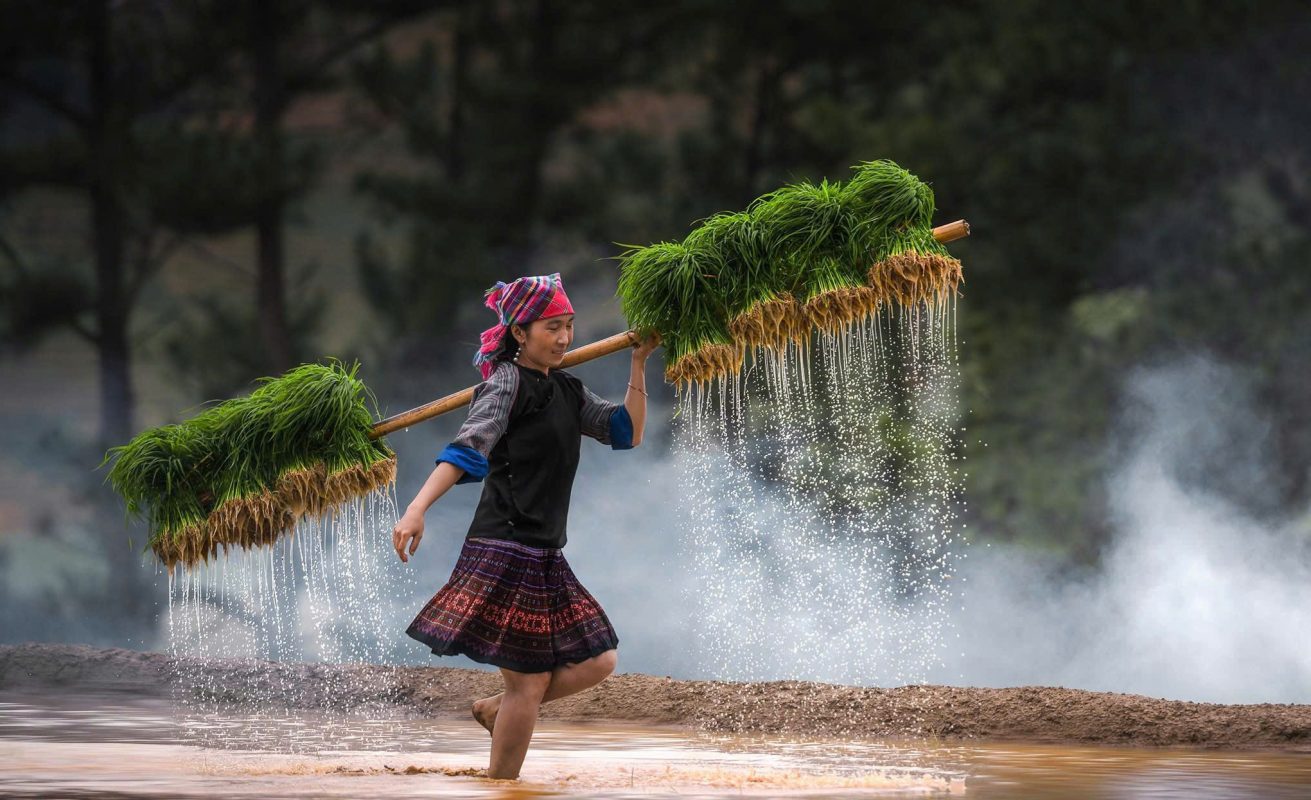
And remember that the rice fields are working agricultural land.
Protecting the Landscape
The beauty of Ninh Binh depends on maintaining the balance between tourism and the natural environment.
The UNESCO property contains not only dramatic scenery but also rural communities, agricultural land and important ecosystems.
The landscape is valuable precisely because nature and human activity have coexisted here for centuries.
Travelers can contribute by choosing responsible operators and spending money with businesses that respect the environment and communities.
Ninh Binh’s Deep History
One of the most fascinating things about Ninh Binh is that the landscape has been inhabited for tens of thousands of years.
UNESCO notes that archaeological deposits in caves within Trang An reveal a continuous sequence of human occupation and adaptation spanning more than 30,000 years.
Later, the same landscape became the setting for the early Vietnamese state.
This creates an unusual historical continuity.
Prehistoric communities.
Early kingdoms.
Imperial capitals.
Agricultural villages.
Modern tourism.
All exist within the same landscape.
A Living Cultural Landscape
Ninh Binh should not be thought of simply as a collection of monuments.
The countryside surrounding Trang An remains inhabited and cultivated.
UNESCO estimates that around 14,000 people live within the World Heritage property, with many families involved in agriculture.
This is why the landscape feels different from a conventional national park.
People are part of it.
The rice fields are working fields.
The waterways are part of everyday life.
The temples remain places of worship.
And the villages continue to evolve.
A Sample 3-Day Private Ninh Binh Journey
Day 1 — Hanoi to Hoa Lu, Trang An and Hang Mua
Leave Hanoi in the morning by private vehicle and travel south toward Ninh Binh. Begin with Hoa Lu Ancient Capital, exploring the historic temples and learning about the early dynasties that established one of Vietnam’s first political centers here. After lunch, continue to Trang An for a private-paced boat experience through limestone mountains, caves, waterways and hidden valleys. In the late afternoon, climb Hang Mua for panoramic views across the karst landscape before checking into a boutique countryside retreat for dinner and a peaceful evening.
Day 2 — Tam Coc, Cycling and Bich Dong
Begin the morning with a gentle cycling journey through the countryside around Tam Coc, following quiet roads between rice fields, villages and limestone mountains. Continue to the Ngo Dong River for the traditional Tam Coc boat experience, with the route passing through caves and dramatic mountain scenery. After lunch, visit Bich Dong Pagoda and explore its temples built into the mountainside. Return to your countryside accommodation for a relaxed evening, perhaps with a private dinner overlooking the rice fields.
Day 3 — Van Long or Cuc Phuong and Return to Hanoi
After breakfast, choose between a peaceful nature experience at Van Long Nature Reserve or a deeper forest journey into Cuc Phuong National Park. Van Long offers wetlands, limestone mountains and wildlife, while Cuc Phuong provides opportunities for forest walks and conservation experiences. Enjoy a leisurely lunch before beginning the private journey back toward Hanoi. Depending on your schedule, arrive in Hanoi in the afternoon or continue directly to your next destination as part of a longer Northern Vietnam journey.
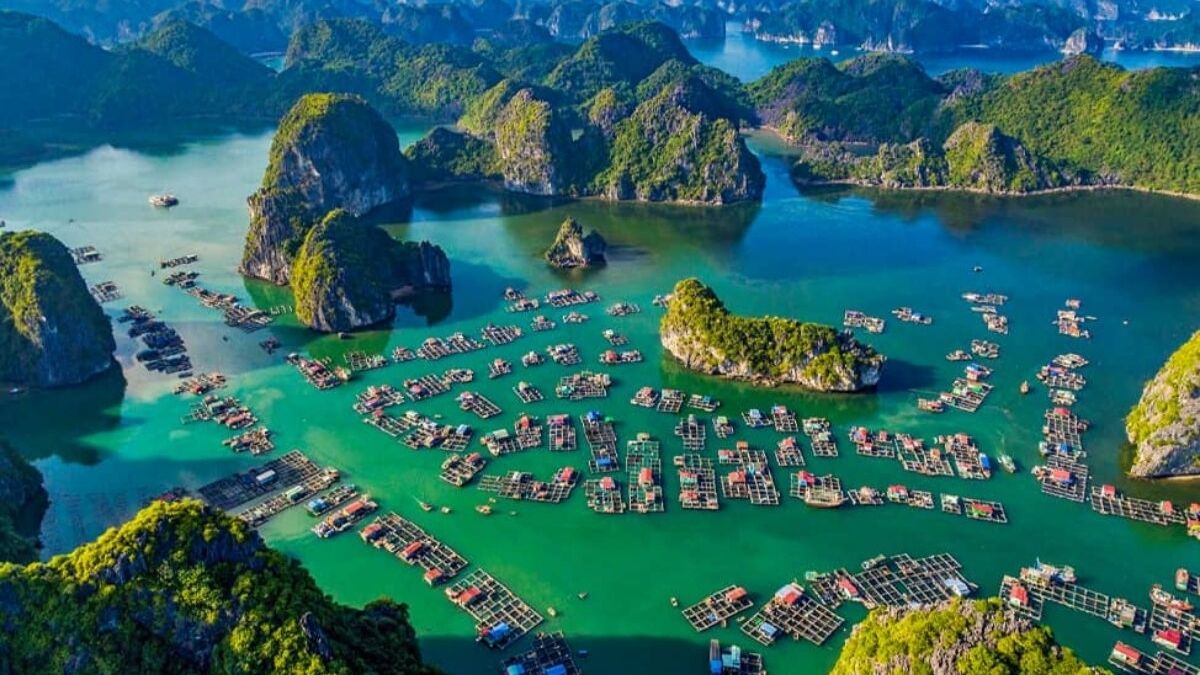
Ninh Binh Beyond “Ha Long Bay on Land”
The nickname is useful because it immediately communicates the visual drama of Ninh Binh.
But it also does the destination a slight disservice.
Ninh Binh is not another Ha Long Bay.
There is no ocean here.
There are rice fields instead of open sea, temples instead of floating villages and ancient capitals instead of cruise ships.
Its landscapes are connected to agriculture, history and village life in ways that make the experience fundamentally different.
The mountains may look similar from a distance.
The journey is not.
The Beauty Between the Attractions
The most memorable Ninh Binh experience may not be Trang An.
It may be the bicycle ride before breakfast.
The farmer walking beside a rice field.
The temple hidden beneath a limestone cliff.
The sudden appearance of a water buffalo beside the road.
The reflection of a mountain in a flooded field.
The sound of oars against the river.
These are the moments that transform a sightseeing trip into a journey.
Why Choose Vietnam Women Travel for Ninh Binh?
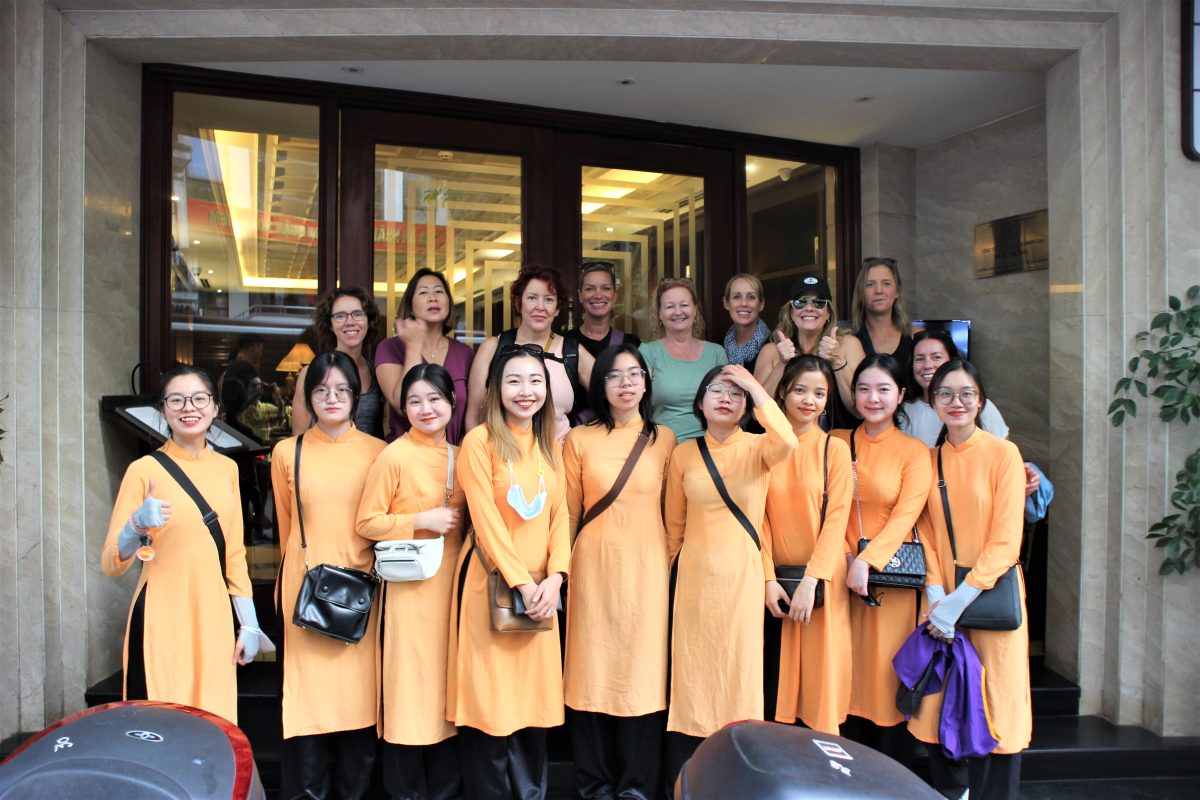
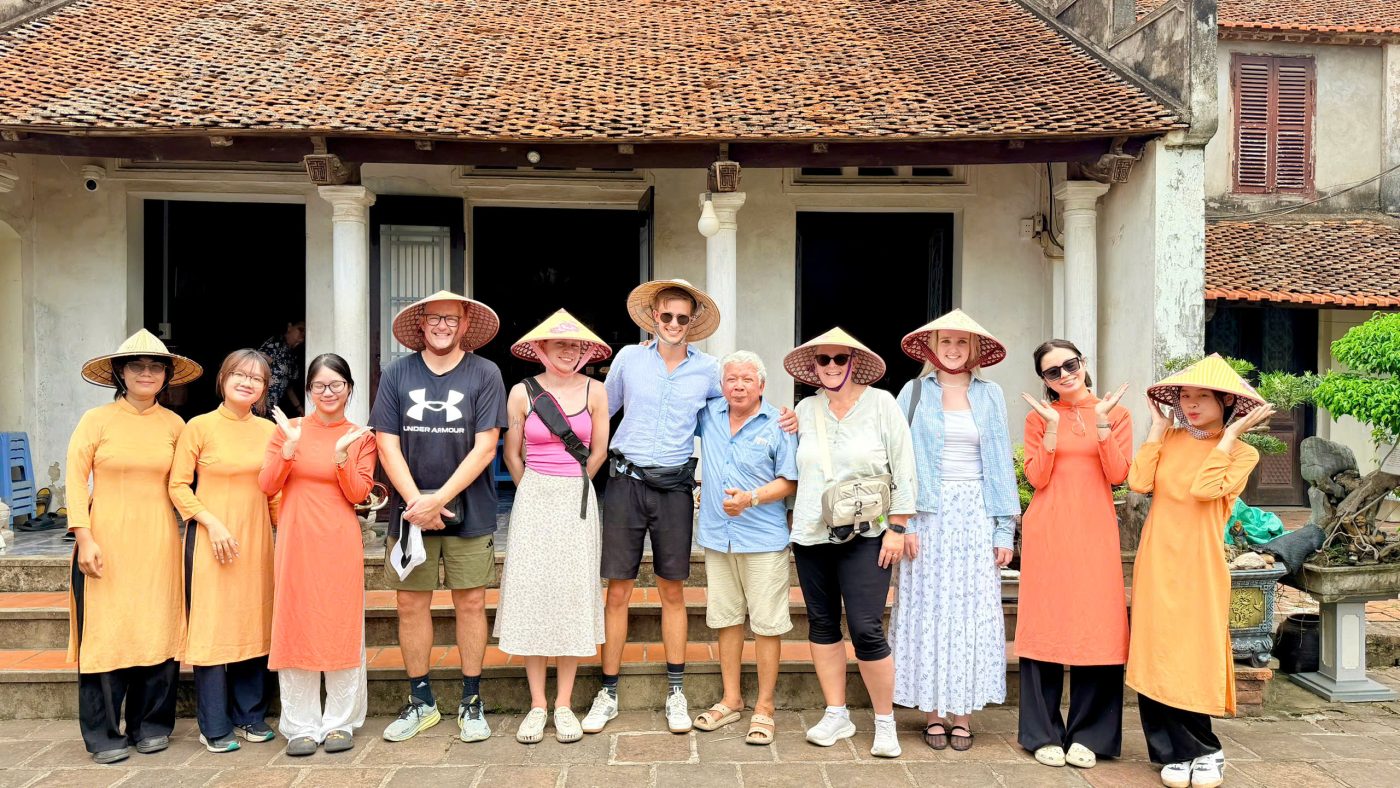
Vietnam Women Travel – Premium Private Tours Led by Women creates private Ninh Binh journeys for travelers who want to experience the landscape at a slower, more personal pace.
Rather than simply combining the standard attractions into a single busy day, our private journeys can be designed around what matters most to you: nature, history, photography, cycling, food, culture or simply having time to enjoy the countryside.
Couples can combine a private Trang An boat journey with a luxury countryside retreat and sunset at Hang Mua.
Families can enjoy shorter cycling routes, boat trips and cultural sites without exhausting travel days.
Active travelers can combine cycling, hiking and nature reserves.
And travelers interested in Vietnamese culture can spend more time exploring Hoa Lu, village life and traditional crafts.
A Different Way to See Ninh Binh
The greatest luxury in Ninh Binh is not simply the hotel.
It is space.
Space to stop beside a rice field.
Space to wait for the perfect light.
Space to take the longer cycling route.
Space to have lunch without watching the clock.
Space to sit quietly on the river while the limestone mountains rise around you.
This is why a private journey can feel completely different from a standard day tour.
You are not simply visiting Ninh Binh.
You are spending time inside it.
The Morning That Stays With You
Imagine waking in a quiet countryside retreat.
Mist is hanging between the limestone peaks.
The rice fields are still wet with morning dew.
There is no traffic.
No tour buses.
Only the sound of birds and distant activity from the village.
You have breakfast slowly before getting on a bicycle and following a narrow road between the fields.
That is the Ninh Binh experience worth searching for.
Not just the famous photograph.
The feeling behind it.
Plan Your Ninh Binh Journey
Ninh Binh brings together some of the most remarkable elements of Northern Vietnam: ancient history, limestone mountains, rice agriculture, caves, rivers, temples, forests and living rural communities.
At its center, Trang An offers one of Southeast Asia’s most extraordinary river landscapes, recognized by UNESCO for its exceptional natural, geological and cultural significance.
But the destination becomes even more rewarding when you look beyond the famous boat ride.
Cycle through the countryside.
Climb Hang Mua.
Walk through Hoa Lu.
Explore Bich Dong.
Discover Cuc Phuong.
Watch the seasons transform the rice fields.
Stay overnight among the mountains.
And allow the landscape to dictate the pace of your journey.
With Vietnam Women Travel – Premium Private Tours Led by Women, your Ninh Binh experience can begin in Hanoi and unfold as a private journey through Vietnam’s extraordinary northern countryside, combining carefully selected accommodation, private transportation, women-led travel experiences and enough time to appreciate the places between the highlights.
Come for the limestone mountains.
Stay for the quiet countryside.
Discover the history.
And experience Ninh Binh not simply as “Ha Long Bay on land,” but as one of Vietnam’s most remarkable landscapes in its own right.
Vietnam Women Travel – Premium Private Tours Led by Women
Private journeys. Women guides. Authentic Vietnam.