Pu Luong Travel Guide: Rice Terraces, Mountain Villages & the Quiet Heart of Northern Vietnam
Pu Luong is the kind of destination that rewards travelers who are willing to slow down. Hidden among the limestone mountains of Thanh Hoa Province, southwest of Hanoi, Pu Luong Nature Reserve is a landscape of forested peaks, terraced rice fields, bamboo water wheels, waterfalls and traditional stilt-house villages. The journey from Hanoi takes roughly four to five hours by road, yet the atmosphere feels far removed from the capital. Instead of busy streets and large-scale tourism, Pu Luong offers narrow paths through rice fields, mountain valleys where farmers still work the land, and evenings when the loudest sounds may be flowing water, insects and birds. Vietnam’s official tourism authority describes Pu Luong as a quieter alternative to more heavily visited mountain destinations, with rice paddies, cliffs, waterfalls and ethnic villages providing the setting for trekking and rural experiences.
Why Pu Luong Belongs on a Northern Vietnam Itinerary
Pu Luong is not a destination built around one spectacular monument or a single famous viewpoint. Its appeal comes from the landscape as a whole. Mountains rise around cultivated valleys, rice terraces follow the natural contours of the hillsides, wooden houses stand among fields and streams, and traditional bamboo water wheels continue to form part of the agricultural scenery.
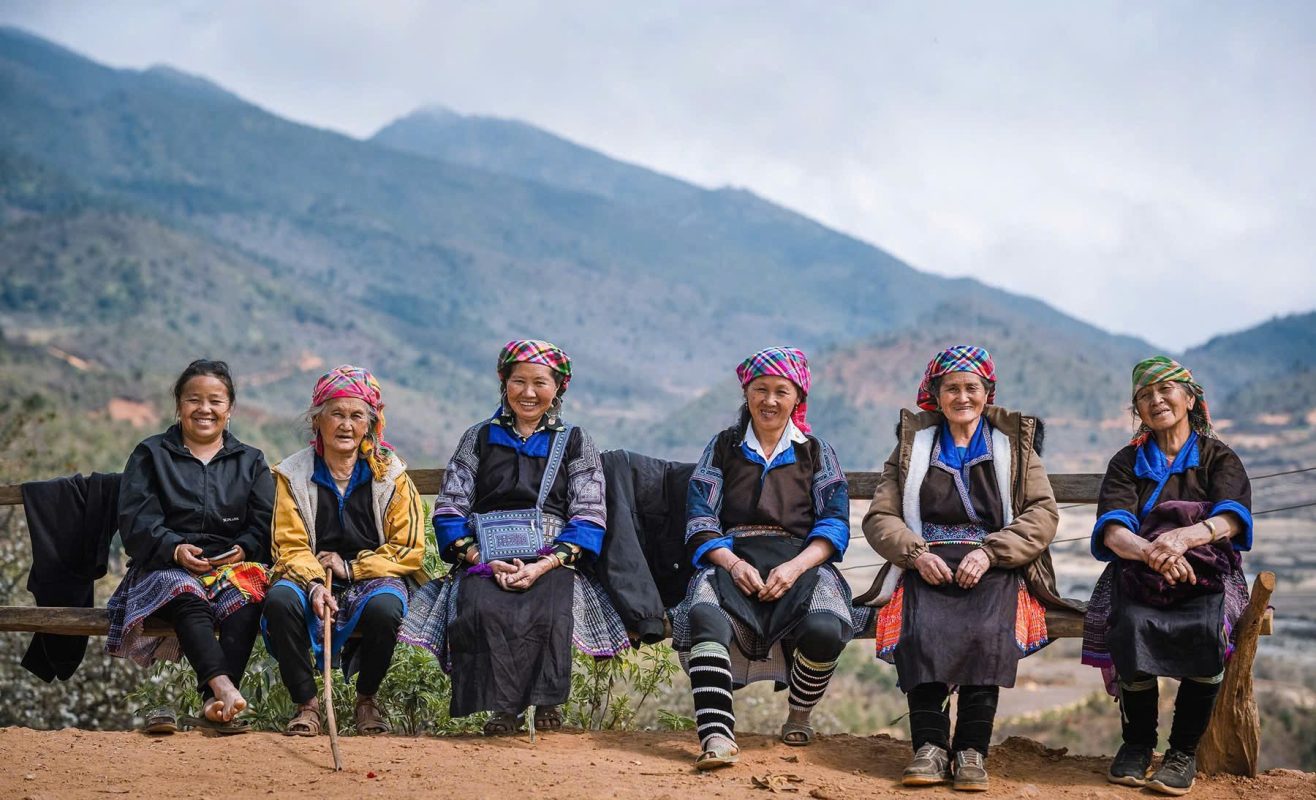
The nature reserve covers more than 17,600 hectares and was established in 1999 to protect the area’s biodiversity. The landscape is also home to Thai and Muong communities whose lives remain closely connected with agriculture and the surrounding mountains. Travelers can therefore experience nature and culture within the same walk, moving from a forest trail into a rice-growing valley and then into a village of traditional stilt houses.
For travelers who want to see a quieter side of Vietnam, this combination is what makes Pu Luong special. It is not simply a trekking destination and it is not simply a countryside retreat. It is a living mountain landscape where farming, culture and nature remain closely connected.
Where Is Pu Luong?
Pu Luong Nature Reserve is located in Thanh Hoa Province in northern-central Vietnam, roughly 160–170 kilometers southwest of Hanoi. The reserve lies within a mountainous area characterized by limestone formations, forests, valleys and agricultural terraces.
The journey from Hanoi generally takes around four to five hours by road, depending on traffic, weather and the route chosen. Private cars and organized transfers are the most comfortable options, while some travelers approach Pu Luong through Mai Chau. Vietnam Tourism also describes Pu Luong as approximately four hours from Hanoi, making it one of the more accessible mountain escapes from the capital.
The relatively short distance is one of Pu Luong’s greatest advantages. You can leave Hanoi after breakfast and arrive among the mountains later the same day, without committing to the longer journey required for destinations farther into Northern Vietnam.
A Landscape of Rice, Forest and Limestone
The geography of Pu Luong is what gives the region its distinctive character. Tropical forest covers much of the surrounding mountains, while the valleys have been transformed by generations of farming into layers of rice terraces.
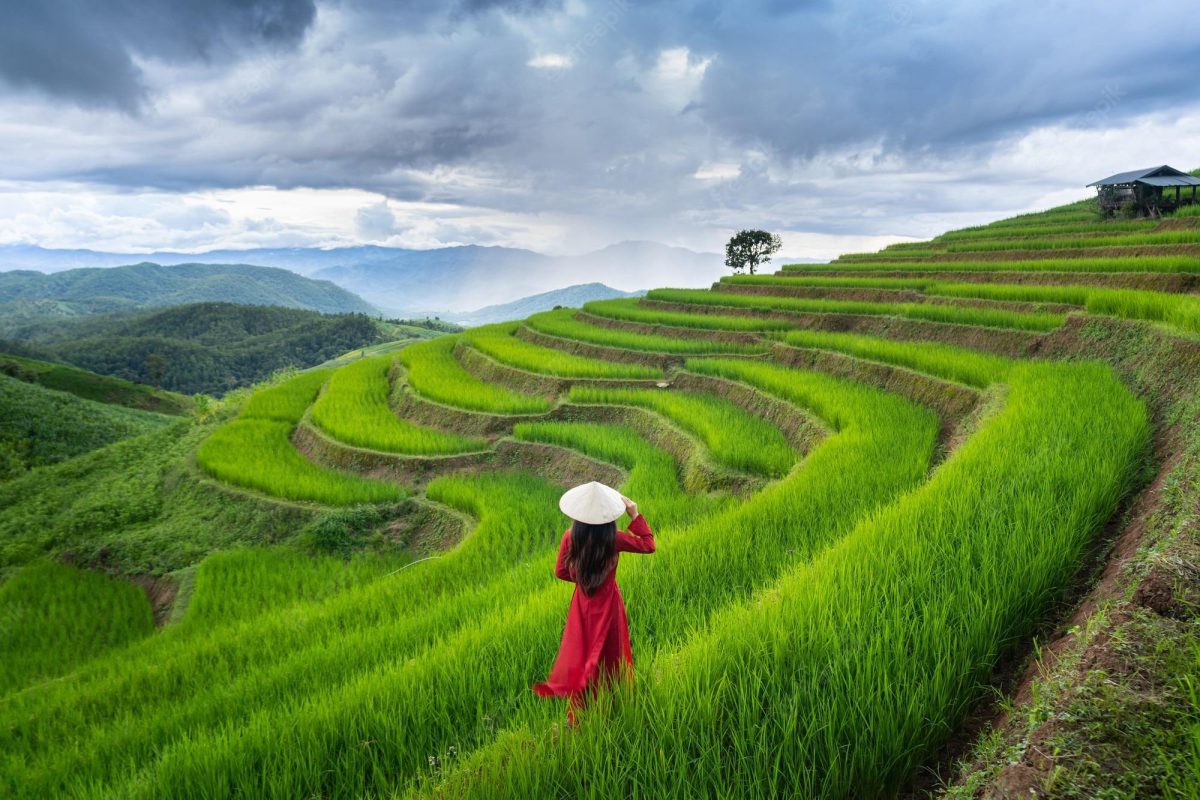
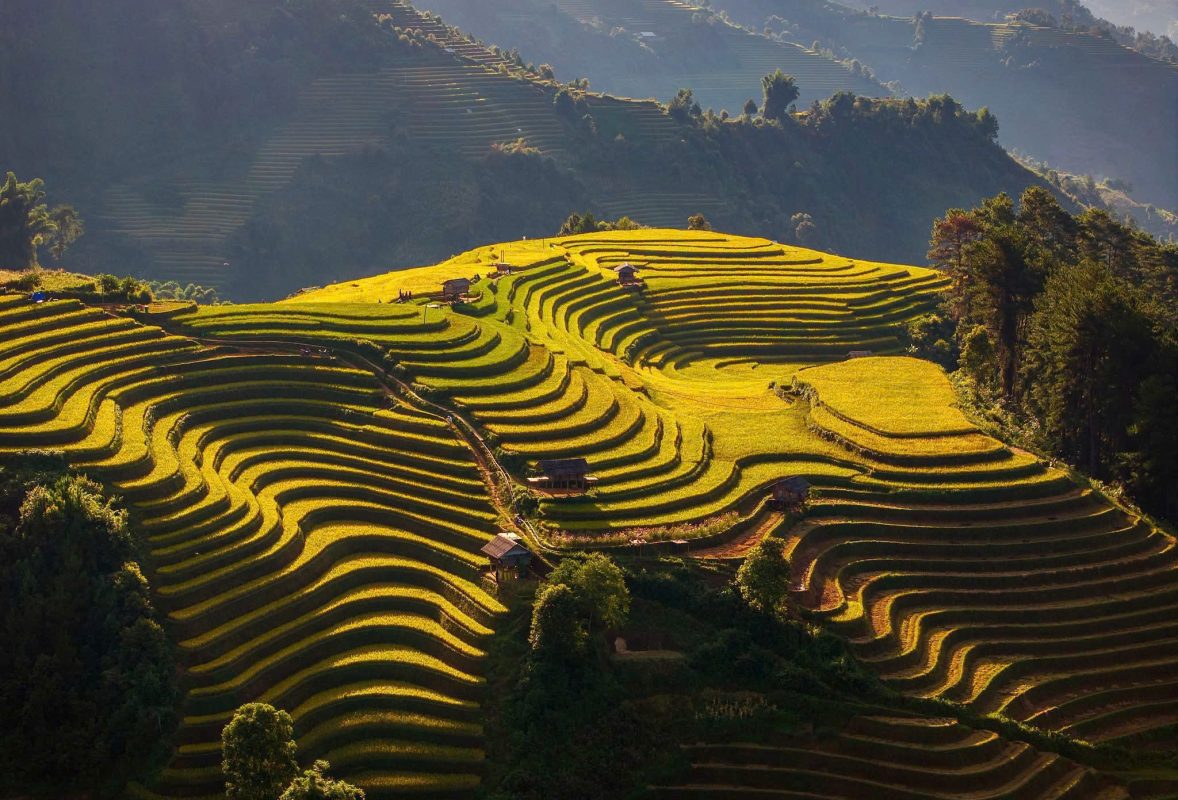
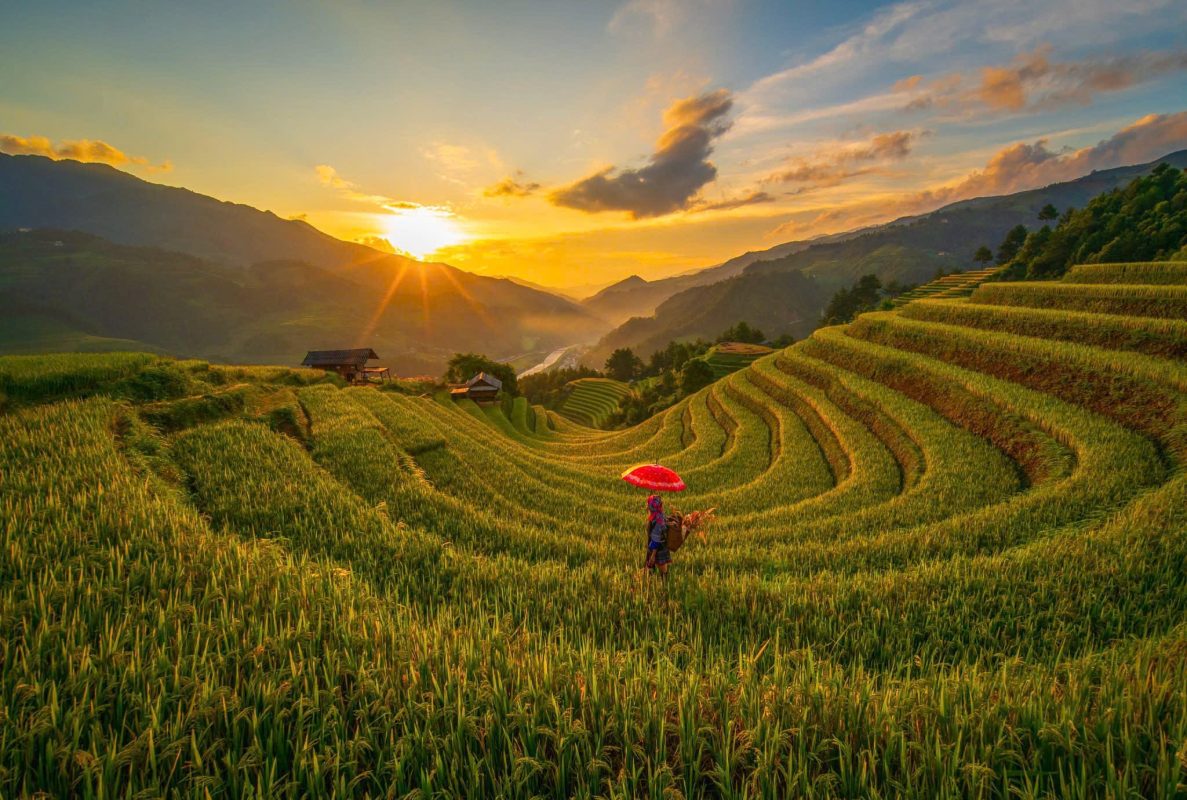
Unlike the enormous terraces found in some of Vietnam’s northern highlands, Pu Luong’s rice fields are often smaller and more intimate. They curve around hillsides and descend toward narrow valleys, creating a landscape that feels closely connected to the villages below.
In the distance, limestone mountains form a dramatic backdrop. Closer to the villages, bamboo, palm trees, streams and wooden houses soften the landscape. The result is a scenery that changes constantly as you walk through it.
The Rice Terraces of Pu Luong
Rice is at the heart of the Pu Luong landscape.
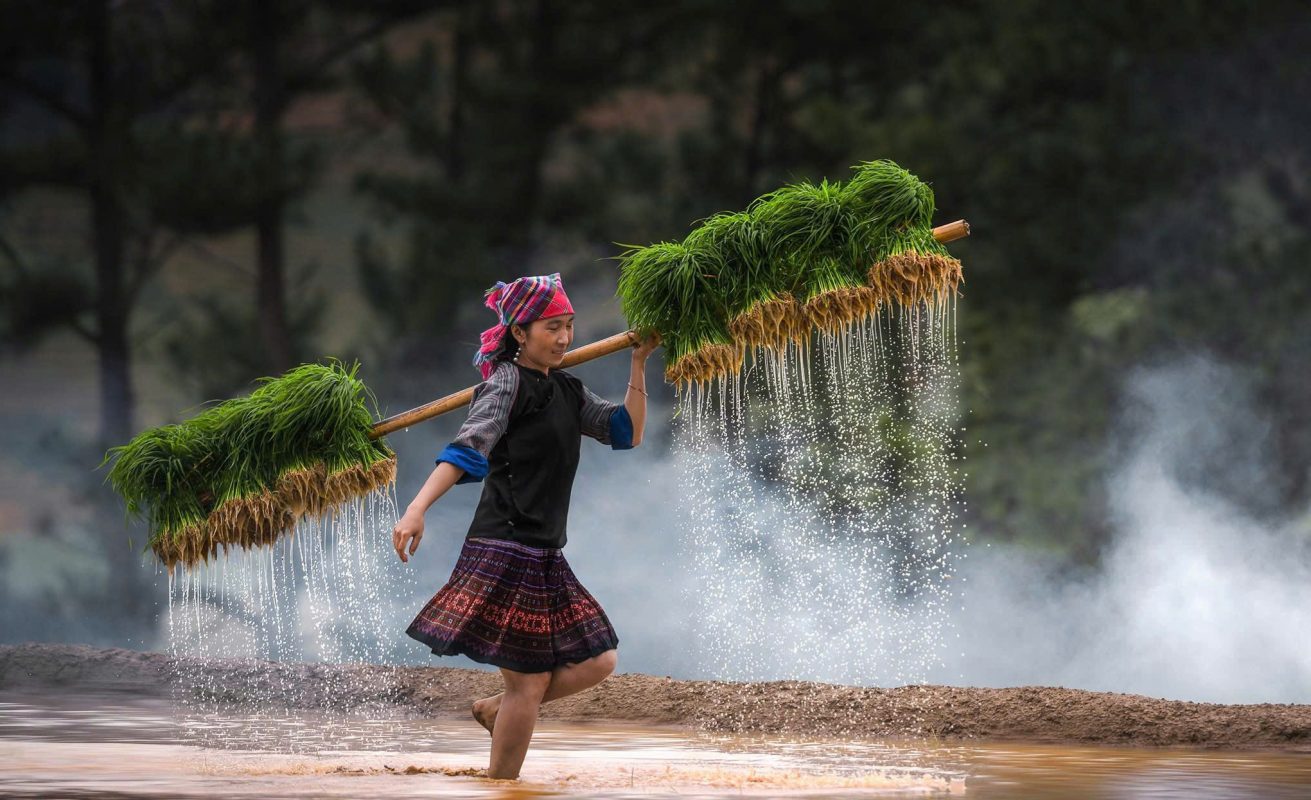
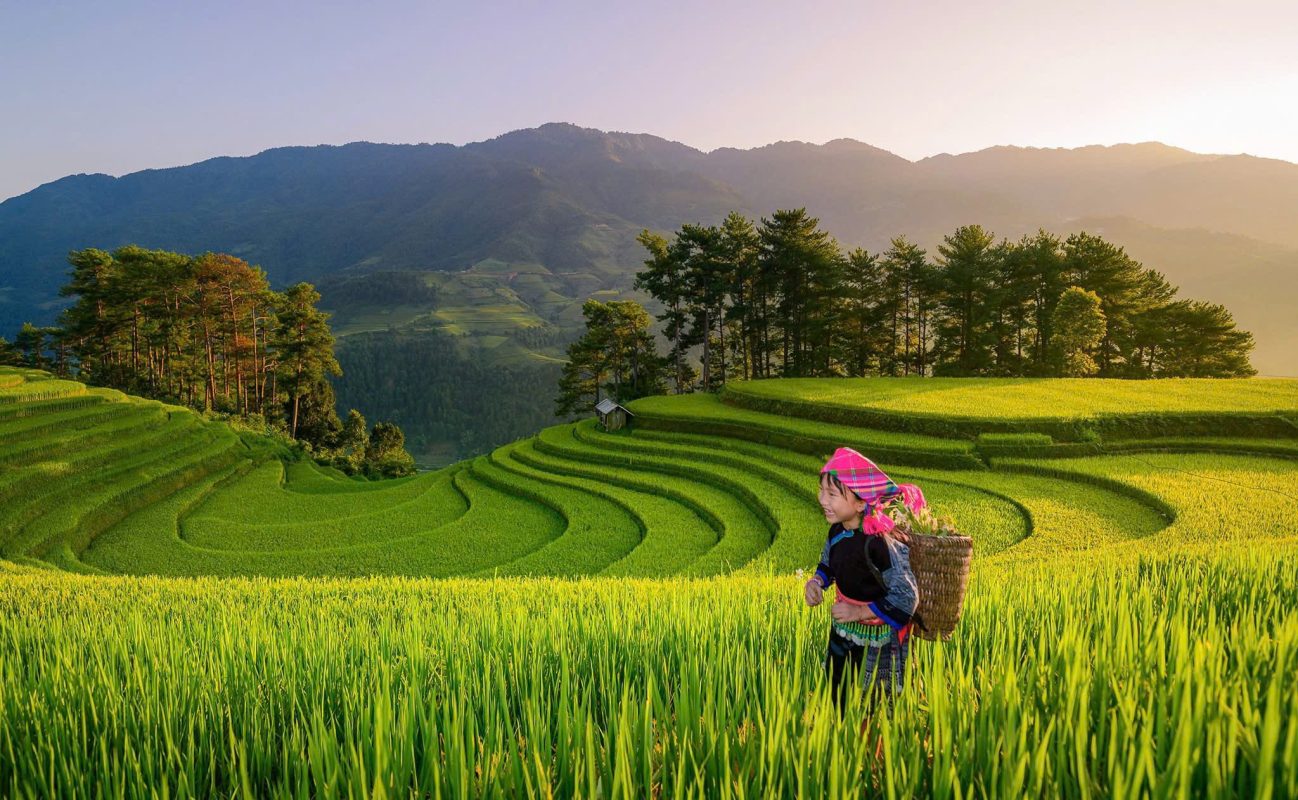
The terraces are not simply decorative scenery created for visitors. They are working agricultural fields that have been shaped and maintained by generations of farming communities. Their appearance changes throughout the year according to the agricultural cycle.
During the early growing season, water can fill the terraces and create reflective surfaces that mirror the sky and surrounding mountains. As the rice grows, the fields become increasingly green. Later in the year, the terraces turn golden as the rice approaches harvest.
Vietnam Tourism notes that Pu Luong’s terraces are particularly vibrant from August through late October, when green fields gradually develop into golden harvest landscapes. Other sources identify late May and early June as another important rice season, meaning the exact appearance depends on the year’s agricultural calendar.
When the Rice Fields Turn Golden
For photographers, harvest season is one of the most beautiful periods to visit Pu Luong.
The mountainsides become layered with shades of gold, green and brown, while farmers work among the terraces. Morning light can create soft shadows across the valleys, and the changing elevation means that different terraces may mature at slightly different times.
September and October are often particularly attractive because temperatures are more comfortable for trekking and the rice terraces can take on their famous golden appearance. Vietnam Tourism specifically recommends early October as an excellent time to see the rice fields shortly before harvest.
However, travelers should not assume that every field will be golden on a specific date. Farming follows weather and agricultural conditions, so the scenery can vary from valley to valley.
The Green Season
Pu Luong is equally beautiful when the terraces are green.
In late spring and early summer, young rice transforms the valleys into intense shades of green. Vietnam Tourism highlights late May and early June as an especially attractive period for seeing the fresh young rice and enjoying the cooler mountain environment.
The green season also brings a sense of abundance to the landscape. Water flows through the irrigation channels, vegetation becomes dense and the surrounding mountains take on a deeper tropical character.
For travelers more interested in hiking and nature than golden rice photography, this can be one of the best times to visit.
Trekking Is the Best Way to See Pu Luong
Pu Luong is best experienced on foot.
The most beautiful parts of the reserve are connected by narrow paths rather than major roads. These trails cross rice terraces, bamboo forests, streams and villages, allowing travelers to move at the same pace as the landscape.
A short walk can take you from a traditional stilt house into a valley surrounded by rice fields. A longer trek may lead through forested slopes toward a waterfall or a remote village.
Vietnam Tourism identifies hiking and trekking as some of Pu Luong’s defining experiences, while also noting that marked trails can be limited and that local guides are useful for navigating longer routes.
Trekking Between the Villages
One of the most rewarding experiences is walking from one village to another rather than simply visiting a single viewpoint.
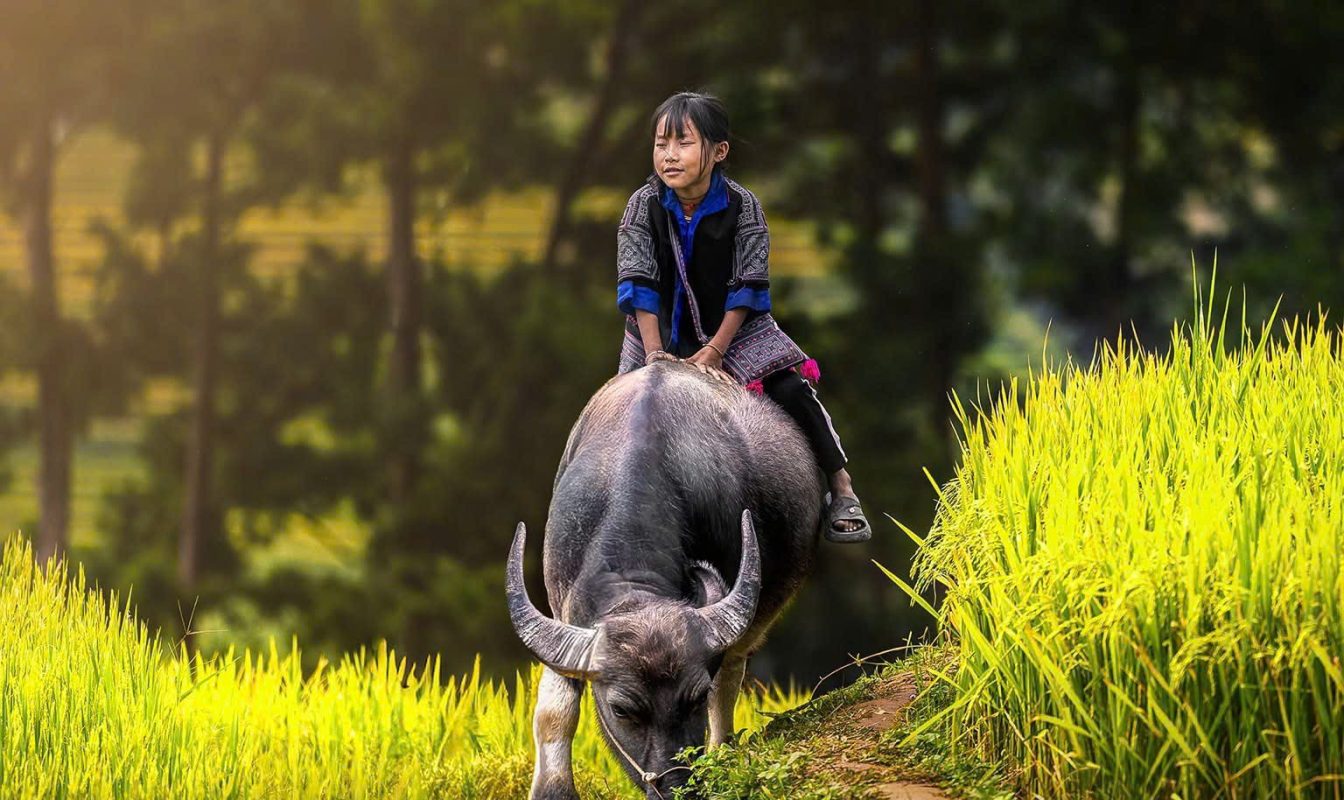
Paths wind through rice fields and along streams, sometimes passing directly between houses. Farmers may be working in the fields, children may be walking along village paths and buffalo can often be seen grazing near the terraces.
The scenery changes gradually rather than dramatically. That is precisely the appeal.
You are not constantly searching for the next attraction. The walk itself becomes the experience.
Don Village
Don Village, or Ban Don, is one of the best-known areas of Pu Luong and a convenient base for exploring the surrounding valleys.
The village is surrounded by rice terraces and mountains, with traditional stilt houses providing accommodation for travelers. Its elevated position also offers attractive views over the valley.
Because of its accessibility, Don Village has more tourism infrastructure than some of the more remote communities. Even so, the surrounding countryside remains strongly agricultural.
It is an excellent starting point for travelers who want a gentle introduction to Pu Luong before taking on longer treks.
Uoi and Lan Villages
Uoi and Lan are among the villages commonly visited on trekking routes through the central valleys of Pu Luong.
The journey between these communities is more important than simply arriving at the villages themselves. The paths pass through rice fields and along hillsides, creating changing views of the surrounding landscape.
Walking between villages also provides a better understanding of how the communities are connected. The trails are not constructed purely for tourism; many form part of the everyday network used by residents.
This makes the experience feel much more natural than visiting a staged cultural attraction.
Kho Muong Village
Kho Muong is one of the most atmospheric villages in Pu Luong.
Located in a valley surrounded by limestone mountains, the village feels noticeably more remote than some of the easier-access areas.
The journey into Kho Muong is part of its appeal. The road and trekking routes descend into the valley, gradually revealing rice fields, forested hills and traditional houses.
For travelers who want a deeper trekking experience, Kho Muong is one of the places worth including in a private itinerary.
Kho Muong Cave
Near Kho Muong is a large cave system commonly known as Bat Cave or Hang Doi.
The cave is part of the limestone landscape underlying the region and adds another dimension to a trekking journey. Instead of simply seeing the mountains from outside, travelers can experience the geological environment from within.
The terrain can be slippery, particularly after rain, so appropriate footwear and a knowledgeable guide are important.
The cave is best approached as part of a wider trek rather than as a standalone sightseeing stop.
Hieu Village and Hieu Waterfall
Hieu Village is another popular area of Pu Luong and is particularly known for its waterfall.
The route toward Hieu Waterfall passes through rice fields and forest before reaching a series of cascading pools.
Vietnam Tourism recommends the waterfall as one of Pu Luong’s signature nature experiences, noting that visitors can walk through the landscape and reach natural pools where they can cool off.
For travelers visiting during the warmer months, a swim in one of the pools can be the perfect reward after a morning of trekking.
Hieu Waterfall: A Natural Mountain Escape
Hieu Waterfall is not one enormous vertical cascade. Instead, the water moves through a series of rocky levels, creating pools and smaller falls along the mountainside.
The surrounding forest makes the area particularly peaceful.
After several hours of walking through rice terraces, arriving at cool mountain water creates a natural pause in the journey.
Conditions can change after heavy rain, so swimming should always depend on the current water level and local safety advice.
The Giant Bamboo Water Wheels
Few sights are more closely associated with Pu Luong than its enormous bamboo water wheels.
These traditional structures are ingenious examples of agricultural engineering. Water flowing through streams turns the wheel, which lifts water into bamboo channels that carry it toward higher rice fields.
The wheels move slowly and rhythmically, creating a gentle sound that blends into the surrounding landscape.
They are functional rather than decorative, and that distinction is important. Their presence demonstrates how closely the agricultural system of Pu Luong has developed around the natural movement of water.
Chieng Lau and the Waterwheel Landscape
The streams around Chieng Lau are among the best places to see these traditional water wheels.
Several wheels can sometimes be seen turning together, creating an almost hypnotic rhythm against the mountains.
Photographers often find the scene particularly compelling in the early morning or late afternoon, when the light is softer and the surrounding mountains become more atmospheric.
The water wheels also make a useful reminder that Pu Luong’s beauty comes from the relationship between people and nature rather than from untouched wilderness alone.
The Thai Communities of Pu Luong
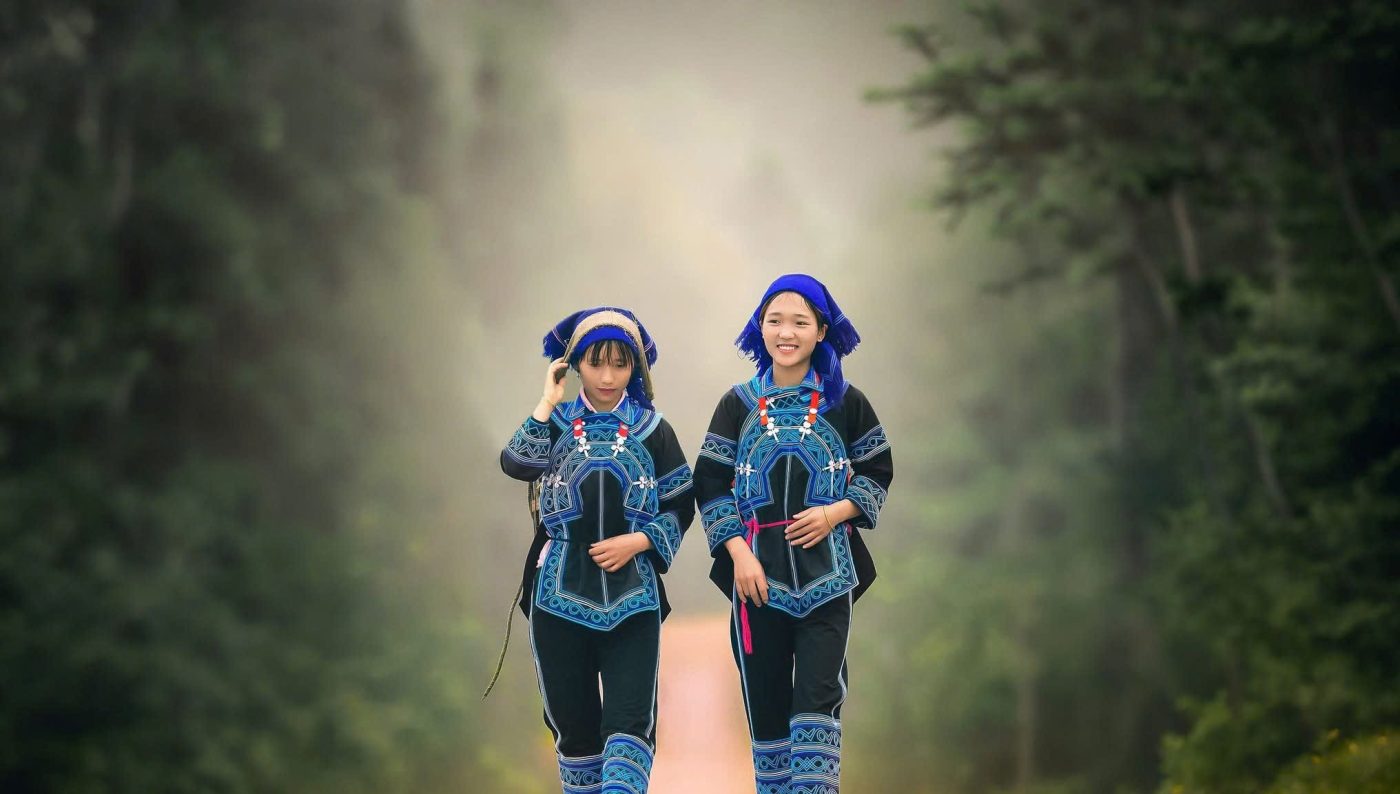
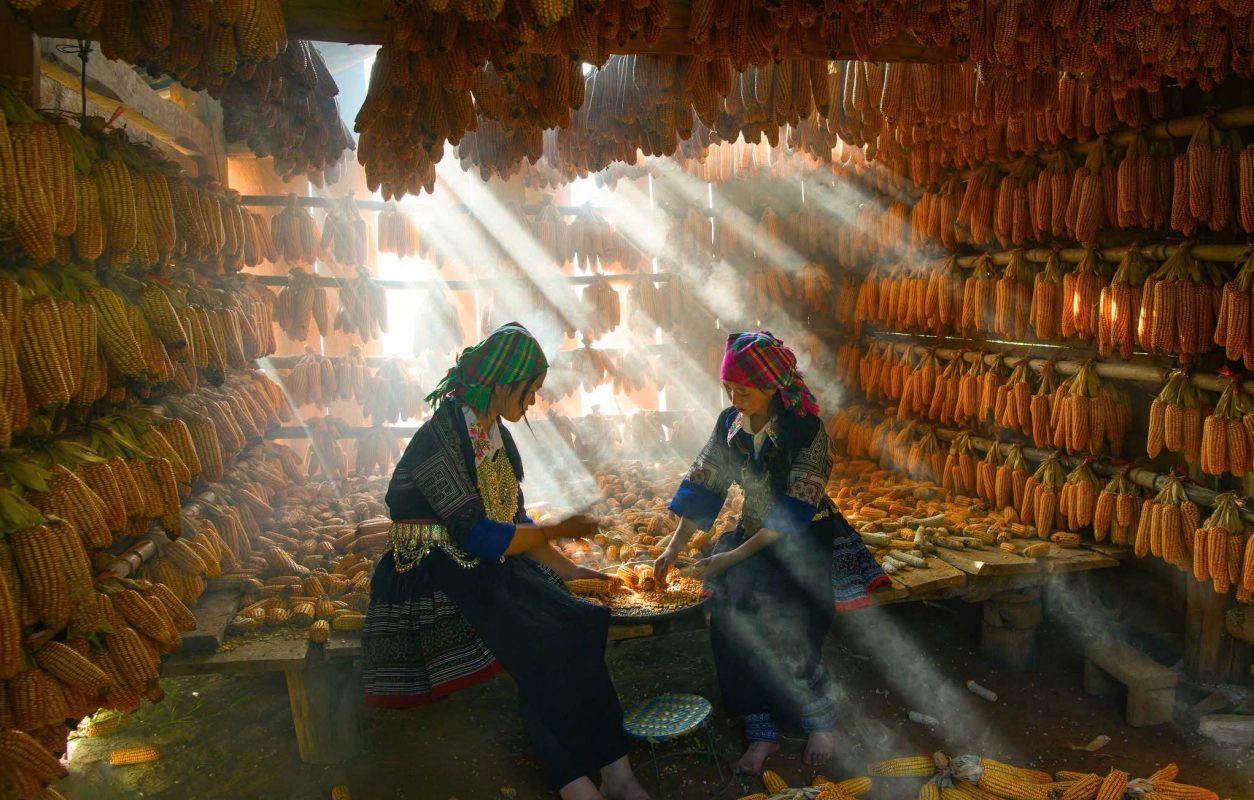
Pu Luong is home primarily to Thai and Muong communities.
The Thai people have a long history of wet-rice cultivation, and their traditional stilt houses are one of the defining architectural features of the valleys.
The houses are elevated above the ground, traditionally providing protection from moisture, animals and seasonal conditions while creating useful space underneath.
A walk through a village can therefore reveal not only beautiful architecture but also the practical relationship between houses, fields, streams and forests.
Vietnam Tourism describes Pu Luong’s Thai communities and stilt houses as an important part of the destination’s cultural character.
Life Inside a Stilt House
Staying in a traditional-style stilt house can be one of the most memorable ways to experience Pu Luong.
Rather than arriving at a large hotel and leaving again the next morning, travelers can sleep within the same architectural tradition that has shaped village life for generations.
The experience varies considerably between properties. Some homestays are simple and communal, while others have been thoughtfully adapted into boutique accommodation with private rooms, comfortable bedding and modern bathrooms.
The best stays preserve the character of the architecture while providing enough comfort for international travelers.
From Homestay to Boutique Retreat
Pu Luong has evolved beyond simple backpacker-style homestays.
Today, travelers can choose from traditional village accommodation, boutique lodges and mountain retreats offering private rooms, terraces, swimming pools and panoramic views.
For a premium journey, this creates an interesting balance.
You can spend the day trekking through rice terraces and villages, then return to a beautifully designed retreat overlooking the mountains.
The luxury comes from the setting and the sense of space as much as from the facilities.
Waking Up Above the Rice Fields
One of the pleasures of staying overnight in Pu Luong is waking before the day becomes hot.
Open your curtains and the valley may already be alive. Farmers begin working in the fields, mist moves between the mountains and birds can be heard from the forest.
A quiet breakfast overlooking the rice terraces can be more memorable than an elaborate hotel buffet in the city.
This is one reason Vietnam Tourism recommends staying in accommodation overlooking the rice fields and spending time simply walking through the surrounding countryside.
Cycling Through Pu Luong
Although trekking is the best way to reach many villages, cycling is an excellent way to cover greater distances.
The roads through the reserve pass through valleys and mountain scenery, allowing travelers to move between villages without committing to a full-day trek.
Some routes are relatively gentle, while mountain roads can be more demanding.
Cycling is particularly enjoyable in the early morning or late afternoon when temperatures are lower.
For families or travelers who want a combination of activity and comfort, a private itinerary can alternate between walking and cycling depending on the day’s terrain.
Pu Luong for Adventure Travelers
Pu Luong offers adventure without requiring extreme expedition-style travel.
Trekking, cycling, cave exploration, waterfall walks and mountain roads provide plenty of opportunities for active travelers.
The terrain can become challenging after rain, particularly on narrow trails and steep sections.
Good hiking shoes are therefore essential, and travelers should avoid treating the reserve like a simple paved countryside walk.
A private guide can also adjust the route according to fitness level, weather and interests.
Pu Luong for Slow Travelers
Pu Luong may be even more rewarding for travelers who are not particularly interested in strenuous trekking.
You can take a short morning walk, spend the afternoon reading beside a pool, cycle through a village, enjoy a long lunch or simply sit on a terrace overlooking the rice fields.
The destination works because there is no pressure to fill every hour.
Vietnam Tourism describes Pu Luong as a retreat where travelers can step away from the pace of Hanoi and immerse themselves in nature and rural life.
The Food of Pu Luong
Food is an important part of the Pu Luong experience.
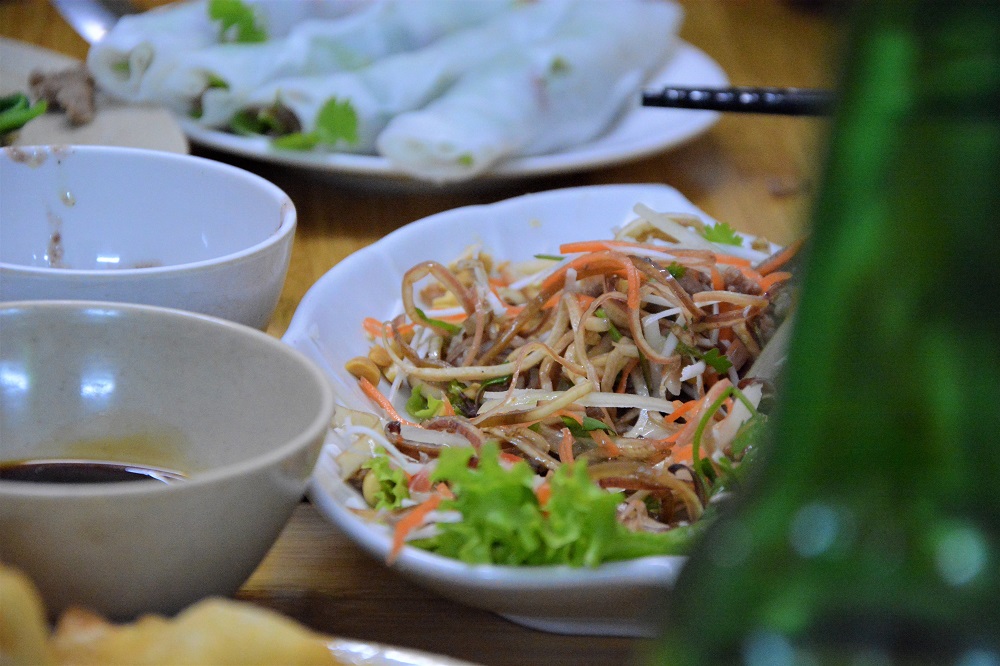
Meals often make use of ingredients grown or raised within the surrounding agricultural landscape. Rice, vegetables, bamboo shoots, herbs, chicken, pork, duck and freshwater fish commonly appear on menus.
One of the region’s well-known dishes is Co Lung duck, associated with the Co Lung area and traditionally prepared with local herbs and spices.
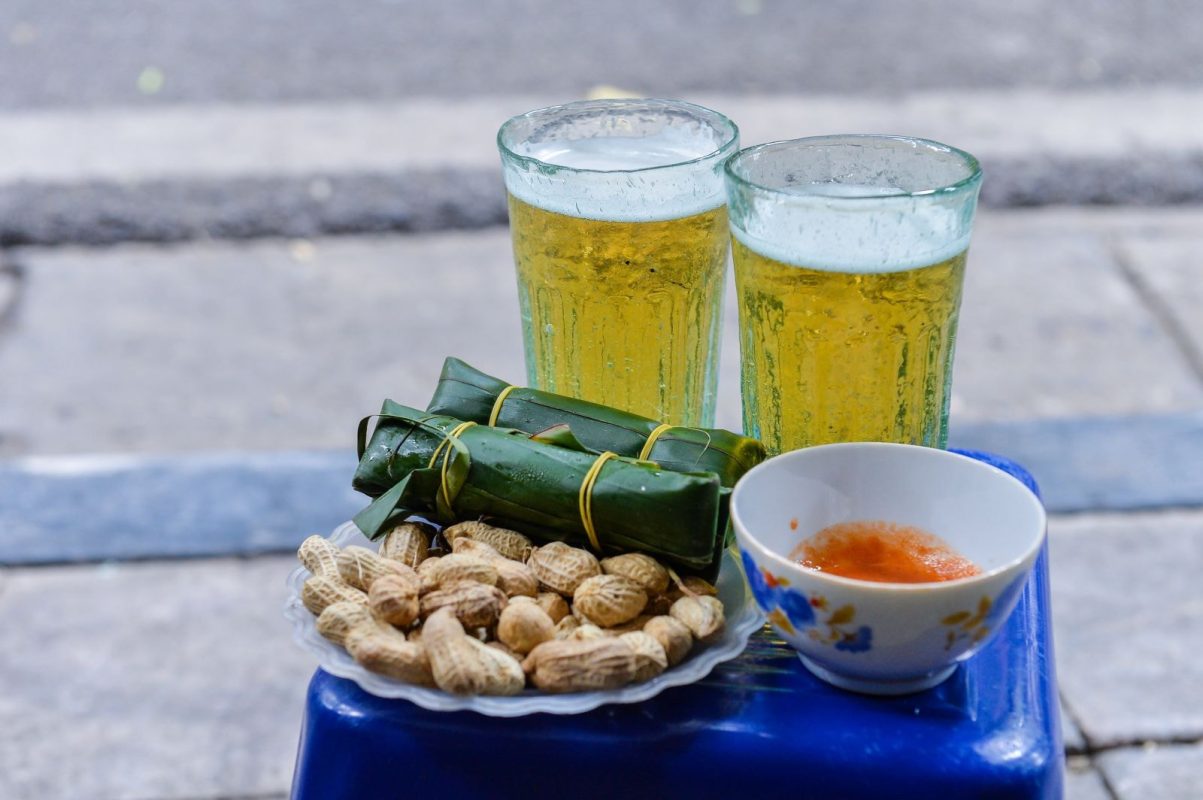
Com Lam, sticky rice cooked inside bamboo tubes, is another northern mountain specialty worth trying.
Grilled stream fish, bamboo shoots and seasonal vegetables can also appear in village meals and lodge menus.
Com Lam and Mountain Cuisine
Com Lam is particularly suited to the Pu Luong landscape.
Sticky rice is placed inside bamboo tubes and cooked over heat, allowing the rice to absorb a subtle aroma from the bamboo.
It is simple food, but the setting changes the experience.
Eating warm bamboo-cooked rice after several hours of walking through mountain valleys feels completely different from ordering the same dish in a city restaurant.
That is part of the appeal of rural travel: food becomes connected to place.
Sharing a Traditional Meal
A meal in Pu Luong can be an opportunity to experience hospitality as much as cuisine.
Some homestays serve communal dinners where guests sit together and share several dishes.
Traditional rice wine may also be offered during celebrations or social occasions. Visitors should feel comfortable declining alcohol if they do not drink.
The important part is the interaction.
Food provides a natural way to learn about ingredients, farming, family life and regional traditions without turning the experience into a formal cultural performance.
Pho Doan Market
Pho Doan Market is one of the more interesting cultural experiences for travelers who happen to be in Pu Luong at the right time.
The market traditionally serves surrounding communities and brings together agricultural products, food, textiles and other goods.
It provides a different perspective from the trekking routes because you see people from the wider region gathering for everyday commerce.
Market days and schedules can change, so travelers should confirm current arrangements before planning an itinerary around a specific market visit.
Pu Luong in Spring
March and April can bring fresh green landscapes and milder temperatures.
The rice terraces may not yet have the dramatic golden appearance associated with harvest season, but the mountains can be lush and the conditions are often pleasant for walking.
This is a good period for travelers who prefer gentle trekking, cycling and nature rather than intense heat.
The landscape feels fresh and quiet, particularly in the mornings.
Pu Luong in Late May and June
Late May and early June mark an important rice-growing period.
Young rice creates vibrant green terraces, and the combination of water, vegetation and limestone mountains produces some of Pu Luong’s most photogenic landscapes.
Vietnam Tourism specifically highlights late May and early June for travelers who want to see the young rice fields.
Temperatures can become hot during the middle of the day, so early-morning trekking and afternoon relaxation are sensible ways to structure the itinerary.
Pu Luong in Summer
From June through August, Pu Luong becomes increasingly green.
The surrounding forest is dense, rice fields are full of vegetation and waterfalls can be particularly attractive after rainfall.
However, summer can also bring heat, humidity and storms.
For travelers planning longer treks, starting early is important. Rain can also make trails slippery, so footwear with good grip is essential.
Pu Luong in September and October
September and October are among the most attractive months for many travelers.
The rice terraces begin turning golden, temperatures become more comfortable and the landscape takes on the colors associated with the classic Pu Luong photographs.
Vietnam Tourism identifies early October as a particularly good time to see the terraces shortly before harvest.
For photographers, this is one of the strongest periods of the year.
For trekkers, the cooler conditions make longer walks much more enjoyable.
Pu Luong in Winter
December through February can be cooler, especially in the mornings and evenings.
Fog and cloud may occasionally settle over the valleys, creating an atmospheric mood that is very different from the bright green and golden landscapes of warmer seasons.
Travelers visiting in winter should bring warm layers.
If your priority is comfortable trekking, the shoulder seasons are generally more attractive. If your priority is peaceful retreats and misty mountain scenery, winter has its own appeal.
How to Get From Hanoi to Pu Luong
The easiest way to reach Pu Luong from Hanoi is by road.
A private car offers the greatest comfort and flexibility, particularly for travelers carrying luggage or combining Pu Luong with other destinations.
The journey generally takes around four to five hours, although weather and traffic can affect the exact duration. Vietnam Tourism gives a similar estimate for private road travel from Hanoi.
Some travelers use shared limousine transfers, while others combine public transport with onward transportation from Mai Chau.
For a premium private itinerary, however, a private vehicle is usually the most seamless option.
Why Private Transportation Makes Sense
Pu Luong is spread across valleys and villages rather than concentrated in one compact town.
Once you arrive, having your own vehicle allows you to reach different trailheads, villages and viewpoints without depending on a fixed shared schedule.
It also makes it easier to combine trekking with other activities.
You might hike in the morning, visit a waterfall after lunch and then drive to a scenic lodge for sunset.
That flexibility is particularly valuable when traveling with families or private groups.
How Long Should You Stay in Pu Luong?
A minimum of two days and one night gives travelers a taste of the region.
You can travel from Hanoi, explore a village, enjoy a short trek, stay overnight and continue exploring the following morning.
However, three days and two nights is a better choice for travelers who want to understand Pu Luong rather than simply visit it.
The extra night allows time for longer trekking, Hieu Waterfall, village experiences, cycling and a more relaxed stay at your accommodation.
It also reduces the feeling that you are spending most of your trip in the car.
A Sample 3-Day Pu Luong Journey
Day 1 — Hanoi to Pu Luong
Leave Hanoi in the morning by private vehicle and travel toward the mountains of Thanh Hoa. Along the way, the urban landscape gradually gives way to valleys, forests and agricultural countryside. Arrive in Pu Luong for lunch before beginning an afternoon walk through rice terraces and traditional villages. Continue toward your boutique lodge or traditional-style stilt accommodation and enjoy the changing mountain light from the terrace before dinner.
Day 2 — Rice Terraces, Water Wheels and Hieu Waterfall
Wake early for sunrise over the rice fields and enjoy breakfast overlooking the valley. Begin a guided trek through villages, bamboo forests and agricultural paths before reaching the traditional water wheels along the mountain streams. Continue toward Hieu Village and walk to Hieu Waterfall, where you can relax beside the pools or swim when conditions are suitable. Return to your accommodation in the afternoon for time to rest, enjoy the scenery and experience a relaxed dinner featuring regional mountain cuisine.
Day 3 — Kho Muong and Return to Hanoi
After breakfast, travel toward Kho Muong for a more adventurous morning walk through the limestone landscape and surrounding villages. Explore the valley and, depending on conditions and fitness level, visit the nearby cave area with your guide. Enjoy lunch before beginning the private journey back toward Hanoi. Arrive in the capital in the late afternoon or evening, or continue directly to your next destination as part of a longer Northern Vietnam journey.
Pu Luong Compared With Sapa
Travelers often compare Pu Luong with Sapa because both destinations offer mountain landscapes, rice terraces and ethnic cultures.
The atmosphere, however, is quite different.
Sapa has developed into a major tourism center with hotels, restaurants, transportation infrastructure and large numbers of visitors. Pu Luong remains much quieter and more focused on village trekking, countryside accommodation and nature.
Vietnam Tourism itself presents Pu Luong as a quieter alternative to more heavily visited mountain destinations, emphasizing its rice fields, ethnic communities and slower pace.
If you want dramatic mountain infrastructure and a wider range of hotels and attractions, Sapa may be the better choice. If you want peaceful valleys, trekking and rural immersion, Pu Luong is often the more natural fit.
Pu Luong and Mai Chau
Pu Luong and Mai Chau are close enough to combine in one journey.
Mai Chau is generally more open and accessible, with a broad valley and relatively gentle cycling routes. Pu Luong is more mountainous and better suited to trekking through rice terraces and forested valleys.
The two destinations therefore complement each other.
A private itinerary can spend a night in Mai Chau before continuing deeper into Pu Luong, creating a gradual transition from easy countryside exploration to more immersive mountain trekking.
Responsible Travel in Pu Luong
Pu Luong’s greatest attraction is also its greatest vulnerability.
The destination’s appeal comes from its quiet villages, agricultural landscape and relatively low level of mass tourism. As visitor numbers increase, protecting that character becomes increasingly important.
Travelers should avoid littering, reduce unnecessary plastic use, respect private homes and ask before photographing people.
When staying in villages, it is important to remember that the houses, fields and paths are part of people’s everyday lives.
Responsible travel means participating respectfully rather than treating rural communities as a backdrop for photographs.
Respecting Thai and Muong Culture
Cultural sensitivity is particularly important in Pu Luong because visitors frequently walk directly through inhabited villages.
Dress modestly when visiting homes or religious and community spaces.
Follow your guide’s advice about entering houses, taking photographs and interacting with residents.
A smile and a simple greeting can go a long way, but travelers should not assume that every person wants to be photographed.
The best cultural experiences happen naturally, through conversation, food and shared moments rather than forced performances.
What to Pack for Pu Luong
Good walking shoes should be at the top of your packing list.
Trails can become muddy or slippery after rain, especially around waterfalls and steep rice-field paths.
Lightweight clothing is ideal during warmer months, while a light jacket or warmer layers are useful from late autumn through winter.
Bring insect repellent, sunscreen, a reusable water bottle and a small daypack.
For longer treks, walking poles can also be useful, particularly after rain.
What Pu Luong Is Not
Pu Luong is not the place to visit if you are looking for nightlife, shopping malls or a busy entertainment scene.
Evenings are quiet.
After dinner, most travelers return to their rooms, sit on a terrace, talk with companions or simply listen to the sounds of the countryside.
For some visitors, this may feel too quiet.
For others, it is precisely the reason to come.
The Luxury of Doing Less
There is a particular kind of luxury in Pu Luong that cannot be measured by the number of hotel facilities.
It is waking up without traffic noise.
It is having breakfast overlooking a valley.
It is walking for two hours without seeing a major road.
It is returning from a trek and sitting beside a swimming pool surrounded by mountains.
It is having an entire afternoon with nowhere else to be.
For travelers accustomed to fast-paced itineraries, this can be surprisingly restorative.
Why Pu Luong Works So Well for Couples
Pu Luong is one of Vietnam’s most naturally romantic mountain escapes.
There are no elaborate attractions required.
A private terrace overlooking rice fields, a sunrise breakfast, a walk through a quiet valley and dinner beneath the mountains can create a more intimate experience than a busy resort destination.
Vietnam Tourism has also highlighted Pu Luong as a romantic destination, particularly for travelers staying in traditional stilt houses overlooking the rice paddies.
For honeymooners, Pu Luong works particularly well as a slower chapter between Hanoi and the rest of a longer Vietnam journey.
Why Families Can Enjoy Pu Luong
Families can experience Pu Luong without turning the trip into an intense trekking expedition.
Short village walks, cycling, waterfalls, rice fields and traditional houses provide plenty of activities for children.
The itinerary can be adjusted around age and fitness.
Younger children may enjoy a gentle countryside walk and waterfall visit, while teenagers can take longer treks and explore the mountain landscape more actively.
Private transportation and accommodation also make the experience considerably more comfortable for families.
Why Photographers Love Pu Luong
Pu Luong offers a constantly changing palette of landscapes.
Morning mist hangs above the valleys.
Rice terraces reflect the sky during the early growing season.
Green fields dominate the summer months.
Golden terraces appear around harvest.
Water wheels create movement beside mountain streams.
Traditional houses sit beneath forested slopes.
And at sunset, the limestone mountains become layered silhouettes.
The challenge is not finding something to photograph.
It is deciding what not to photograph.
A Different Kind of Vietnam
Pu Luong offers something that many travelers increasingly seek: a chance to see Vietnam away from its major tourist centers.
There are no grand monuments here.
No famous boulevard runs through the valleys.
No large attraction demands your attention.
Instead, the landscape asks you to notice smaller things.
A farmer walking through the rice fields.
Water moving through a bamboo channel.
Smoke rising from a kitchen.
Children walking home through a village.
A traditional house illuminated by late afternoon sunlight.
These details often become the strongest memories.
Why Choose Vietnam Women Travel for Pu Luong?
Vietnam Women Travel – Premium Private Tours Led by Women creates private journeys for travelers who want to experience Vietnam with greater comfort, flexibility and cultural depth.
Pu Luong is particularly well suited to this approach because there is no single itinerary that works for everyone. Some travelers want challenging trekking, while others prefer gentle walks and a luxury retreat. Some want to spend time with village communities, while others want photography, food and nature.
Our private journeys can be designed around those differences.
A couple can combine a luxury mountain retreat with private trekking and romantic dining.
A family can enjoy shorter walks, waterfalls and comfortable accommodation.
A small private group can combine trekking, cycling, cultural experiences and regional cuisine.
And travelers arriving in Hanoi for the first time can include Pu Luong as part of a broader Northern Vietnam journey.
Pu Luong as a Slow-Travel Destination
The real value of Pu Luong is not how many attractions you can see in two days.
It is how deeply you can experience the landscape.
A morning trek can become an afternoon conversation.
A rice terrace can become a lesson in farming.
A traditional house can become a window into architecture and family life.
A meal can become a cultural experience.
And a quiet evening can become the moment when you finally stop thinking about the next destination.
That is the essence of slow travel.
The Morning You Will Remember
Imagine waking before sunrise.
The valley below your room is covered with a thin layer of mist. The mountains appear as dark silhouettes, and the first sounds of village life begin somewhere beyond the rice fields.
You step onto the terrace with a cup of Vietnamese coffee.
As the sun rises, the rice terraces slowly become visible.
There is no traffic.
No crowds.
No schedule demanding your attention.
Only mountains, rice fields, forest and the quiet rhythm of rural Vietnam.
That is Pu Luong.
Plan Your Pu Luong Journey
Pu Luong is one of Northern Vietnam’s most rewarding destinations for travelers who want nature, culture and a slower pace.
Its rice terraces provide the scenery. Its forests and waterfalls provide adventure. Its Thai and Muong villages provide cultural depth. Its traditional water wheels reveal the relationship between people and the landscape.
And its peaceful atmosphere gives travelers something increasingly difficult to find: space.
With Vietnam Women Travel – Premium Private Tours Led by Women, your Pu Luong journey can begin in Hanoi and continue into the mountains by private vehicle, with carefully selected accommodation, women-led experiences, guided trekking and thoughtfully planned cultural encounters.
Whether you visit during the green rice season, the golden harvest, the cool autumn months or the misty winter, Pu Luong offers a side of Vietnam that cannot be understood from a city hotel.
You have to walk into the valley.
You have to hear the water wheels.
You have to sit above the rice fields.
And you have to slow down enough to notice the details.
Vietnam Women Travel – Premium Private Tours Led by Women
Private journeys. Women guides. Authentic Vietnam.