Quy Nhon Travel Guide: Turquoise Bays, Cham Heritage, Fishing Villages & Vietnam’s Quiet Coast
Quy Nhon is the kind of coastal destination that rewards travelers who are willing to look beyond Vietnam’s most famous beach cities. Set along the South Central Coast, the city combines a long waterfront promenade with quiet bays, offshore islands, fishing villages, seafood markets and some of the most important surviving Cham monuments in central Vietnam. While development is accelerating, Quy Nhon still has a more relaxed atmosphere than better-known beach destinations such as Da Nang and Nha Trang. Lonely Planet recently highlighted Quy Nhon as one of Vietnam’s emerging coastal destinations, particularly for its beaches, seafood, fishing communities and relatively uncrowded atmosphere.
The appeal of Quy Nhon is not concentrated in one landmark. It is the relationship between the city and its coastline. In the morning, fishing boats return with the day’s catch. By afternoon, the turquoise water around Ky Co and Hon Kho becomes the focus. At sunset, people gather along the waterfront promenade, while inland hills preserve traces of the ancient Champa kingdom. This combination gives Quy Nhon a character that feels distinctly Central Vietnamese.
For travelers looking for a more sophisticated alternative to the conventional beach circuit, Quy Nhon is particularly interesting. You can stay in a luxury coastal resort, explore ancient brick towers with a private guide, travel by boat to secluded bays, eat seafood directly beside the fishing villages and still return to a comfortable city hotel or beachfront retreat at the end of the day.
Where Is Quy Nhon?
Quy Nhon is the capital of Binh Dinh Province on Vietnam’s South Central Coast, positioned roughly between Da Nang and Nha Trang. Phu Cat Airport lies about 30–35 km north of the city and provides the main air gateway, with flights connecting Quy Nhon with major Vietnamese cities including Hanoi and Ho Chi Minh City. Dieu Tri railway station is about 10 km from the center and connects the area with Vietnam’s north–south railway network.
The geography is one of Quy Nhon’s strengths. The urban center curves around a broad bay, while mountains, fishing villages and smaller beaches begin almost immediately outside the city. This makes it possible to combine a comfortable city stay with completely different landscapes within a single private day trip.
Why Quy Nhon Feels Different
Quy Nhon does not have the intensity of Nha Trang or the urban sophistication of Da Nang. Its waterfront is spacious, the city is relatively easy to navigate and the surrounding coastline quickly becomes rural.
Lonely Planet describes Quy Nhon as increasingly popular while still retaining an authentic atmosphere, with traditional fishing villages and hidden coves only a short distance from the center.
That balance is perhaps the destination’s greatest advantage.
You can spend the morning walking beside the sea, the afternoon swimming in turquoise water and the evening eating freshly caught seafood without ever feeling that you have left the rhythm of a Vietnamese coastal city.
Quy Nhon Beach & The Waterfront
The city’s main beach stretches along a broad waterfront promenade, creating one of the most pleasant urban seaside environments in Central Vietnam.
Early morning is particularly atmospheric.
Residents walk and exercise beside the sea.
Fishermen prepare their boats.
Street vendors begin serving breakfast.
The beach gradually becomes busier as the sun rises.
In the evening, the promenade becomes one of the city’s social centers, with families, couples and groups gathering beside the water. Lonely Planet notes that Quy Nhon’s roughly 5 km waterfront promenade is one of the defining features of the city.
Sunrise on Quy Nhon Beach
Wake early and the city looks completely different.
The light is soft.
The water is calm.
The beach is relatively quiet.
And local life begins before the heat of the day arrives.
For photographers, sunrise is particularly rewarding because fishing boats and the surrounding hills create natural layers across the bay.
For everyone else, it is simply one of the best ways to experience Quy Nhon before the city becomes active.
Ky Co Beach
If Quy Nhon has one postcard landscape, it is Ky Co Beach.
The beach sits on a sheltered stretch of coastline surrounded by rocky cliffs, with clear turquoise water and pale sand.
The scenery is spectacular, but Ky Co is no longer a completely undiscovered secret. Lonely Planet notes that its popularity has grown considerably, particularly among domestic travelers.
For a more enjoyable experience, timing matters.
Early morning generally offers a quieter atmosphere and softer light.
A private boat or carefully arranged excursion can also make the journey more comfortable than simply arriving with a large group.
The Road to Ky Co
The journey toward Ky Co is part of the experience.
The coastline becomes increasingly rugged as the road leaves the city and approaches the Nhon Ly peninsula.
Green hills rise above the sea.
Small coves appear below.
Fishing boats move across the water.
And the road opens to dramatic coastal viewpoints.
Rather than rushing directly to the beach, a private itinerary can include several viewpoints and a stop in Nhon Ly village.
Eo Gio
Just north of Ky Co lies Eo Gio, whose name can be translated roughly as “Windy Strait.”
The landscape is dominated by steep rocky cliffs, blue water and a curving coastal viewpoint.
The site is particularly beautiful when the wind is strong and the sea is moving beneath the cliffs.
Eo Gio is best visited in the early morning or late afternoon, when the sunlight creates stronger contrasts across the rock formations.
The surrounding landscape is also closely connected with Nhon Ly fishing village, making it easy to combine nature and coastal culture in the same excursion.
Nhon Ly Fishing Village
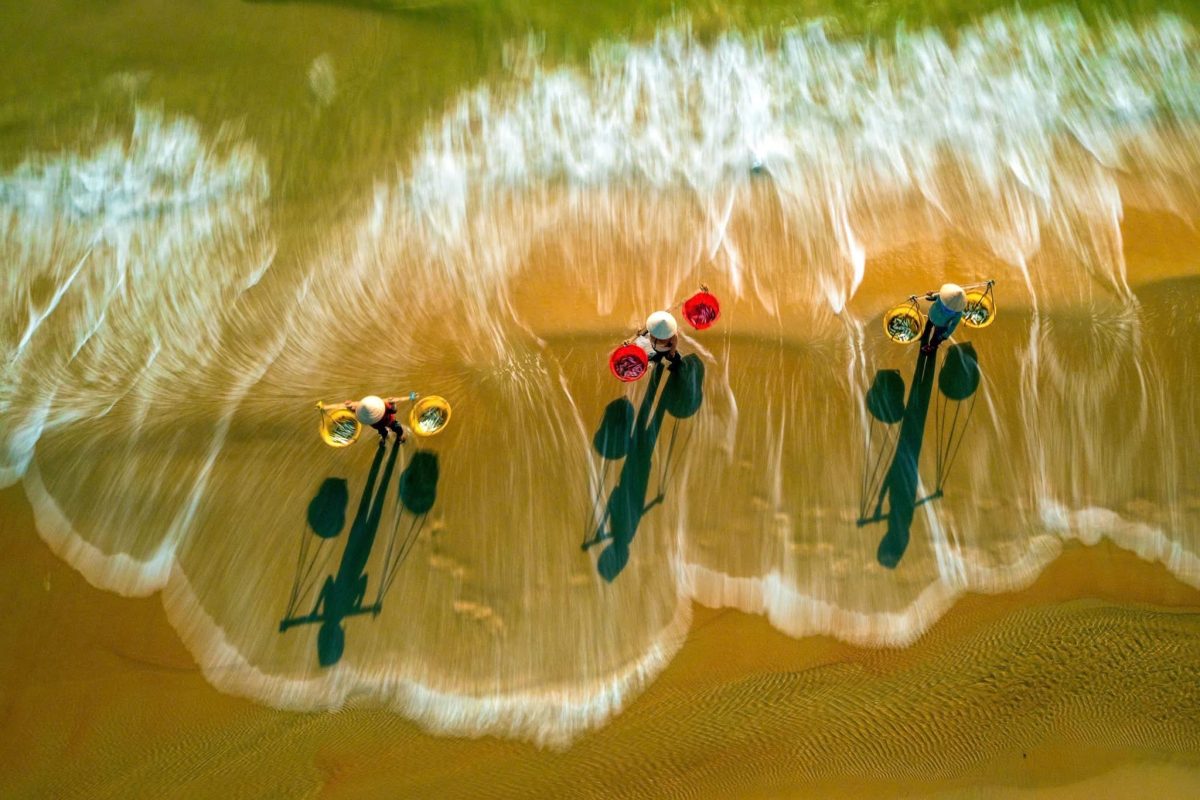
Nhon Ly is one of the places where Quy Nhon’s coastal identity becomes tangible.
The village sits between mountains and the sea, with narrow streets leading toward the fishing harbor.
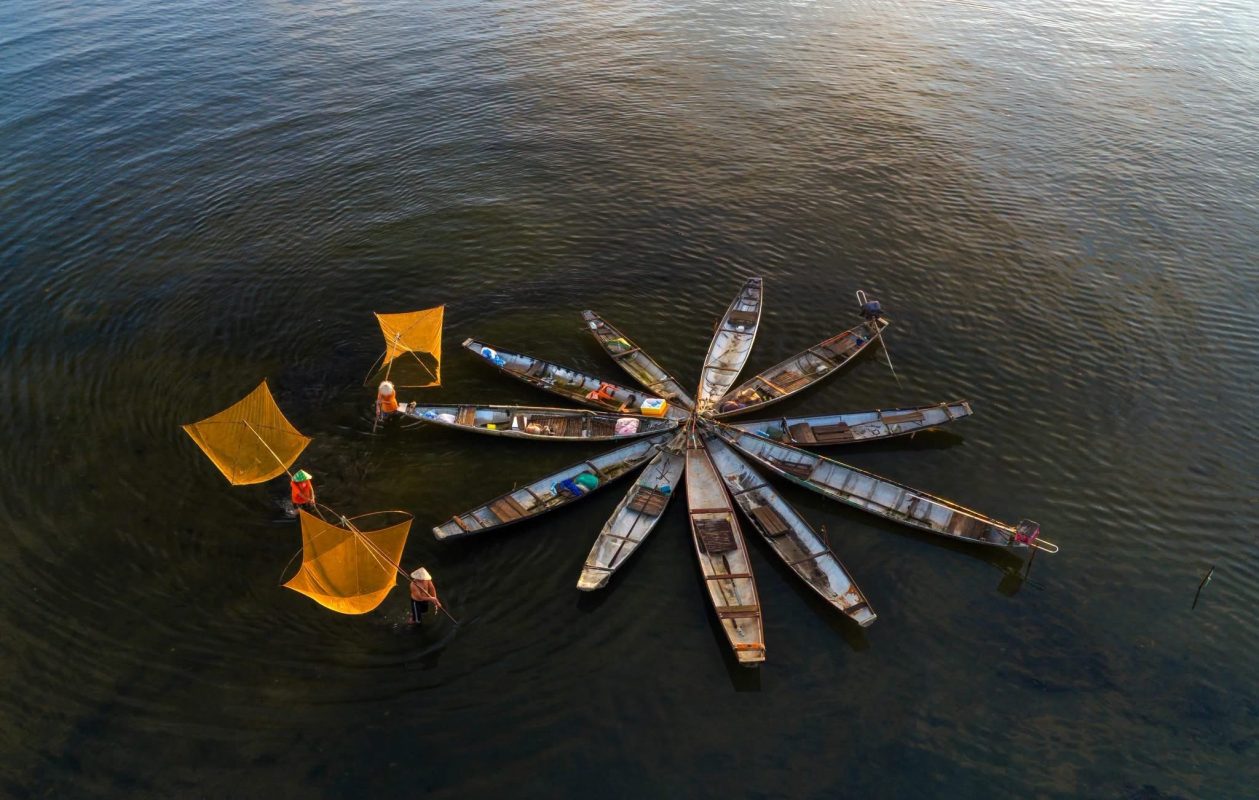
Boats gather along the shoreline.
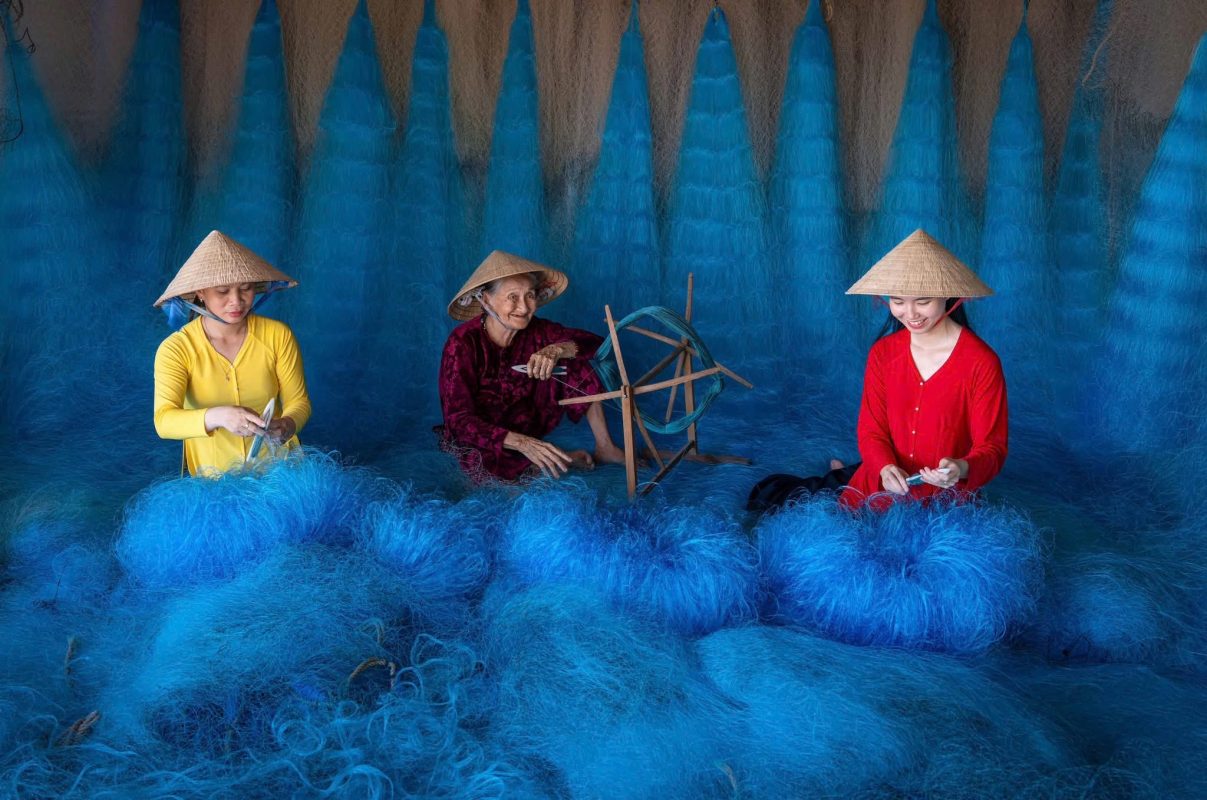
Fishing nets are repaired.
Seafood moves from the water toward kitchens and markets.
The experience is especially interesting in the morning.
Instead of simply photographing the boats, take time to understand how the community depends on the sea.
That connection between landscape and livelihood is one of the most valuable parts of traveling around Quy Nhon.
Nhon Hai Fishing Village
East of the city, Nhon Hai sits in a picturesque coastal setting backed by green hills.
The village is known for its fishing community and access to the waters around Hon Kho.
Lonely Planet highlights Nhon Hai as one of the most rewarding places to experience Quy Nhon’s coastal life, including its seafood and small-scale village atmosphere.
A morning visit can combine the village, breakfast and a boat excursion before the strongest heat of the day.
Hon Kho Island
Hon Kho is one of the easiest island experiences to add to a Quy Nhon itinerary.
The island lies off the coast near Nhon Hai and is surrounded by clear water and rocky landscapes.
Depending on sea conditions, travelers can swim, snorkel or simply enjoy a boat trip around the coast.
The underwater environment is particularly attractive when visibility is good, but conditions vary seasonally.
For travelers who prefer a relaxed experience, the boat journey itself can be just as enjoyable as the snorkeling.
Cu Lao Xanh
Further offshore, Cu Lao Xanh, or Green Island, offers a more remote island experience.
The island is associated with fishing communities, coastal scenery and a historic lighthouse.
Because it lies farther from the city, visiting requires more planning and suitable sea conditions.
For a three-day itinerary, Hon Kho is usually easier to incorporate.
For travelers staying longer, Cu Lao Xanh can become a full-day private excursion.
Bai Xep
South of Quy Nhon, Bai Xep is one of the region’s most attractive coastal escapes.
The small bay combines clear water, rocky coastline and a more intimate atmosphere than the main city beach.
Its popularity has grown, but it retains a village-like character in several areas.
Lonely Planet recommends Bai Xep as one of the quieter alternatives for travelers looking beyond the city’s main beach.
For luxury travelers, Bai Xep is particularly appealing because several high-end properties are positioned around the coastline.
Quy Nhon’s Coastal Roads
One of the best ways to understand the region is to travel along its coastal roads.
The route between Quy Nhon, Nhon Hai, Nhon Ly and the surrounding bays repeatedly reveals new perspectives.
One moment you are passing fishing houses.
The next, the road climbs above the sea.
Then a small beach appears below.
A private vehicle is ideal for travelers who want comfort and flexibility, while experienced riders can also explore the region by motorbike. Lonely Planet specifically notes motorbike travel as a convenient way to reach the coastal villages and coves surrounding Quy Nhon.
The Cham Heritage of Quy Nhon
Quy Nhon’s beaches are only half of the story.
Binh Dinh was an important center of the Champa Kingdom, and the surrounding region contains some of the most significant surviving Cham tower architecture in Vietnam.
The towers are built largely from red brick and demonstrate the sophisticated construction techniques of Cham civilization.
Lonely Planet notes that Binh Dinh was a major center of the Champa Kingdom, which flourished along the central coast for centuries.
This makes Quy Nhon particularly valuable for travelers who want to combine beach time with history.
Thap Doi — The Twin Cham Towers
Within Quy Nhon itself, Thap Doi, or the Twin Towers, are among the easiest Cham monuments to visit.
Two imposing brick towers rise from a landscaped area close to the city center.
Their architectural details reflect the distinctive artistic traditions of Champa.
Because the site is within the city, it can easily be incorporated into an afternoon cultural tour.
Visit the towers with a guide who can explain Champa history and architecture rather than simply treating them as a photo stop.
Banh It Cham Towers
Outside the city, the Banh It Towers occupy a hilltop position overlooking the surrounding countryside.
The setting makes the visit especially rewarding.
Rather than encountering the towers among urban buildings, you approach them through open agricultural landscapes.
From the elevated position, the surrounding countryside becomes part of the experience.
The architecture and landscape work together.
Binh Dinh Museum
The Binh Dinh Museum provides additional context for the region’s history.
Its collections include artifacts connected with the Champa period and the wider history of Binh Dinh.
For travelers who have already visited the Cham towers, the museum can help explain the sculptures, religious traditions and artistic influences behind the architecture.
Lonely Planet recommends the museum as an important complement to visiting the towers themselves.
Ong Nui Pagoda
North of Quy Nhon, Ong Nui Temple offers a very different cultural experience.
The site is known for its enormous seated Buddha overlooking the surrounding landscape.
Reaching the upper area involves a substantial staircase, making the visit more active than a conventional temple stop.
Lonely Planet’s 2026 destination feature specifically highlights the site and its large seated Buddha as a worthwhile spiritual detour from the coast.
The reward is not only the religious site but also the panoramic landscape.
Quy Nhon’s Seafood Culture
If the coastline is the visual attraction, seafood is the culinary attraction.
Quy Nhon is a fishing city, and seafood is deeply integrated into everyday food culture.
Restaurants range from simple seaside establishments to sophisticated dining rooms.
The best experiences often involve choosing seafood that is fresh that day and allowing the kitchen to prepare it simply.
Grilled.
Steamed.
Stir-fried.
Or cooked with local herbs and sauces.
What to Eat in Quy Nhon
Quy Nhon has a distinct culinary identity that deserves more attention than it receives.
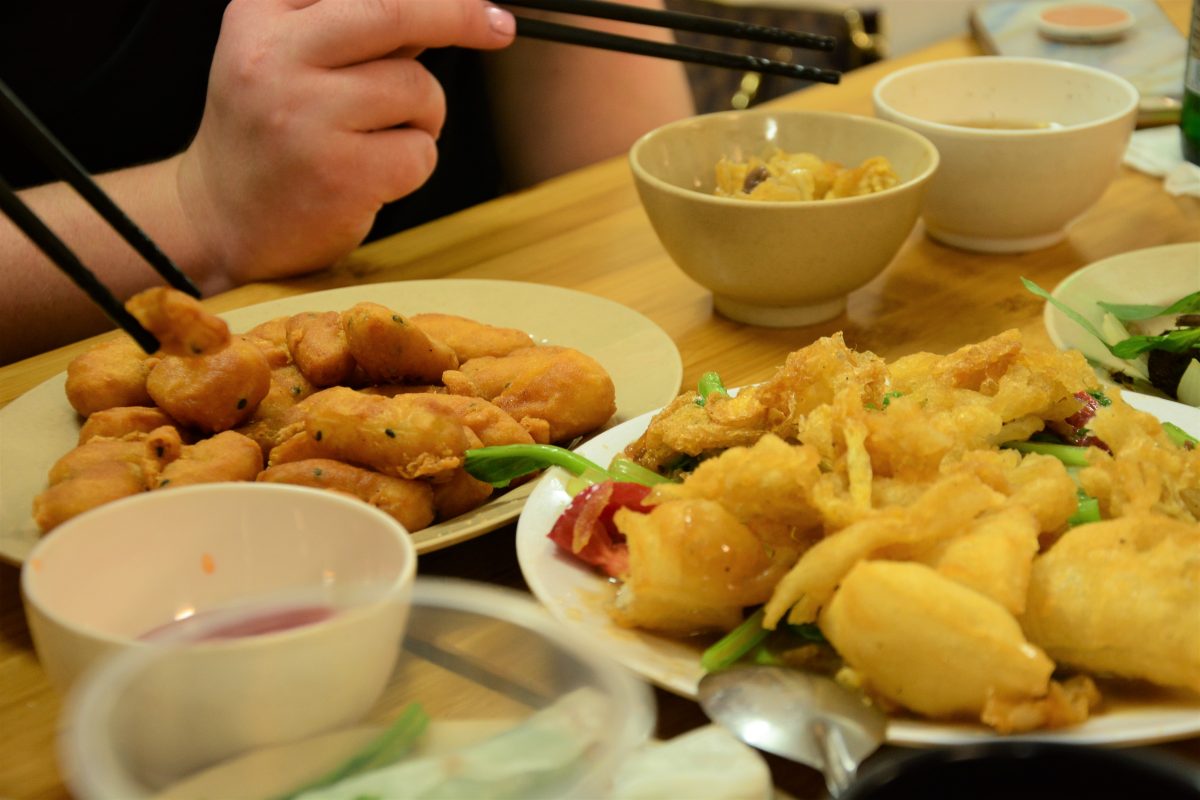
Important dishes include banh xeo tom nhay, banh xeo muc, bun cha ca, banh hoi chao long, seafood porridge and various shellfish dishes.
Lonely Planet also highlights jellyfish noodles and fresh seafood among the region’s culinary specialties.
The food is generally straightforward.
Fresh ingredients matter more than complicated presentation.
That is exactly what you want in a coastal destination.
Banh Xeo Tom Nhay
Banh xeo tom nhay is one of Binh Dinh’s signature dishes.
The small crispy pancakes are filled with shrimp and typically served with herbs, vegetables and dipping sauce.
The texture is central to the experience.
Crisp pancake.
Fresh shrimp.
Herbs.
Sour, sweet and savory dipping sauce.
It is a dish that makes sense when eaten beside the sea.
Banh Xeo Muc
Around Nhon Hai and other coastal communities, banh xeo muc is another specialty worth seeking out.
Instead of shrimp, squid becomes the central ingredient.
The squid is often cooked quickly so that it retains its texture.
For food travelers, tasting the same style of pancake in different villages can reveal subtle differences in seasoning and preparation.
Bun Cha Ca
Bun cha ca is a popular fish-cake noodle soup found throughout Vietnam’s central coastal region.
Quy Nhon’s version is particularly appropriate for the destination because fish is such a central part of the local economy.
The broth is usually lighter than many northern noodle soups, allowing the fish cakes and accompanying herbs to remain prominent.
It makes an excellent breakfast.
Banh Hoi Chao Long
Another regional specialty is banh hoi chao long, combining delicate rice vermicelli with pork offal and accompanying herbs.
The dish is strongly associated with Binh Dinh cuisine and is best experienced in the morning.
For travelers unfamiliar with Vietnamese regional food, it is an excellent example of how different parts of the country have developed their own breakfast traditions.
Fresh Seafood
Seafood is everywhere in Quy Nhon.
Squid.
Crab.
Prawns.
Clams.
Snails.
Fish.
Sea urchin.
The best meal may not come from the most sophisticated restaurant.
Sometimes it is a simple table beside the fishing harbor with seafood selected directly from the day’s catch.
For premium travel, however, the ideal approach is to combine both experiences: a genuine coastal seafood meal and a carefully selected restaurant for a more refined evening.
Quy Nhon After Dark
The city becomes surprisingly lively after sunset.
The promenade fills with walkers.
Families gather around the beach.
Restaurants begin serving seafood.
Cafés open toward the water.
And the temperature becomes much more comfortable.
Quy Nhon does not have the nightlife intensity of Nha Trang, but that is part of its appeal.
The evenings are social without being overwhelming.
The Best Time to Visit Quy Nhon
The weather deserves careful consideration because Quy Nhon’s appeal depends heavily on the sea.
The Ginkgo Voyage guide identifies January through August as the broader dry period and September through December as the wetter season.
Lonely Planet’s more recent 2025 guide gives a somewhat narrower recommendation of December through April, when temperatures are generally comfortable and rainfall is lower, while noting that June through August can be hotter and busier and September through November wetter.
This difference is important: there is no single perfect month for every traveler.
Quy Nhon from December to April
This period is particularly attractive for comfortable sightseeing and coastal exploration.
Temperatures are generally pleasant.
Rainfall is lower.
And the sea can be suitable for boat excursions depending on conditions.
For travelers combining beaches with Cham towers and countryside exploration, this is one of the safest periods to consider.
Quy Nhon from May to August
The summer months can be excellent for beach-focused travel.
The weather is warmer and domestic tourism increases significantly, particularly around June through August.
If visiting during this period, start beach and boat excursions early.
The light is beautiful.
The sea is often calmer in favorable conditions.
And you can avoid the strongest midday heat.
Quy Nhon from September to November
The wetter months bring more uncertainty.
Rain can affect boat trips and coastal activities, while storms elsewhere in Central Vietnam can influence local conditions.
The advantage is lower visitor numbers.
If traveling during this period, build flexibility into your private itinerary and prioritize cultural experiences on days when the sea is unsuitable.
How Long Should You Stay in Quy Nhon?
Two nights can cover the main highlights.
Three nights are much better.
Four nights allow you to slow down and include additional coastal villages, islands or cultural sites.
Lonely Planet recommends at least two days for the essential sights and suggests three or more days for exploring the surrounding countryside and fishing villages.
For a premium private journey, I would recommend three to four nights.
That gives you enough time for Ky Co and Eo Gio without sacrificing the city, Cham heritage or a slow beach day.
Where to Stay in Quy Nhon
The main choice is between staying in the city and staying along the surrounding coast.
A city-center hotel provides easy access to restaurants, the promenade and everyday life.
A beachfront resort outside the center provides greater privacy and a more relaxed atmosphere.
Bai Xep is particularly appealing for travelers seeking a quieter coastal setting.
The choice depends on whether you want Quy Nhon as a cultural city experience or as a luxury beach retreat.
Quy Nhon for Couples
Quy Nhon is exceptionally well suited to couples.
A private boat trip.
A quiet beach.
Seafood beside the water.
A sunset walk.
A secluded resort.
A coastal road through the hills.
There is less pressure to fill every hour with sightseeing.
That makes the destination particularly attractive for honeymooners or couples looking for a quieter alternative to more developed beach destinations.
Quy Nhon for Families
Families can also enjoy the region because the coastline provides plenty of activities without requiring long journeys.
Beach time.
Boat rides.
Snorkeling.
Fishing villages.
Seafood.
Cham towers.
Short countryside excursions.
For families with younger children, a private vehicle is especially useful because it allows the itinerary to adapt around naps, meals and weather.
Quy Nhon for Photographers
Photographers will find an unusually diverse collection of subjects.
Fishing boats at sunrise.
Red Cham towers.
Turquoise bays.
Rocky cliffs.
Seafood markets.
Old village lanes.
The long urban promenade.
And the changing colors of the sea.
The most interesting photographs are often found outside the famous viewpoints.
A fishing village at 6 AM may tell you more about Quy Nhon than a perfectly composed photograph of Ky Co.
Quy Nhon for Motorbike Travelers
The coastline around Quy Nhon is particularly attractive by motorbike.
The roads toward Nhon Hai, Nhon Ly, Eo Gio and the southern coastal villages offer repeated sea views and opportunities to stop spontaneously.
Lonely Planet also highlights motorbike exploration as one of the best ways to discover the coastal landscape beyond the city.
For travelers without extensive riding experience, a private car and driver provides a safer and more comfortable alternative while preserving the ability to stop for photographs and village visits.
Responsible Travel in Quy Nhon
Quy Nhon’s attraction partly comes from the fact that it has not yet experienced the same level of mass tourism as Vietnam’s most famous coastal destinations.
That makes responsible travel particularly important.
Support locally owned restaurants and small businesses.
Avoid single-use plastic on boat trips.
Do not collect shells or marine life.
Respect fishing communities when photographing people and boats.
Do not enter private homes or working areas without permission.
And avoid visiting sensitive coastal environments in ways that damage vegetation or coral.
The destination’s relative authenticity is an asset worth protecting.
A Sample 4-Day Private Quy Nhon Journey
Day 1 — Hanoi to Quy Nhon & Coastal City
Begin your premium private journey in Hanoi with a convenient flight to Phu Cat Airport, followed by private transfer toward Quy Nhon. Enjoy lunch after arrival and settle into your beachfront hotel or luxury coastal retreat. In the afternoon, explore the city’s waterfront, visit the Twin Cham Towers and continue toward the seaside promenade as the light becomes softer. Enjoy a seafood dinner overlooking the bay and take an evening walk along the beach.
Day 2 — Ky Co, Eo Gio & Nhon Ly
After breakfast, travel privately toward Nhon Ly and the spectacular coastline around Eo Gio and Ky Co. Explore the dramatic cliffs before continuing to the beach, where you can swim, relax or take a private boat depending on current sea conditions. Enjoy a seafood lunch and spend time exploring the fishing village before returning toward Quy Nhon in the afternoon. End the day with dinner featuring Binh Dinh specialties and fresh seafood.
Day 3 — Nhon Hai, Hon Kho & Coastal Life
Start with breakfast before traveling toward Nhon Hai, where the fishing village provides an intimate look at everyday coastal life. Continue by boat toward Hon Kho for swimming and snorkeling when conditions are suitable, followed by a seafood lunch near the coast. Return to Quy Nhon in the afternoon and leave time for a spa treatment, beach relaxation or a slow coffee beside the sea. Enjoy dinner at a carefully selected restaurant and experience the promenade after dark.
Day 4 — Cham Heritage & Departure
After breakfast, leave the coast for the Banh It Cham Towers, where ancient brick architecture rises above the surrounding countryside. Continue with a visit to the Binh Dinh Museum or another cultural site before enjoying lunch. Return toward Quy Nhon for a final seaside stop before your private transfer to Phu Cat Airport for the onward flight. Breakfast, Lunch & Dinner are included throughout the private journey.
A More Relaxed Five-Day Quy Nhon Journey
If you have five days, do not simply add more attractions.
Instead, add more space.
Spend the first day understanding the city.
Dedicate the second to Ky Co and Eo Gio.
Use the third for Hon Kho and Nhon Hai.
Reserve the fourth for Cham heritage and countryside.
Then leave the fifth open for the beach, a private boat trip or simply enjoying the resort.
That rhythm is particularly suitable for luxury travel.
Quy Nhon and Phu Yen
Quy Nhon pairs naturally with Phu Yen, another South Central Coast destination known for dramatic coastline and quieter beaches.
Traveling south allows you to continue into landscapes that remain less developed than many of Vietnam’s famous beach cities.
For travelers who want a longer coastal journey, Quy Nhon can therefore become part of a broader route rather than a standalone destination.
Quy Nhon and Nha Trang
Travelers who want a contrast can continue south toward Nha Trang.
Nha Trang is larger, more developed and more focused on resort tourism and nightlife.
Quy Nhon feels quieter and more connected to fishing communities.
The two destinations therefore complement rather than duplicate one another.
Quy Nhon and Hoi An
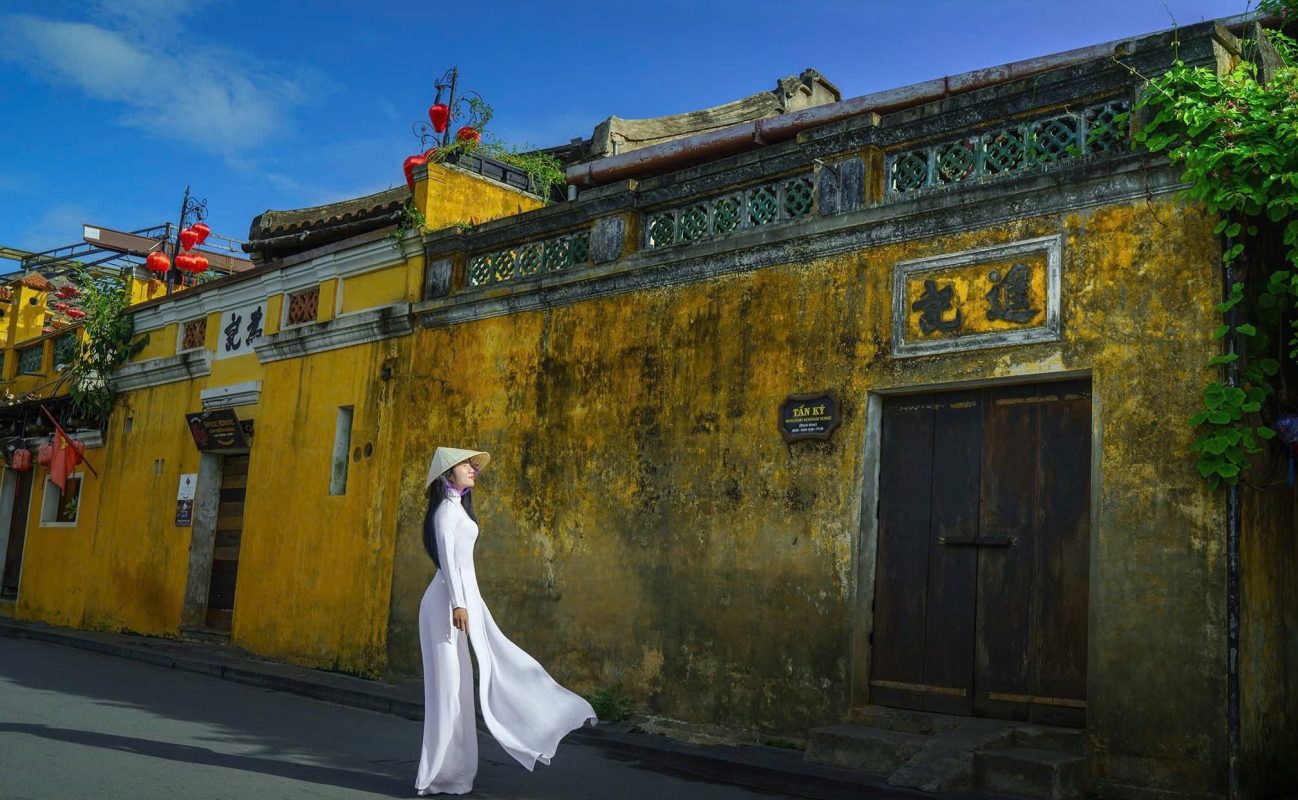
Quy Nhon can also be connected northward with Hoi An.
The contrast is equally interesting.
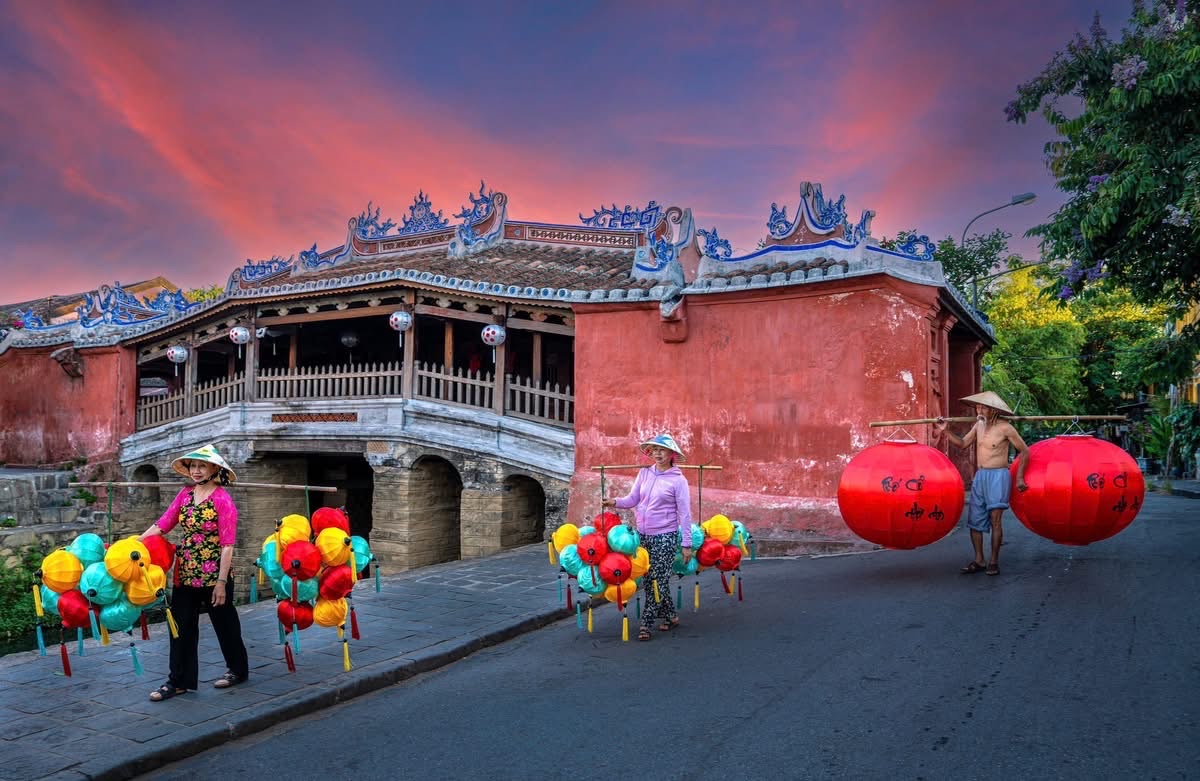
Hoi An is defined by historic architecture and its former international trading port.
Quy Nhon combines coastal landscapes with the archaeological heritage of Champa.
Together they create a strong Central Vietnam itinerary built around history, food and the sea.
The Quiet Luxury of Quy Nhon
Quy Nhon’s luxury is not primarily about grand architecture.
It is about space.
A wide beach without crowds.
A private boat moving across turquoise water.
A seafood lunch beside the fishing village.
A quiet resort overlooking the sea.
A coastal road with almost no traffic.
A sunset watched without competing with hundreds of tour groups.
This is the kind of luxury that becomes increasingly valuable as Vietnam’s major destinations grow busier.
Why Choose Vietnam Women Travel for Quy Nhon?
Vietnam Women Travel – Premium Private Tours Led by Women creates private Quy Nhon journeys for travelers who want to experience the coastline beyond the standard beach itinerary.
A private journey can combine the beaches of Ky Co and Bai Xep with Eo Gio’s cliffs, Nhon Hai’s fishing culture, Hon Kho’s clear waters and the ancient Cham towers of Binh Dinh.
Rather than moving between attractions on a rigid schedule, the itinerary can be shaped around your interests.
Spend more time swimming.
Stay longer in a fishing village.
Stop for photography.
Explore Cham architecture with a specialist guide.
Or simply slow the day down and enjoy the coast.
The Women-Led Difference
With Vietnam Women Travel – Premium Private Tours Led by Women, the emphasis is on private, thoughtful travel rather than standardized group sightseeing.
Women-led guiding brings a personal dimension to the journey, while private transportation allows the route to remain flexible.
The experience can connect the visible beauty of Quy Nhon with the stories underneath it.
The fishing boats explain the seafood.
The Cham towers reveal the region’s ancient history.
The villages explain the coastline.
The islands reveal the marine landscape.
And the food brings all of these elements together.
Discovering the Real Quy Nhon
The easiest way to experience Quy Nhon is to arrive expecting a beach destination and leave understanding that it is much more.
It is a city.
A fishing community.
A historical landscape.
A seafood destination.
A gateway to islands.
A place of ancient Cham architecture.
And one of the more compelling emerging coastal regions in Vietnam.
Lonely Planet selected Quy Nhon for its 2026 Best in Travel list, specifically emphasizing its combination of coastal scenery, culture, seafood and a laid-back atmosphere.
That description captures the destination well.
Plan Your Quy Nhon Journey
Come for the turquoise water.
Stay for the seafood.
Wake before sunrise to watch fishing boats return.
Walk through Nhon Ly.
Explore the red-brick towers of Champa.
Take a private boat toward Hon Kho.
Watch the cliffs of Eo Gio disappear into the afternoon haze.
And finish the day beside the sea with a plate of freshly grilled seafood.
Quy Nhon does not need to compete with Da Nang or Nha Trang.
Its strength is precisely that it offers something different: a slower, more intimate coastal experience where nature, history and everyday life remain closely connected.
For travelers seeking a premium private journey, Vietnam Women Travel – Premium Private Tours Led by Women can place Quy Nhon within a carefully designed Vietnam itinerary beginning in Hanoi, combining private transportation, luxury accommodation, women-led experiences, cultural heritage, coastal landscapes and the extraordinary food of Vietnam’s South Central Coast.
Vietnam Women Travel – Premium Private Tours Led by Women
Private journeys. Women guides. Authentic Vietnam.