Hanoi Motorbike Tour Through Hanoi’s Hidden Streets
When most visitors think of Hanoi, they picture the Old Quarter, Hoan Kiem Lake, the Temple of Literature, the Ho Chi Minh Mausoleum and busy tourist streets. But these famous places represent only one part of the capital.
The real character of Hanoi often appears in its smaller streets—narrow residential lanes, neighborhood markets, tiny cafés, family businesses, traditional houses and quiet communities hidden behind the city’s main roads.
A Hanoi Motorbike Tour is one of the easiest ways to explore these places. A scooter can move through narrow streets and alleys that larger vehicles cannot easily access, allowing travelers to see a more everyday side of Hanoi.
According to the official Motorbike City Tours website, its city-insight experiences are specifically designed around hidden backstreets, local neighborhoods, markets, Long Bien Bridge, Banana Island, West Lake, Huu Tiep Lake and Train Street. Guests ride as passengers with professional local drivers and guides.

Why Explore Hanoi’s Hidden Streets?
Hanoi’s main tourist attractions are important, but they don’t tell the entire story.
Walk a few streets away from the major landmarks and the atmosphere can change completely. You may see residents having breakfast on tiny plastic stools, children returning from school, vendors preparing food, mechanics repairing scooters, elderly people drinking tea and families running small businesses from their homes.
These ordinary moments are often what travelers remember most.
Motorbike City Tours describes its backstreet tours as a way to experience everyday local life away from the main tourist crowds, using routes that cars and buses cannot easily reach.
1. Start in the Old Quarter’s Hidden Alleys
The journey begins in one of the most famous parts of Hanoi—but instead of staying on the main tourist streets, the motorbike turns into the smaller lanes and backstreets of the Old Quarter.
The Old Quarter is often associated with crowded streets and souvenir shops, but behind those streets is another world of residential lanes and small local businesses.
Motorbike City Tours’ itinerary starts by navigating the maze of alleys and narrow streets that form the inner neighborhoods of Hanoi, giving visitors a glimpse of everyday life away from the busiest tourist areas.
This is where the motorbike becomes particularly useful.
2. See Hanoi Where Cars Cannot Easily Go
One of the main advantages of a scooter is its size.
Large tour buses and cars are restricted to major roads. A motorbike can turn into much smaller lanes, follow narrow residential streets and reach neighborhoods that would otherwise be difficult for visitors to discover.
Motorbike City Tours specifically promotes its motorbike experiences as a way to explore backstreets and hidden alleys that cars and buses cannot easily access.
You are therefore not simply traveling between tourist attractions.
You are traveling through the city itself.
3. Discover Local Markets
Markets are an important part of everyday Hanoi.
Instead of visiting only tourist-oriented shopping streets, a backstreet motorbike route can take you toward local markets where residents shop for food, household products and everyday necessities.
You may see vendors selling vegetables, herbs, meat, fruit and other ingredients used in Vietnamese cooking.
Motorbike City Tours lists local markets among the highlights of its city-insight experiences, emphasizing the opportunity to observe the color, sounds and activity of ordinary Hanoi.
For photographers, markets are particularly rewarding because there is always movement and activity.
4. Pass Traditional Hanoi Homes
Another interesting feature of Hanoi’s hidden streets is the architecture.
Behind the major boulevards, you can find narrow tube houses, older family homes, small courtyards and traditional residential buildings existing alongside newer construction.
A local guide can explain how Hanoi’s neighborhoods have changed over time and why houses developed in such distinctive forms.
This is something you might completely miss if you spend your entire visit on the city’s major avenues.
5. See the French Colonial Side of Hanoi
The hidden-street experience isn’t limited to traditional Vietnamese neighborhoods.
As you move between different parts of Hanoi, you can also encounter French colonial villas, historic buildings and broad tree-lined streets.
Motorbike City Tours includes landmarks such as the Hanoi Opera House and French colonial architecture in several of its city itineraries.
The contrast is fascinating:
Narrow alley → traditional house → local market → French colonial building → modern Hanoi.
All of these layers exist within the same city.
6. Ride Toward Long Bien Bridge
After exploring Hanoi’s backstreets, the route can continue toward Long Bien Bridge.
Built more than a century ago during the French colonial period, the bridge is one of Hanoi’s most recognizable historical landmarks.
But on a motorbike tour, Long Bien Bridge is more than a photo stop.
It becomes the gateway from the dense urban center toward the quieter Red River landscape and agricultural areas.
Motorbike City Tours’ backstreet itinerary specifically connects the Old Quarter’s hidden streets with Long Bien Bridge and the countryside beyond it.
7. Escape to Banana Island
One of the most surprising parts of exploring Hanoi by motorbike is discovering Banana Island.
After the traffic and narrow streets of central Hanoi, the landscape suddenly becomes green and open.
Motorbike City Tours describes riding along dirt paths beneath banana and guava trees, passing farmland and gardens in this agricultural area near the city center.
It can feel as though you have left Hanoi completely.
But you haven’t.
You are still inside the capital.
This contrast between urban Hanoi and rural Hanoi is one of the strongest reasons to explore the city by motorbike.
8. Experience Everyday Life in the Countryside
Banana Island isn’t simply a scenic stop.
It provides an opportunity to see Hanoi’s agricultural side—vegetable gardens, fruit trees, farmland and people working in the fields.
Motorbike City Tours describes this area as part of Hanoi’s agricultural heart, offering a quieter perspective on local life.
For travelers who have only seen Hanoi’s Old Quarter, this can be one of the biggest surprises of the tour.
9. Continue Toward West Lake
After exploring the Red River area, the motorbike route returns toward the city and continues around West Lake, Hanoi’s largest lake.
The atmosphere here is very different from the Old Quarter.
There are lakeside roads, trees, temples, cafés, villas and open views across the water.
Motorbike City Tours includes West Lake in its city-insight itineraries, often allowing time for photographs before continuing through smaller streets.
The lake provides a natural break between Hanoi’s dense neighborhoods and its more open spaces.
10. Find Huu Tiep Lake and the B-52 Wreckage
Another unusual location accessible on the route is Huu Tiep Lake, where the remains of a B-52 bomber can be seen.
The wreckage is located within an ordinary residential neighborhood rather than being isolated from daily life.
Motorbike City Tours includes Huu Tiep Lake and the B-52 wreckage among its city-tour highlights.
This makes the stop particularly interesting because history and everyday Hanoi exist side by side.
11. Explore Train Street
From the smaller neighborhood roads, the route can continue toward Reunification Train Street.
The railway passes through a densely populated part of Hanoi, with homes and businesses located close to the tracks.
Motorbike City Tours includes Train Street in its city itineraries and describes the surrounding area as a unique part of everyday Hanoi life.
Because it is an active railway environment, visitors should always follow their guide’s instructions and current local access and safety requirements.
The interesting part is not simply the train itself.
It is seeing how an entire neighborhood has developed around this unusual railway corridor.
12. Meet Local People
Hidden streets become much more meaningful when you have someone who can explain what you are seeing.
A local guide can tell you why a particular neighborhood looks the way it does, explain Vietnamese customs, introduce local foods and describe how Hanoi has changed.
Some Motorbike City Tours itineraries also include opportunities to visit a local home, enjoy tea and hear personal stories from local residents.
These interactions can turn a sightseeing trip into a cultural experience.
13. Stop for Vietnamese Food
Exploring Hanoi’s hidden streets naturally leads to food.
Small restaurants and street-food stalls are often found away from the major tourist attractions. A motorbike allows you to move between different neighborhoods and food stops without spending large amounts of time in traffic.
Motorbike City Tours combines its sightseeing experiences with local Vietnamese food, and its food-focused tours include dishes such as Bánh Cuốn, Bún Chả, seafood, banana flower salad and Egg Coffee.
This is one reason a motorbike food tour can be particularly enjoyable: the ride becomes part of the culinary experience.
14. Finish With Hanoi Egg Coffee
After several hours of exploring, a stop for Vietnamese Egg Coffee is a natural way to finish.
Egg Coffee is one of Hanoi’s best-known specialties, combining strong coffee with a rich, creamy egg mixture.
Motorbike City Tours includes Egg Coffee at a local café in several of its city experiences.
It gives travelers the opportunity to sit down, relax and talk with their guide after exploring Hanoi’s streets.
What Makes Hidden-Street Motorbike Tours Different?
A standard sightseeing tour usually follows a predictable pattern:
Hotel → attraction → attraction → restaurant → hotel.
A backstreet motorbike tour is different:
Neighborhood → alley → market → bridge → countryside → lake → residential street → historical site → local café.
The route itself becomes part of the attraction.
Motorbike City Tours describes its Hanoi experiences as a way to discover hidden corners, local markets, authentic eateries, peaceful villages and streets that typical tours often miss.
Why a Motorbike Is Ideal for Hanoi’s Hidden Streets
A motorbike combines three advantages:
Small enough for narrow streets
The scooter can enter many lanes that larger vehicles cannot.
Fast enough to cover the city
Unlike walking, you can move between very different neighborhoods within a few hours.
Flexible enough to stop
If something interesting appears—a market, a street-food stall, a local neighborhood or a scenic viewpoint—the guide can incorporate appropriate stops into the experience.
That combination makes a motorbike particularly suitable for discovering Hanoi beyond its main attractions.
Do Tourists Need to Drive?
No.
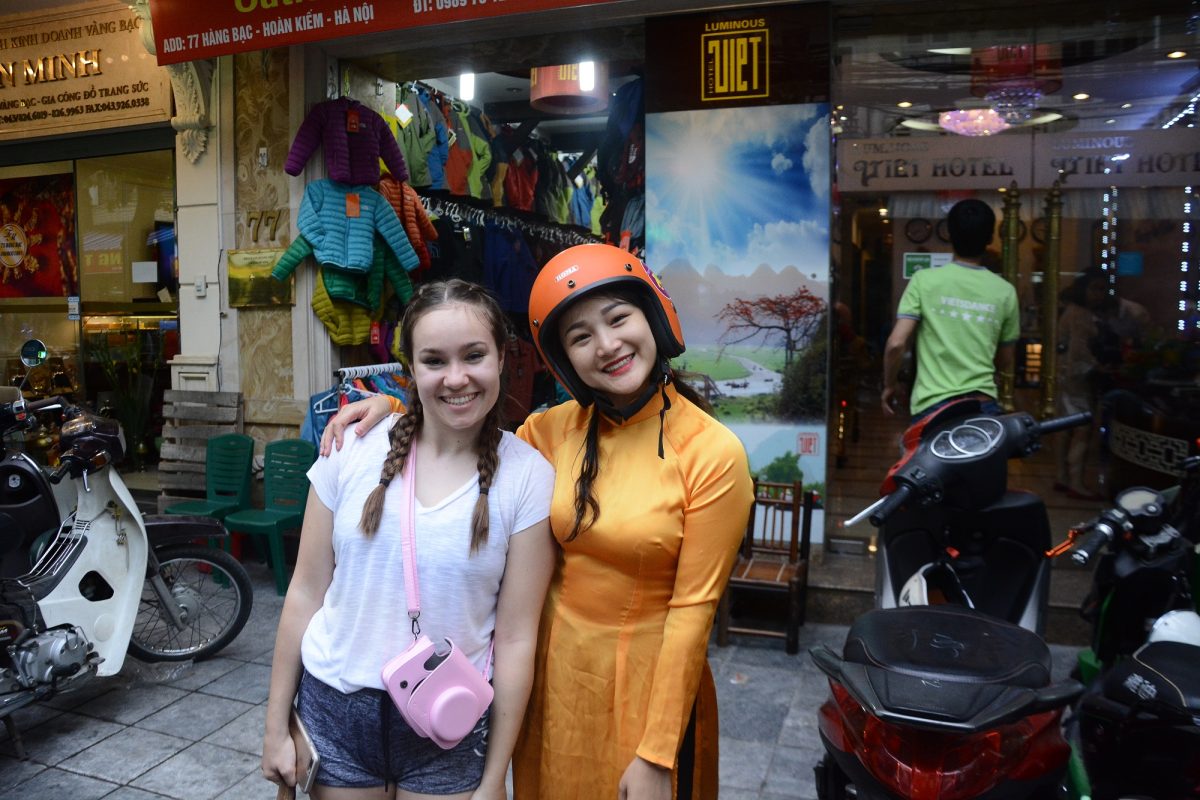
On Motorbike City Tours’ passenger experiences, guests ride behind professional local drivers, so you do not need to navigate Hanoi’s traffic yourself. The company highlights experienced female riders, licensed drivers, helmets and scooters equipped with passenger backrests.
This is particularly useful for visitors who want to experience Hanoi by motorbike but have never ridden in Vietnam.
How Long Does a Hidden-Street Motorbike Tour Take?
The current Hanoi City Insight Motorbike Tour is approximately 4–4.5 hours, with morning and afternoon departures listed by Motorbike City Tours. Lunch is included according to the current tour information.
For travelers who want to explore more extensively, the company also offers full-day city-and-countryside experiences.
Is This Tour Suitable for First-Time Visitors?
Yes.
In fact, a hidden-street motorbike tour can be particularly useful for first-time visitors because it combines Hanoi’s major highlights with the neighborhoods between them.
You don’t have to choose between:
“I want to see the famous Hanoi”
and
“I want to see authentic Hanoi.”
A well-designed route can provide both.
You can see the Opera House, Long Bien Bridge, West Lake, Huu Tiep Lake and Train Street while also riding through markets, residential streets, agricultural areas and hidden alleys.
Is It Better Than Exploring the Hidden Streets on Foot?
Walking is excellent for very small areas, especially the Old Quarter.
But Hanoi is much larger than the Old Quarter.
If you want to combine the Old Quarter with Long Bien Bridge, Banana Island, West Lake, Huu Tiep Lake and Train Street, walking would require considerably more time.
A motorbike allows you to connect these different environments within a single itinerary.
Who Will Enjoy This Hanoi Motorbike Tour Most?
This experience is particularly suitable for:
- First-time visitors who want to understand Hanoi quickly
- Repeat visitors looking beyond the main attractions
- Photographers interested in everyday street scenes
- Food lovers who want local restaurants and street food
- Couples looking for a more personal experience
- Families wanting to see more of Hanoi without excessive walking
- Culture enthusiasts interested in local stories
- Travelers with limited time who want a comprehensive half-day experience
Hanoi’s Hidden Streets Are the Real Story
The most memorable part of Hanoi is often not the landmark you planned to visit.
It might be an elderly man drinking tea outside his house.
A woman preparing breakfast on the sidewalk.
A market vendor arranging vegetables.
A child riding home from school.
A tiny café hidden at the end of an alley.
A farmer working among banana trees just a few kilometers from the city center.
These moments are difficult to find when you stay on the main tourist roads.
They happen naturally when you go deeper into the city.
Final Thoughts
A Hanoi Motorbike Tour Through Hanoi’s Hidden Streets is about seeing the capital from a different perspective.
You begin among the narrow alleys of the Old Quarter, pass local markets and traditional neighborhoods, cross historic Long Bien Bridge, discover the green countryside of Banana Island, ride around West Lake, explore Huu Tiep Lake and the B-52 relic, and continue toward Train Street and local cafés.
The result is not simply a list of attractions.
It is a journey through the different layers of Hanoi—historic, residential, cultural, agricultural and modern.
And that is what makes exploring Hanoi’s hidden streets by motorbike so compelling: you don’t just see Hanoi’s attractions; you see the life happening between them.
Explore Hanoi’s Hidden Streets With Motorbike City Tours
The official Motorbike City Tours website offers Hanoi city, countryside, food, sunset, sunrise, private and full-day motorbike experiences led by local riders and guides.
Official Website: Motorbike City Tours
Hanoi City Insight Motorbike Tour: Hanoi City Insight Motorbike Tour
WhatsApp / iMessage: +84 988 402 008
Email: info@motorbikecitytours.com
If your goal is to discover the real Hanoi beyond the tourist streets, a hidden-street motorbike tour is one of the most comprehensive ways to experience the city.