Hanoi to Halong Bay: How to Plan the Perfect Trip
A Hanoi to Halong Bay trip is one of the easiest and most rewarding journeys to add to a Northern Vietnam itinerary. The route connects Vietnam’s historic capital with a spectacular seascape of limestone towers, islands, caves and emerald-colored water. Halong Bay is approximately 165 kilometers from Hanoi, and modern road connections have made the journey much faster than it was in the past. For most travelers, the biggest decision is not how to reach Halong Bay, but whether to choose a day trip, one-night cruise or two-night cruise, which bay area to visit, what activities to include and how to organize transportation so that the trip feels relaxed rather than rushed. Halong Bay and the Cat Ba Archipelago are now part of the same UNESCO World Heritage property, recognized for their exceptional marine karst landscapes, caves, islands and geological features.
Hanoi to Halong Bay at a Glance
For most travelers, the simplest route is Hanoi → Halong Bay by private car, limousine or cruise transfer, with the road journey generally taking around 2.5–3 hours under normal conditions. A day trip is possible, but an overnight cruise provides a much better experience because you spend considerably more time among the limestone islands rather than spending most of the day traveling between Hanoi and the port. Travelers with only one free day can still see the bay on a day cruise, while those with two days should strongly consider a one-night cruise. If you have three days available, a two-night cruise or a combination of Halong Bay and Cat Ba can provide a slower and more varied experience.
How Far Is Halong Bay from Hanoi?
Halong Bay is roughly 165 kilometers east of Hanoi, although the actual driving route is longer. The distance is relatively manageable compared with destinations such as Ha Giang or Sapa, making Halong Bay one of the easiest excursions from Hanoi. UNESCO identifies the Ha Long Bay–Cat Ba Archipelago World Heritage property as being in northeastern Vietnam, covering areas within Quang Ninh Province and Hai Phong City. The property covers approximately 65,650 hectares and includes 1,133 islands and islets.
How Long Does It Take from Hanoi to Halong Bay?
A direct road transfer generally takes around 2.5–3 hours, depending on traffic, departure location and the exact port used by your cruise. The expressway has significantly improved the journey compared with older routes. However, cruise check-in times mean that you should not calculate your day based only on driving time. If your cruise requires passengers to arrive at the port at a specific time, allow enough time for hotel pickup, traffic and check-in procedures. A private transfer gives you more control over departure time and is particularly useful when traveling with children, older travelers or a private group.
How to Travel from Hanoi to Halong Bay
There are several practical ways to travel from Hanoi to Halong Bay: private car, limousine, shared shuttle, taxi or cruise transfer. The best option depends on your budget and whether you are booking an independent day trip or an overnight cruise. Most travelers do not need to rent a car themselves because professional transfers are widely available. For a premium experience, a private vehicle is the most comfortable choice because it provides hotel pickup, direct transportation and flexibility with departure time.
Hanoi to Halong Bay by Private Car
A private car is the best option for travelers who value comfort and flexibility. Your driver can pick you up directly from your Hanoi hotel and take you to the cruise port without requiring you to meet other passengers. This is particularly useful for families and private groups because you can stop for coffee, food or a short break when necessary. A private car also works well when Halong Bay is part of a longer Northern Vietnam itinerary because the same transportation plan can connect Hanoi with Halong Bay, Sapa or other destinations.
Hanoi to Halong Bay by Limousine
A limousine is a popular middle-ground option between a shared bus and private car. Modern limousine vans generally provide more comfortable seating than standard buses and are commonly used for the Hanoi–Halong Bay route. Some operators provide hotel pickup in central Hanoi, while others use designated meeting points. Before booking, check whether your cruise package includes the transfer or whether transportation must be purchased separately.
Hanoi to Halong Bay by Shared Shuttle
Shared shuttle buses are often the most economical option for travelers who do not need a private vehicle. They are practical for couples and independent travelers who are comfortable following a fixed schedule. The disadvantage is that pickup can take longer because the vehicle may stop at several hotels before leaving Hanoi. For a cruise with strict boarding times, confirm the pickup time carefully rather than choosing a transfer solely because it is inexpensive.
Should You Take a Taxi from Hanoi to Halong Bay?
A standard taxi is generally not the first choice for a long-distance Hanoi–Halong Bay transfer because the price can be less predictable and you may have less certainty about the vehicle and driver. A pre-arranged private transfer is usually easier for tourists because the price, pickup location and destination can be confirmed in advance. If you are traveling as a private group, compare the total price of a dedicated car with the cost of several shared seats before deciding.
Should You Travel from Hanoi to Halong Bay by Motorbike?
Traveling by motorbike is possible, but it is not necessary for most visitors. The route is much more convenient by private car or organized transfer, especially if your main goal is to spend time on the bay. A motorcycle journey also requires more attention to traffic, weather, luggage and navigation. If you are already an experienced rider and specifically want a road-trip experience, it can be an interesting option, but it should not be chosen simply because you assume it will be faster.
Day Trip or Overnight Cruise: Which Is Better?
For first-time visitors, an overnight cruise is the better experience if your schedule allows it. A day trip gives you a quick introduction to the landscape but requires a long round trip from Hanoi and usually follows a tightly controlled timetable. An overnight cruise changes the pace completely. You can watch sunset over the limestone islands, wake up on the bay, participate in activities before the busiest part of the day and experience the landscape at different times of day. If you have only one day available, a day cruise is still worthwhile; if you have two days, choose overnight.
Hanoi to Halong Bay Day Trip
A typical day trip starts with morning pickup in Hanoi, followed by a road transfer to the port and boarding the cruise around midday. The cruise then travels through sections of the limestone landscape, with activities such as kayaking, cave visits or other sightseeing depending on the itinerary. Lunch is generally served on board, followed by additional sightseeing before returning to port and driving back to Hanoi. You will normally return to Hanoi in the evening. The biggest advantage is that you can see Halong Bay without changing hotels; the biggest disadvantage is the limited amount of time actually spent on the water.
Hanoi to Halong Bay One-Night Cruise
A one-night cruise is the best balance for most travelers. You travel from Hanoi to the port in the morning, board the cruise around midday, have lunch and begin exploring the bay in the afternoon. Depending on the route, activities can include kayaking, caves, swimming or visiting scenic areas. In the evening, enjoy dinner on board and sleep in your cabin surrounded by the bay. The following morning usually includes another activity or scenic cruise before brunch and disembarkation. You then return to Hanoi in the afternoon.
Hanoi to Halong Bay Two-Night Cruise
A two-night cruise is better for travelers who want a slower experience. The additional day can allow the vessel to travel farther from the busiest areas and provide more time for kayaking, swimming, beaches, caves or visits to less-visited parts of the World Heritage landscape. The exact route varies by cruise, so travelers should compare the actual itinerary rather than assuming every two-night cruise provides the same experience. If you have fourteen days or more for Northern Vietnam, this option can work particularly well after Hanoi and before continuing to another destination.
Halong Bay or Lan Ha Bay?
This is one of the most important choices when booking a cruise. Halong Bay is the famous destination associated with the classic limestone towers and islands, while Lan Ha Bay lies around the Cat Ba Archipelago and offers a similar karst landscape with numerous islands, coves and marine areas. The two areas are geographically connected through the broader World Heritage landscape. UNESCO’s 2023 extension incorporated the Cat Ba Archipelago into the World Heritage property, creating the current Ha Long Bay–Cat Ba Archipelago designation.
Why the Ha Long Bay–Cat Ba Archipelago UNESCO Site Matters
The UNESCO designation is not simply about the famous photographs of limestone islands. The World Heritage property is recognized for its exceptional marine-invaded tower karst, where limestone formations have been shaped by geological processes and subsequently flooded by the sea. UNESCO describes the landscape as containing limestone towers, caves, marine lakes, islands and other karst formations. The property was first inscribed in 1994, its boundaries were modified in 2000, and the Cat Ba Archipelago was added through a significant boundary modification in 2023.
Best Things to Do on a Halong Bay Cruise
The activities available depend on the cruise route, but the most common experiences include kayaking, cave visits, swimming, beach stops, sunrise viewing, sunset photography and Vietnamese cooking activities. Kayaking is particularly valuable because it allows you to move close to limestone cliffs and into smaller waterways that are impossible to appreciate fully from the main cruise ship. If you prefer relaxation, you can skip some activities and simply enjoy the views from the sundeck.
Kayaking in Halong Bay
Kayaking is one of the best ways to experience the landscape at water level. Instead of looking at the islands from the deck of a large boat, you can paddle closer to cliffs, caves and sheltered lagoons. When selecting a cruise, check whether kayaking is included in the itinerary or offered as an optional activity. Also check whether swimming and kayaking depend on weather and sea conditions because activities can occasionally be changed for safety reasons.
Exploring Caves
The limestone landscape contains numerous caves and geological formations created through long-term erosion and karst development. Cruise routes vary considerably, so not every boat visits the same cave. Some travelers prefer caves with large chambers and dramatic formations, while others prefer smaller caves accessible by kayak or rowboat. The important point is to check the exact itinerary instead of choosing a cruise solely because the website lists “cave visit.”
Swimming in Halong Bay
Swimming can be enjoyable during warmer months when the cruise itinerary includes a suitable beach or designated swimming area. Water conditions and weather can affect whether swimming is available. Bring swimwear even if you are unsure about participating because a short swim can be one of the most enjoyable ways to experience the bay during a hot afternoon.
Sunrise and Sunset in Halong Bay
One of the biggest advantages of staying overnight is the opportunity to see the bay at different times of day. Sunset can create dramatic silhouettes around the limestone islands, while early morning often brings a quieter atmosphere and softer light. If photography is important to you, choose a cabin or cruise with access to an open-air deck so you are not restricted to viewing the scenery through a cabin window.
Vietnamese Food on a Halong Bay Cruise
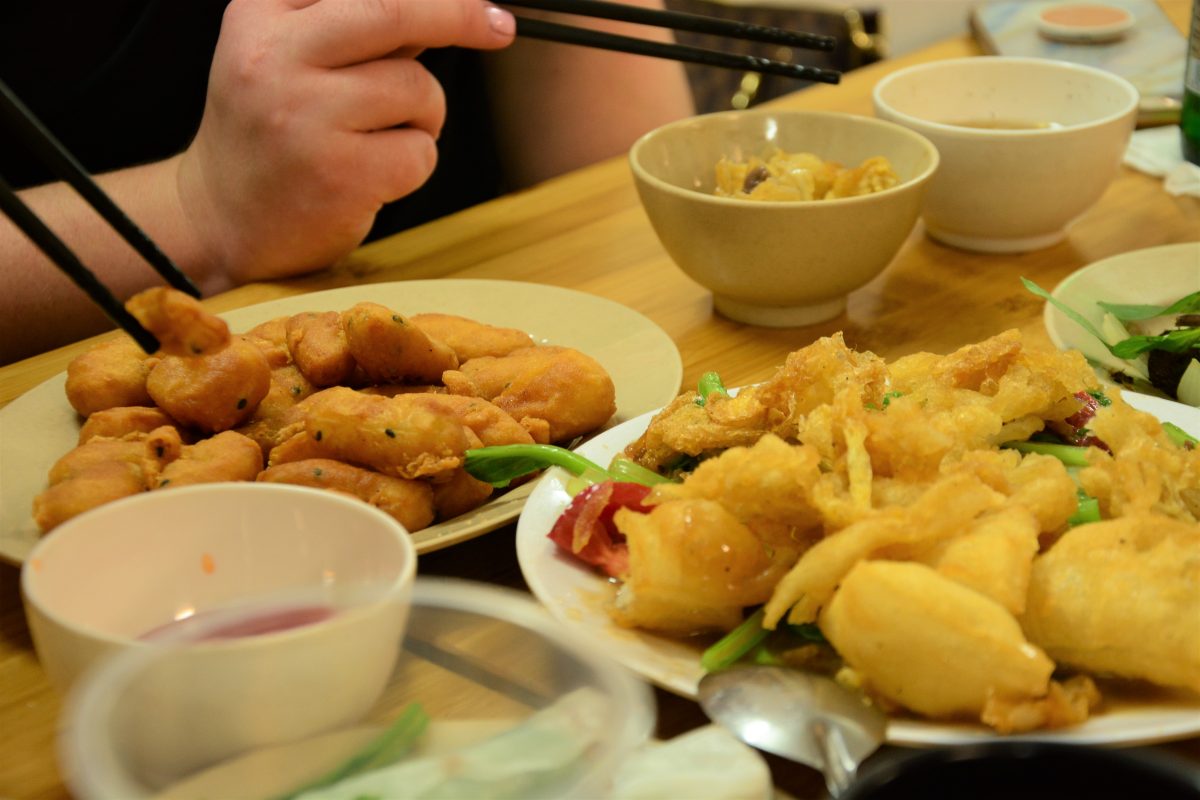
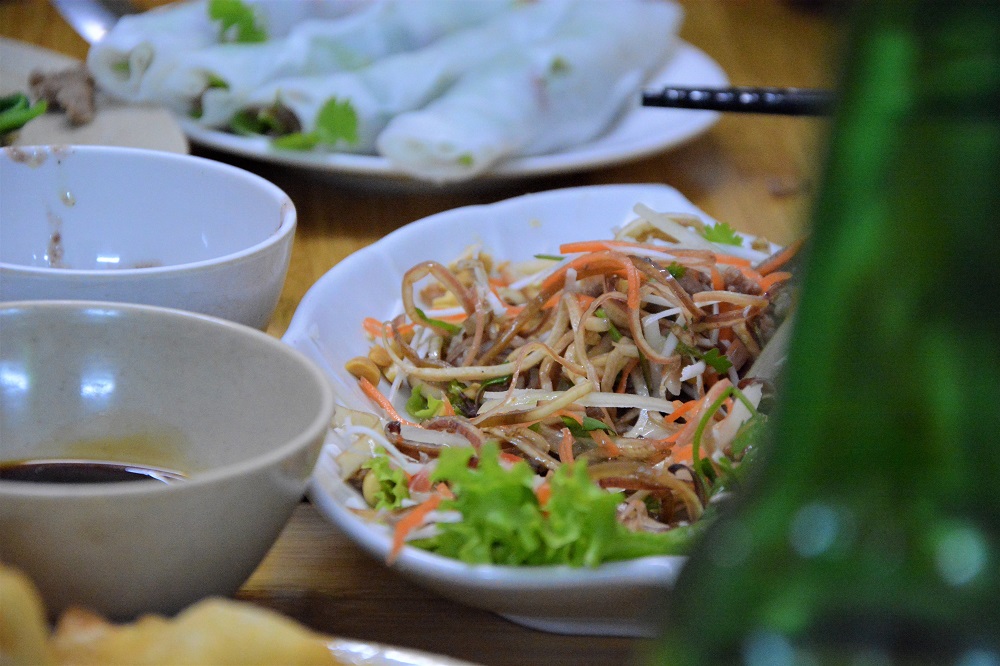
Cruise meals typically combine Vietnamese dishes with international options, and seafood is naturally prominent in the region. However, food quality varies considerably between cruise companies. Before booking, check recent reviews and the actual meal plan rather than assuming that a luxury-looking boat automatically provides excellent food. Travelers with vegetarian, vegan, seafood-allergy or other dietary requirements should notify the cruise in advance.
How to Choose the Right Halong Bay Cruise
Do not select a cruise based only on photographs or the number of stars shown on a booking website. Compare boat age, cabin size, route, passenger capacity, meal quality, activities, transfer arrangements, safety record, cancellation policy and recent guest reviews. Two cruises may both advertise a “2-day 1-night Halong Bay cruise” but provide completely different experiences. A smaller luxury vessel can feel very different from a large ship carrying many passengers.
Large Cruise or Small Luxury Cruise?
A larger cruise ship can offer more facilities, larger public spaces and more entertainment, while a smaller luxury cruise can provide a quieter atmosphere and more personalized service. Couples often prefer smaller vessels, while families may appreciate larger ships with more facilities. Private groups should compare the possibility of chartering a boat or reserving multiple cabins because this can create a much more personal experience.
Where Should You Stay Before a Halong Bay Cruise?
Most travelers stay in Hanoi before their cruise because the city provides the widest choice of hotels and restaurants and is the main starting point for cruise transfers. If your cruise departs very early or you want to avoid a morning transfer, staying near the port for one night is another possibility. However, for a typical overnight cruise, staying in Hanoi the night before is usually more convenient and gives you a chance to enjoy the capital before heading to the coast.
What Time Should You Leave Hanoi?
Most overnight cruises require passengers to reach the port around late morning or around midday, although exact boarding times vary. A typical private transfer therefore leaves Hanoi in the early morning. Do not book a late breakfast or morning sightseeing activity too far from your hotel because unexpected traffic can affect the transfer. If your cruise has a fixed check-in deadline, follow the cruise operator’s recommended departure time rather than relying on a generic three-hour travel estimate.
What Is the Best Time to Visit Halong Bay?
Halong Bay can be visited throughout the year, but the experience changes with the seasons. March to May often provides a pleasant combination of comfortable temperatures and good conditions for sightseeing. June to August is warmer but can bring heavy rain and tropical storms, which may affect cruise operations. September to November can provide comfortable weather and attractive conditions for cruising, while December to February can be cooler, cloudy and occasionally foggy. Because cruise operations can be affected by weather, travelers should always check conditions close to departure.
Halong Bay in Spring
Spring can be an excellent period for a Hanoi-to-Halong Bay trip. Temperatures are generally comfortable, making it easier to spend time on the sundeck and participate in kayaking or cave activities. Fog can still appear on some mornings, but this can create an atmospheric landscape around the limestone islands rather than necessarily ruining the experience.
Halong Bay in Summer
Summer brings warmer temperatures and excellent conditions for swimming when the weather is stable, but it is also the period when tropical storms and heavy rain can create greater uncertainty. Cruise itineraries may occasionally be modified or canceled when authorities consider weather conditions unsafe. This is another reason to avoid booking a tightly connected international flight immediately after your cruise.
Halong Bay in Autumn
September through November can be one of the most comfortable periods for a Halong Bay cruise. Temperatures become less intense than during midsummer, and travelers may experience clearer conditions. This period also works well for combining Hanoi, Halong Bay and other Northern Vietnam destinations in a longer itinerary.
Halong Bay in Winter
December through February can bring cool temperatures and fog. The landscape can become atmospheric and almost cinematic when limestone towers appear through the mist, but travelers looking for bright blue skies should understand that winter weather can be less predictable. Bring a light jacket and choose a cruise with comfortable indoor spaces in case conditions are cloudy or cool.
What to Pack for Hanoi to Halong Bay
Pack light clothing, comfortable shoes, swimwear, sunscreen, sunglasses, a light jacket, waterproof protection and a small overnight bag. You do not need to take your entire suitcase onto the cruise if your hotel in Hanoi can store larger luggage. A small bag makes moving around the vessel much easier. Bring medication and personal essentials with you because you should not assume that the cruise will stock everything you need.
What Not to Pack
Avoid bringing large amounts of unnecessary luggage onto a one-night cruise. High heels are rarely useful because you will spend time moving between decks, boats and shore activities. Expensive jewelry is also unnecessary. A small daypack, comfortable shoes and weather-appropriate clothing are more practical. If you are traveling onward from Halong Bay, arrange your luggage storage or transfer in advance.
Hanoi to Halong Bay with Children
Halong Bay can be an excellent family destination because the cruise combines transportation, accommodation, meals and activities in one place. Families should select cabins with enough space and confirm whether children are allowed on kayaking, swimming and other activities. A private transfer from Hanoi is also easier with children because you can control departure time and stop when necessary. For young children, a one-night cruise is generally easier than a long two-night itinerary.
Hanoi to Halong Bay for Couples
Couples can choose a smaller premium cruise with a private balcony, quality dining and more time on the water. A one-night cruise provides a compact romantic experience, while two nights is better for couples who want more privacy and fewer scheduled activities. Consider choosing a cabin with a balcony because sitting outside while the limestone islands pass by can be one of the most memorable parts of the trip.
Hanoi to Halong Bay for Luxury Travelers
Luxury travelers should consider a private car from Hanoi, a high-quality small cruise, a spacious cabin with private balcony and carefully selected dining. The transfer itself is short, so comfort is more about eliminating unnecessary waiting and choosing a reliable vehicle than simply choosing the most expensive option. On the cruise, prioritize cabin location, service level, passenger capacity, itinerary and food quality rather than relying only on the word “luxury” in the marketing description.
Hanoi to Halong Bay for First-Time Visitors
First-time visitors should keep the itinerary simple. Stay in Hanoi for at least two nights, then travel to Halong Bay for a one-night cruise. Do not attempt to combine multiple bays, islands and attractions into a single day simply because they appear close together on a map. The best Halong Bay experience comes from having enough time to slow down, watch the landscape and enjoy the cruise rather than continuously checking the next activity.
Recommended 2-Day Hanoi to Halong Bay Itinerary
Day 1: Leave Hanoi around the recommended cruise transfer time and travel by private car or limousine to the port. Board the cruise, have lunch and begin exploring the bay. Participate in kayaking, a cave visit or another activity depending on the itinerary, then return to the boat for sunset, dinner and an overnight stay. Day 2: Wake early for sunrise, have breakfast and join a final morning activity before brunch and disembarkation. Return to Hanoi in the afternoon. This is the best short itinerary for travelers who want a genuine Halong Bay experience without spending several extra days away from the capital.
Recommended 3-Day Hanoi to Halong Bay Itinerary
For three days, choose either a two-night cruise or combine a one-night cruise with additional time around Cat Ba. Day 1 is the Hanoi-to-Halong transfer and cruise boarding. Day 2 is dedicated to additional activities on the bay, potentially including kayaking, beaches or quieter areas depending on the cruise. Day 3 includes a final morning activity before returning to Hanoi. The extra day is especially valuable for travelers who dislike rushed schedules.
Hanoi to Halong Bay and Cat Ba
If you have more than two days, consider combining the bay with Cat Ba Island. Cat Ba adds forests, limestone mountains, beaches and island landscapes to the marine scenery. UNESCO’s World Heritage extension in 2023 incorporated the Cat Ba Archipelago into the Ha Long Bay property, creating a broader protected landscape rather than treating the two areas as completely separate destinations.
Hanoi to Halong Bay and Sapa
Travelers with seven to ten days can combine Hanoi, Sapa and Halong Bay. A practical route is Hanoi for two nights, Sapa for two or three nights, return to Hanoi or continue via coordinated private transportation, then finish with a one-night Halong Bay cruise. This itinerary gives you three completely different environments: urban Vietnam, northern mountains and the coastal karst landscape.
Hanoi to Halong Bay and Ha Giang
For a more adventurous Northern Vietnam trip, combine Hanoi, Ha Giang and Halong Bay. Spend two nights in Hanoi, three or four days exploring the Ha Giang Loop and one or two nights around Halong Bay. The contrast is particularly impressive: Ha Giang provides dramatic mountain passes and limestone valleys, while Halong Bay provides a marine landscape of limestone islands. A private vehicle is particularly useful for coordinating these destinations.
Common Mistakes When Planning Hanoi to Halong Bay
One of the most common mistakes is booking a cruise without checking the actual itinerary. Another is assuming that every cruise sold under the same price category provides the same quality. Travelers also sometimes book a day trip when they actually want a relaxed experience, then discover that the schedule is dominated by transportation and timed activities. Another mistake is booking an international flight too close to the cruise return time. Weather can affect cruise schedules, so allow a reasonable buffer before important flights.
Should You Book a Halong Bay Cruise in Advance?
For popular travel periods, booking ahead is sensible, particularly if you want a specific cabin type, premium vessel or private departure. Advance booking also gives you more choice among routes and room categories. However, compare the cruise itinerary carefully before paying because “Halong Bay cruise” is not a single standardized product. The exact route, port, activities and boat can vary significantly.
Is Halong Bay Too Tourist-Heavy?
Halong Bay is one of Vietnam’s most famous destinations, so it is certainly more developed for tourism than remote areas such as Ha Giang. However, the size of the broader World Heritage landscape means that the experience can vary depending on the route, season, cruise size and timing. Choosing a smaller vessel, traveling outside peak periods and selecting an itinerary that spends more time away from the busiest areas can create a more peaceful experience. UNESCO itself recognizes tourism pressure and emphasizes the importance of carrying-capacity and sustainable tourism management for the World Heritage property.
How to Travel More Responsibly in Halong Bay
The scale and environmental importance of the World Heritage property make responsible travel particularly important. Avoid single-use plastics when possible, never throw anything into the sea, follow your cruise’s waste-management rules and do not remove shells, rocks or other natural materials. Respect restrictions around caves, islands and protected areas. Choosing operators that take waste management and environmental standards seriously helps support the long-term preservation of the landscape. UNESCO continues to identify sustainable tourism, pollution management and carrying capacity as important issues for the property’s future management.
Is Hanoi to Halong Bay Worth It?
Absolutely. Halong Bay is one of the easiest major destinations to combine with Hanoi, and its landscape is completely different from the capital. The combination of limestone islands, caves, sea, forests and dramatic karst towers creates a destination that cannot be replicated by simply visiting another Vietnamese city. The strongest experience comes from treating the bay as more than a sightseeing stop: choose a good cruise, spend at least one night on the water if possible and allow enough time to enjoy the landscape without rushing.
Hanoi to Halong Bay: The Perfect Trip Plan
For most travelers, the ideal plan is two nights in Hanoi followed by a one-night Halong Bay cruise. Leave Hanoi in the morning with a private car or comfortable limousine, board the cruise around midday, spend the afternoon kayaking or exploring caves, watch sunset from the boat, enjoy dinner and sleep on the bay. The next morning, enjoy sunrise and another activity before returning to Hanoi in the afternoon. If you have more time, upgrade to a two-night cruise or combine Halong Bay with Cat Ba. For a premium private journey, arrange transportation and the cruise as part of one coordinated itinerary so that hotel pickup, luggage, cruise check-in and onward travel are handled smoothly.
Vietnam Women Travel – Vietnam Private Tours Led by Women
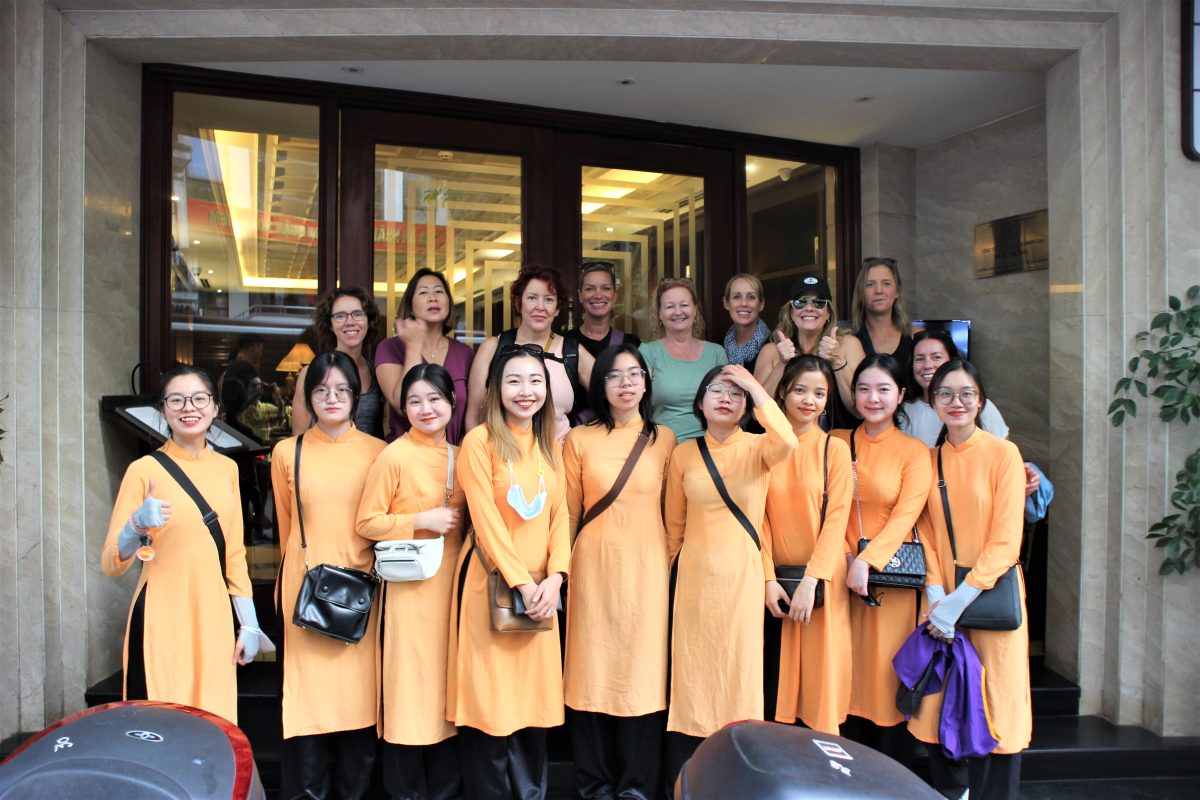
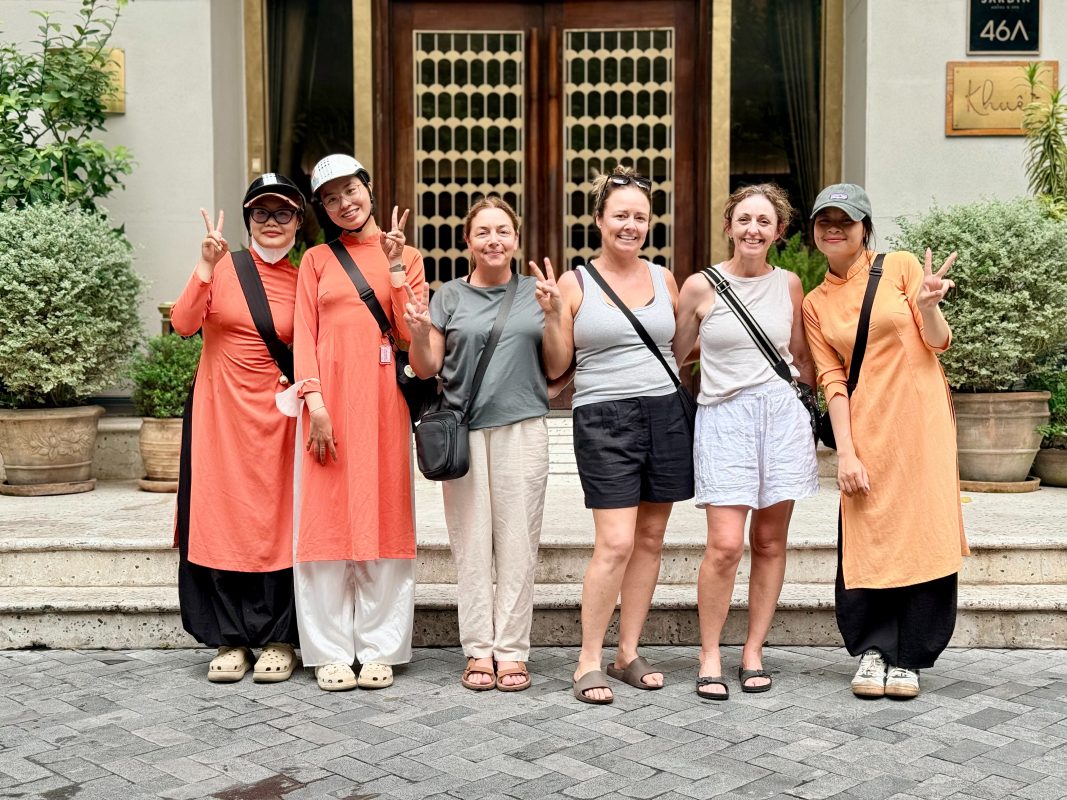
Vietnam Women Travel – Premium Private Tours Led by Women can arrange a private Hanoi-to-Halong Bay journey for travelers who want more flexibility and personalized service. A private itinerary can include hotel pickup in Hanoi, private transportation to the port, a carefully selected Halong Bay or Cat Ba cruise, private sightseeing arrangements and onward transportation according to your travel schedule. For travelers planning a larger Northern Vietnam journey, Halong Bay can be combined with Hanoi, Sapa and Ha Giang in one professionally organized private itinerary. The focus is on Vietnam private tours led by women, giving couples, families and private groups a more comfortable way to experience Northern Vietnam while keeping the itinerary flexible around their interests, preferred accommodation and travel pace.