How to Get Around Vietnam: Planes, Trains, Buses, Cars & Motorbikes
Getting around Vietnam is relatively easy once you understand how the country’s transportation system works. The country stretches roughly 1,650–1,700 km from north to south, with major destinations such as Hanoi, Ha Long Bay, Hue, Da Nang, Hoi An, Ho Chi Minh City and the Mekong Delta spread across a long, narrow coastline. That geography means there is no single best way to travel around Vietnam.
For long distances, domestic flights are usually the fastest option. Trains are excellent for selected scenic routes, buses are useful for shorter or budget journeys, private cars offer the most flexibility, and motorbikes are ideal for travelers who want freedom and adventure and have the appropriate licensing and experience.
For most first-time visitors, the smartest strategy is to combine several transportation methods rather than rely on just one.
Vietnam Transportation at a Glance
| Transportation | Best For | Typical Speed | Comfort | Price |
|---|---|---|---|---|
| Domestic flight | Long distances | ⭐⭐⭐⭐⭐ | ⭐⭐⭐⭐⭐ | $$ |
| Private car | Flexible regional travel | ⭐⭐⭐⭐ | ⭐⭐⭐⭐⭐ | $$$ |
| Train | Scenic journeys | ⭐⭐ | ⭐⭐⭐ | $$ |
| Sleeper bus | Budget travel | ⭐⭐⭐ | ⭐⭐ | $ |
| Limousine van | Regional routes | ⭐⭐⭐⭐ | ⭐⭐⭐⭐ | $$ |
| GrabCar/taxi | City travel | ⭐⭐⭐⭐ | ⭐⭐⭐⭐ | $ |
| Motorbike | Short trips/adventure | ⭐⭐⭐⭐⭐ | ⭐⭐⭐ | $ |
| Public bus | Cheapest city travel | ⭐⭐ | ⭐⭐ | $ |
| Ferry/speedboat | Islands | ⭐⭐⭐ | ⭐⭐⭐ | $$ |
Vietnam’s road network carries the overwhelming majority of passenger journeys, while aviation handles a much smaller share of passenger numbers but a disproportionately large share of passenger-kilometers because it serves long-distance routes.
The Best Way to Travel Around Vietnam
If you are visiting Vietnam for the first time, a good rule is:
Long distance → Fly
Short scenic journey → Train
Regional destination → Private car
Budget intercity travel → Sleeper bus
Inside cities → Grab or taxi
Adventure → Motorbike
This combination saves time while still allowing you to experience Vietnam beyond airports and highways.
Getting Around Vietnam by Plane
For most travelers covering several regions, domestic flights are the most efficient form of transportation.
Vietnam has a large domestic aviation network connecting Hanoi, Ho Chi Minh City, Da Nang, Hue, Nha Trang, Phu Quoc and many other destinations.
Recent 2026 transport guides put advance domestic fares on major routes broadly around US$25–80 one way, although prices vary considerably by airline, travel date, baggage and how far in advance you book.
Best routes for flying
Hanoi → Da Nang
Hanoi → Ho Chi Minh City
Ho Chi Minh City → Da Nang
Hanoi → Phu Quoc
Ho Chi Minh City → Phu Quoc
Da Nang → Ho Chi Minh City
These journeys can save many hours compared with traveling overland.
Hanoi to Ho Chi Minh City: Fly or Train?
This is one of the most important transportation decisions for a Vietnam trip.
By plane
Flight time is approximately 2 hours, excluding airport time.
By train
The North-South railway journey takes approximately 30–36 hours, depending on the service.
Therefore:
Choose a flight if you value time.
Choose the train if the journey itself is part of your travel experience.
For a 10–14-day Vietnam itinerary, flying is usually much more practical because you can use the saved time for Hanoi, Central Vietnam and Ho Chi Minh City.
Which Airlines Fly Within Vietnam?
Major domestic carriers include:
- Vietnam Airlines
- VietJet Air
- Bamboo Airways
Flight schedules and fares change, so compare the total price including baggage, not just the initial ticket price.
For example, Vietnam Airlines’ current domestic Economy Flex conditions include 10 kg of carry-on baggage and one 23 kg checked bag for applicable fares.
Low-cost fares can have different baggage conditions, so always check the fare rules before booking.
Is Flying in Vietnam Safe?
Commercial domestic aviation is a normal and widely used way to travel around Vietnam.
For tourists, the bigger practical considerations are:
- Flight delays
- Airport transfers
- Baggage allowances
- Peak-season fares
- Weather disruptions
Allow sufficient time for airport transfers, especially in Hanoi and Ho Chi Minh City.
How Early Should You Book Domestic Flights?
For popular routes, booking several weeks ahead is generally sensible, especially around:
- Tet
- Christmas/New Year
- Public holidays
- Summer holidays
- Major festivals
Prices can rise significantly closer to departure. One 2026 transport comparison found major routes that might cost around US$40–80 when booked several weeks ahead could rise to roughly US$80–150 when booked close to travel.
Getting Around Vietnam by Train
Vietnam’s railway system is best known for the North-South railway, often associated with the Reunification Express.
The main railway stretches approximately 1,726 km between Hanoi and Ho Chi Minh City and passes through major destinations including Hue, Da Nang and Nha Trang.
Train travel is slower than flying, but it offers something airplanes cannot:
You actually see the country passing outside your window.
The Best Train Journey in Vietnam
If you only take one train journey, consider:
Hue → Da Nang
This is one of the most scenic railway sections in Vietnam.
The route passes through the Hai Van Pass, with coastal views and mountains along the journey. The trip is roughly 2.5–3 hours, depending on the service.
This is very different from spending 30+ hours on a train between Hanoi and Ho Chi Minh City.
Hanoi to Hue by Train
The journey takes roughly 12–14 hours, depending on the train and conditions.
An overnight sleeper can make sense for travelers who:
- Enjoy train travel
- Want to save one hotel night
- Don’t mind a long journey
- Want a more traditional travel experience
However, travelers who prioritize comfort and time may prefer flying.
Hanoi to Ho Chi Minh City by Train
Technically, you can travel all the way from Hanoi to Ho Chi Minh City by train.
The journey is approximately:
30–36 hours
depending on the service.
For most tourists, however, this is not the most efficient way to travel between the two cities.
It makes much more sense if the railway experience itself is one of your main reasons for traveling by train.
What Are Train Classes Like in Vietnam?
Vietnamese trains generally offer different seating and sleeping options, including:
- Hard seats
- Soft seats
- Sleeper berths
- Soft sleeper compartments
For an overnight journey, a soft sleeper is considerably more comfortable than a hard seat.
Recent 2026 train pricing information places soft sleeper berths on many routes at approximately 500,000–1,200,000 VND, depending on distance and class.
Should You Take the Train in Vietnam?
Train is best for:
- Scenic travel
- Hue–Da Nang
- Travelers with flexible schedules
- Budget-conscious travelers
- People who enjoy rail journeys
Train is less suitable for:
- Short Vietnam itineraries
- Travelers with limited time
- Luxury travelers
- Families wanting maximum convenience
- Long north-to-south journeys
For a premium private itinerary, domestic flights and private cars generally make more sense than spending a large part of the trip on trains.
Getting Around Vietnam by Sleeper Bus
Sleeper buses are one of the most common ways to travel between Vietnamese cities.
Instead of normal seats, passengers usually travel in reclining or semi-reclining sleeper-style seats.
They can be particularly useful for:
Hanoi → Sapa
Hanoi → Ha Giang
Hue → Hoi An
Da Nang → Hoi An
Ho Chi Minh City → Mui Ne
Ho Chi Minh City → Da Lat
depending on the current route network.
Typical 2026 sleeper-bus prices are broadly around US$8–20 for many routes, while premium limousine services can cost more.
Are Sleeper Buses Comfortable?
They can be surprisingly comfortable, but expectations should be realistic.
Advantages:
- Affordable
- Direct
- No airport check-in
- Overnight options
- Useful for destinations without convenient flights
Disadvantages:
- Limited personal space
- Road noise
- Frequent stops
- Variable driving comfort
- Some routes take many hours
If you’re tall, check the seat/berth configuration before booking.
Sleeper Bus vs Train
| Feature | Sleeper Bus | Train |
|---|---|---|
| Price | ⭐⭐⭐⭐⭐ | ⭐⭐⭐ |
| Speed | ⭐⭐⭐ | ⭐⭐ |
| Scenic views | ⭐⭐ | ⭐⭐⭐⭐⭐ |
| Comfort | ⭐⭐⭐ | ⭐⭐⭐ |
| Flexibility | ⭐⭐⭐⭐ | ⭐⭐⭐ |
| Overnight travel | ⭐⭐⭐⭐ | ⭐⭐⭐⭐ |
| Luxury | ⭐⭐ | ⭐⭐ |
For budget travelers, buses are often the better choice.
For scenic travel, trains win.
Limousine Vans in Vietnam
A very useful option that many first-time visitors overlook is the limousine van.
These are upgraded minibuses with more comfortable seats than standard buses.
They are particularly useful for:
- Hanoi → Ha Long Bay
- Hanoi → Sapa
- Hanoi → Ha Giang
- Da Nang → Hoi An
- Hue → Hoi An
They often provide hotel pickup and drop-off, making them convenient for tourists.
For short-to-medium distances, a good limousine van can offer an excellent balance between price, speed and comfort.
Getting Around Vietnam by Private Car
For travelers who prioritize comfort, flexibility and door-to-door service, private cars are one of the best transportation options.
A private car is particularly useful when:
- Traveling as a family
- Traveling as a couple
- Carrying large luggage
- Visiting multiple attractions in one day
- Traveling between nearby destinations
- Wanting hotel pickup and drop-off
Private Car vs Bus
A private car usually costs more, but you gain:
- Flexible departure time
- Direct hotel pickup
- No shared passengers
- Stops whenever you want
- More luggage space
- Better privacy
- Easier itinerary changes
For two or more travelers, the difference in cost per person can become much more reasonable.
Best Private-Car Routes in Vietnam
Some of the best journeys by private car include:
Hanoi → Ha Long Bay
Hanoi → Ha Giang
Hanoi → Sapa
Hue → Da Nang
Da Nang → Hoi An
Hoi An → Hue
Ho Chi Minh City → Mekong Delta
Ho Chi Minh City → Vung Tau
For regional travel, private cars can be significantly more convenient than changing between buses and taxis.
Hue to Hoi An: What Is the Best Transportation?
This is one of Vietnam’s most enjoyable regional journeys.
You have several choices:
Private car
Best for comfort and sightseeing.
Train
Excellent if you want the Hai Van Pass scenery, but you will still need onward transportation to Hoi An.
Bus/limousine
Usually cheaper and convenient.
Motorbike
Excellent for experienced riders looking for adventure.
For travelers who want a seamless experience, a private car via Hai Van Pass is one of the best options.
Getting Around Vietnam by Taxi
Traditional taxis remain available in major Vietnamese cities.
However, many international travelers prefer app-based transportation because you can:
- See the estimated price
- Enter the destination digitally
- Avoid language difficulties
- Track the route
- Pay through the app where available
Use established taxi companies or reputable ride-hailing services.
Using Grab in Vietnam
Grab is extremely useful for tourists.
You can use it for:
- Cars
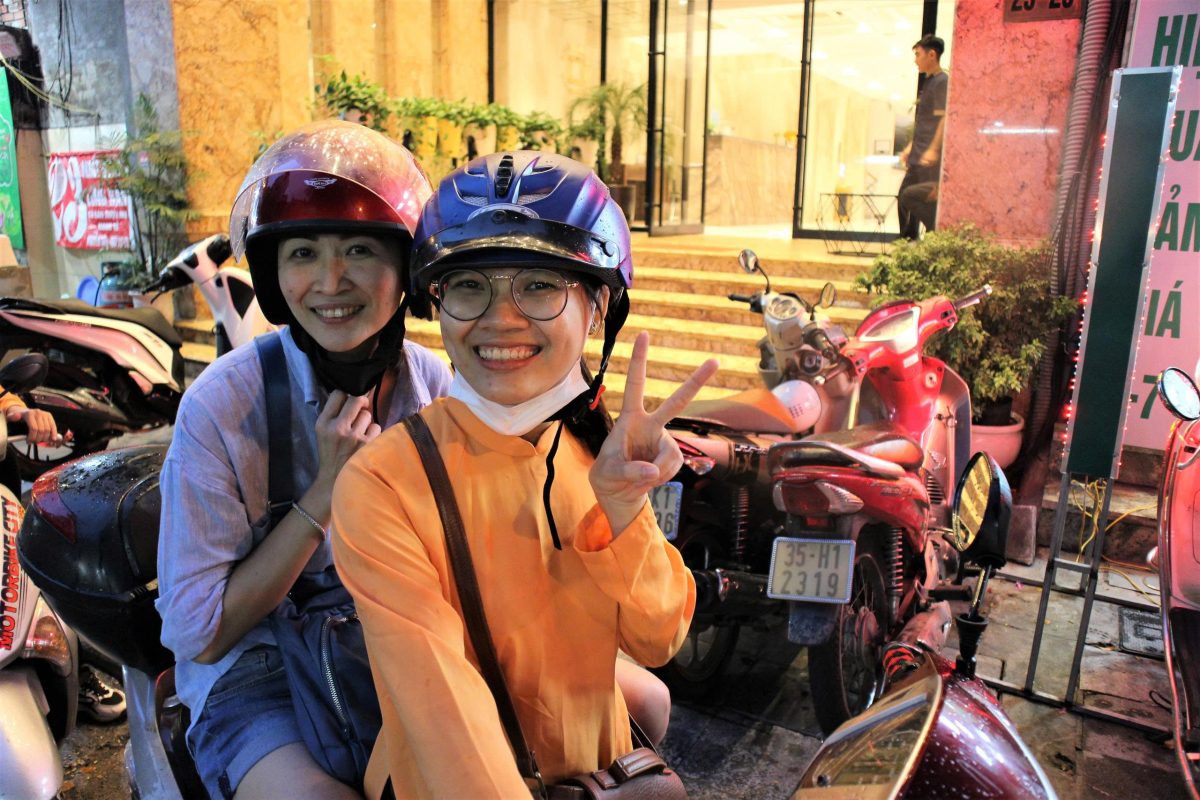
- Motorbike taxis
- Food delivery
- Airport transfers in many areas
Recent 2026 transport guides report Grab and other ride-hailing services as widely available in Vietnam’s major cities.
For a first-time visitor, Grab is often easier than negotiating a taxi fare.
GrabBike vs GrabCar
GrabBike
Best for:
- One traveler
- Short distances
- No large luggage
- Avoiding traffic
GrabCar
Best for:
- Couples
- Families
- Luggage
- Rain
- Longer city journeys
If you’re carrying a large suitcase, choose a car.
Getting Around Vietnam by Motorbike
Motorbikes are deeply integrated into everyday Vietnamese transportation.
For travelers, renting a motorbike can provide incredible freedom.
You can explore:
- Ha Giang
- Sapa
- Central Vietnam
- Coastal roads
- Rural countryside
- Smaller towns
But motorbike travel requires significantly more attention to licensing, insurance, traffic conditions and riding experience than simply booking a taxi.
Can Tourists Rent Motorbikes in Vietnam?
Tourists do rent motorbikes in Vietnam, but having the correct legal authorization to ride is important.
Do not assume that your home-country driving licence automatically authorizes you to ride legally in Vietnam.
Recent 2026 travel guidance notes that fines for riding without the appropriate licence can be substantial.
Before renting, verify that your licence and any required International Driving Permit are recognized for the motorcycle category you intend to ride.
Should Beginners Ride a Motorbike in Hanoi or Ho Chi Minh City?
Generally, no.
Traffic in both cities can be overwhelming for inexperienced riders.
If you’ve never ridden a motorcycle in heavy urban traffic, using:
GrabCar
GrabBike as a passenger
Private car
or a professionally operated tour
is a much safer and easier option.
Motorbike Tours vs Renting a Motorbike
There is an important difference.
Motorbike rental
You ride yourself.
You are responsible for:
- Navigation
- Traffic
- Vehicle
- Licensing
- Fuel
- Safety
- Route planning
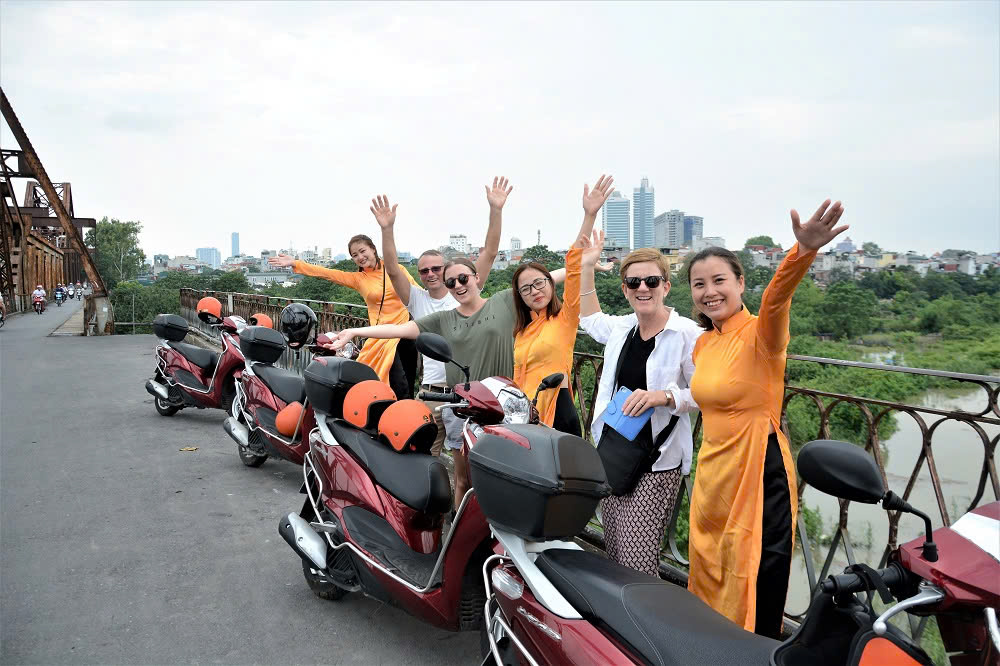
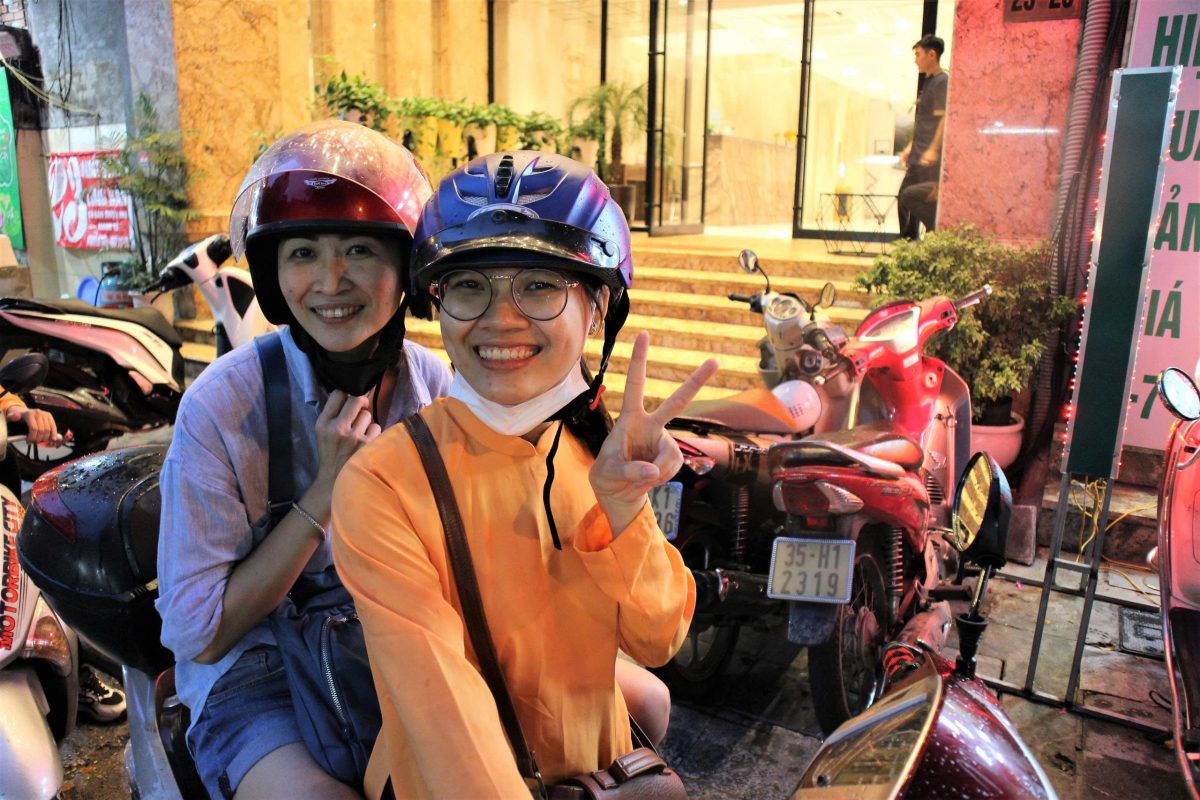
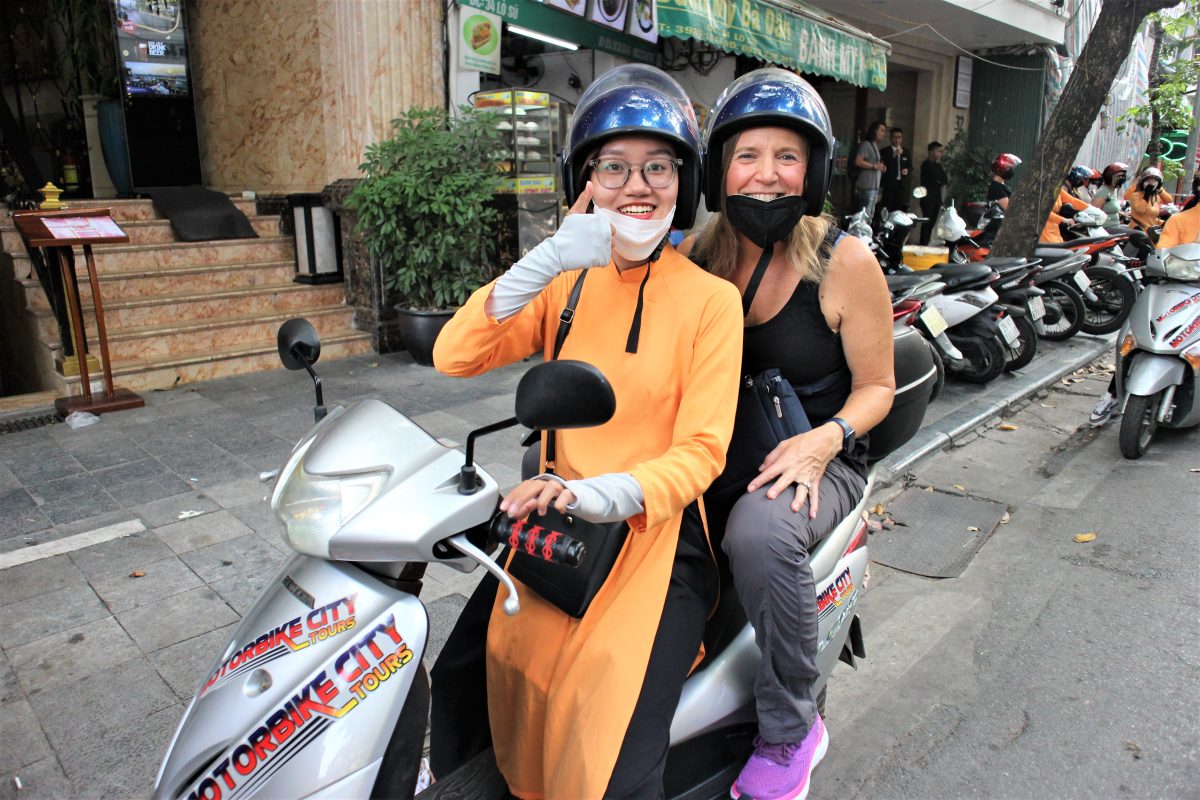
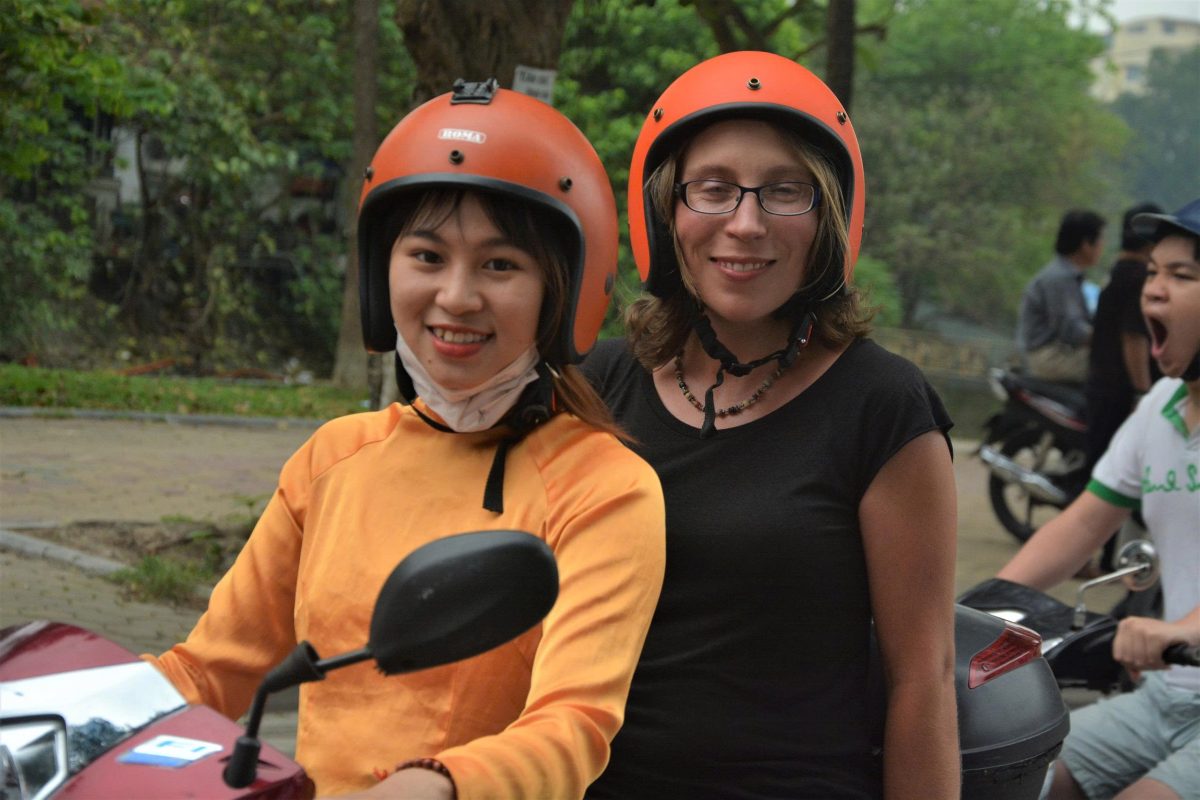
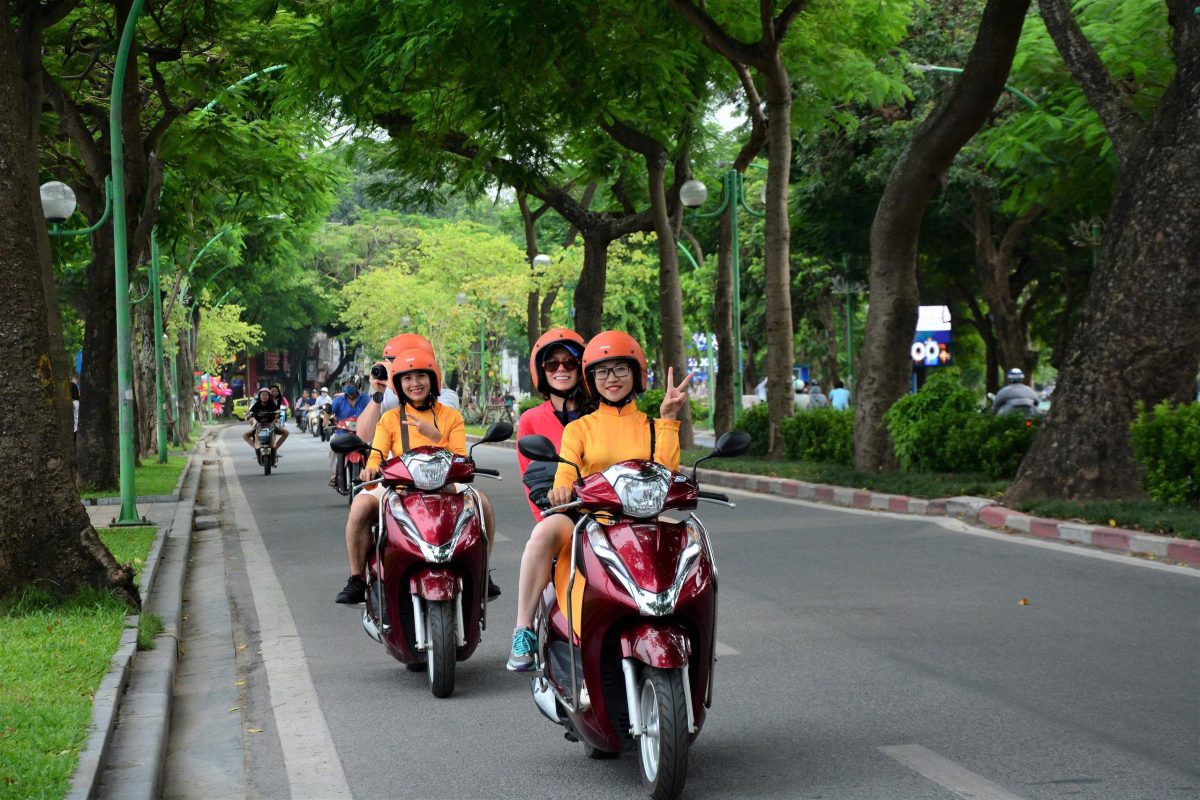
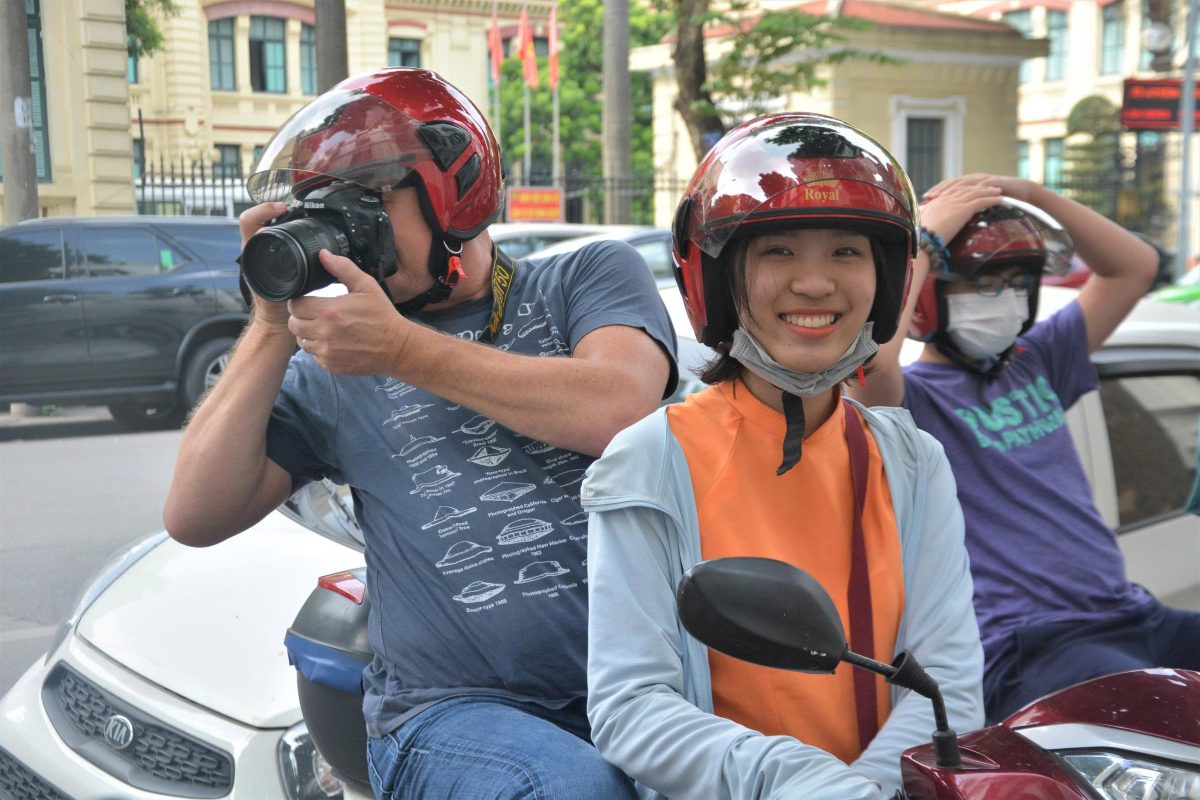
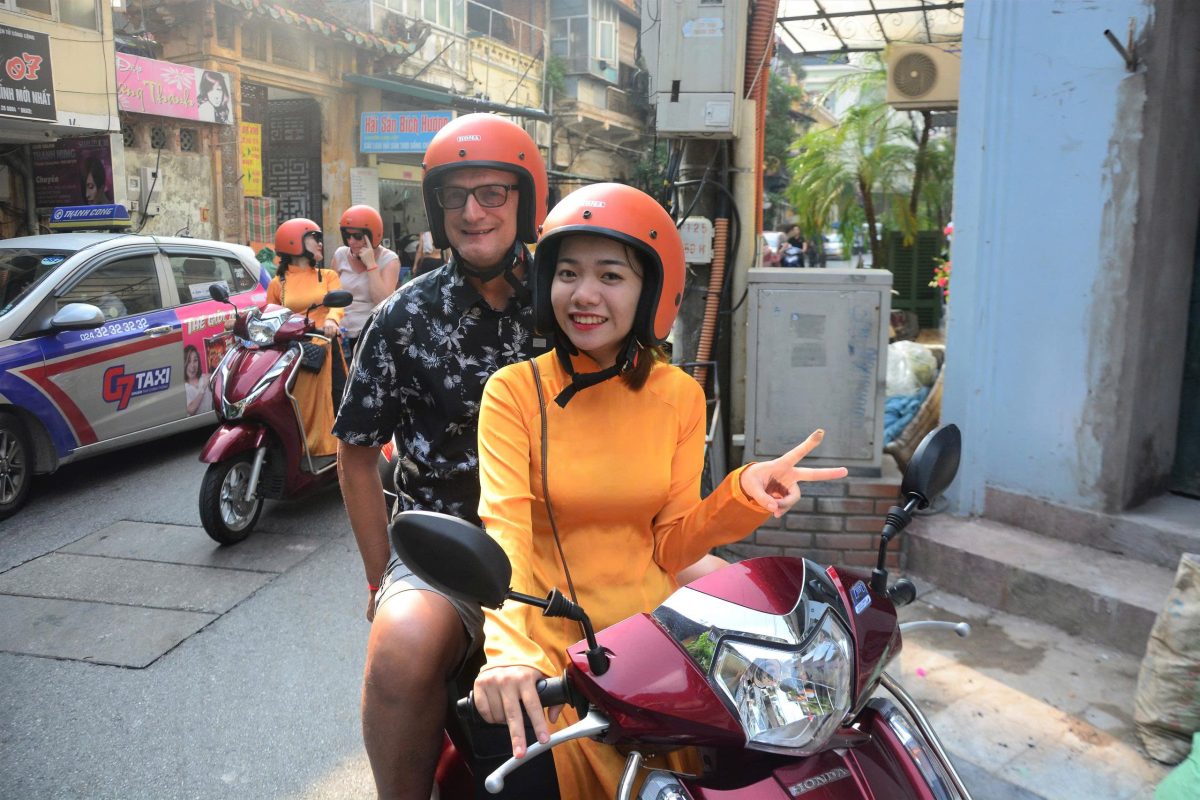
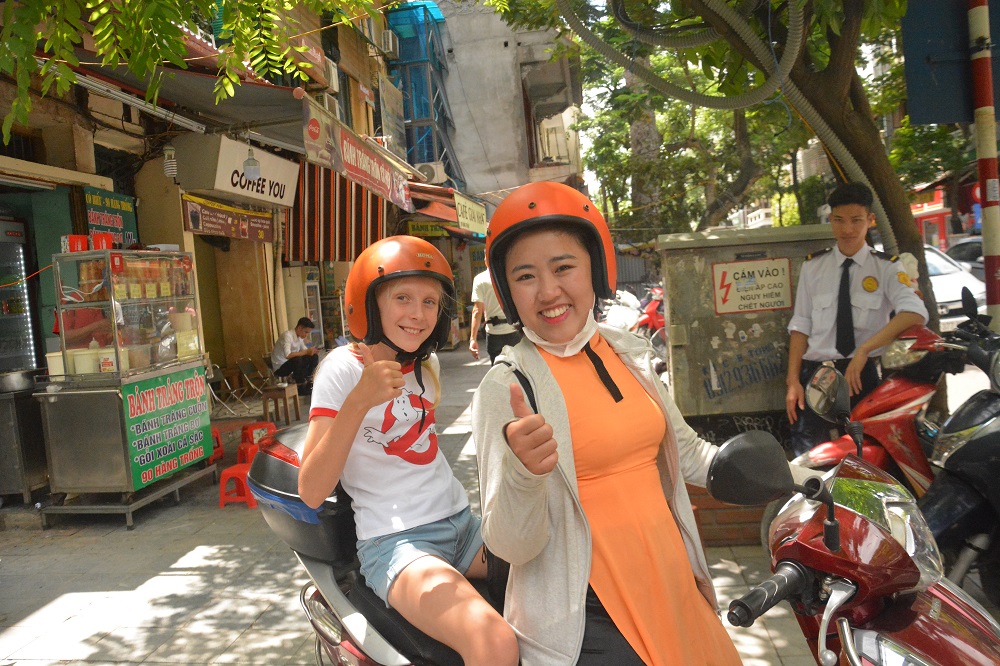
Guided motorbike tour
A professional rider handles the motorcycle while you enjoy the experience as a passenger.
This can be much easier for tourists who want the motorbike experience without having to navigate Vietnamese traffic themselves.
Getting Around Vietnam by Bicycle
Cycling can be excellent in selected destinations.
Good places include:
- Hoi An countryside
- Mekong Delta
- Rural villages
- Some coastal areas
It is less practical for crossing the entire country.
For city sightseeing, cycling can be enjoyable in quieter areas but may be challenging in heavy traffic.
Getting Around Vietnam by Public Bus
Public buses are the cheapest transportation option in most major cities.
They are useful for:
- Budget travelers
- Airport connections
- Short city journeys
- Travelers comfortable navigating local routes
However, routes and payment systems can be less intuitive for first-time visitors than ride-hailing apps.
Hanoi Public Transportation
Hanoi has:
- Public buses
- Ride-hailing
- Taxis
- Urban rail/metro services
For tourists, the easiest combination is generally:
Walk + Grab + occasional public transportation
depending on where you’re staying.
Ho Chi Minh City Public Transportation
Ho Chi Minh City has:
- Public buses
- Metro service
- Taxis
- Grab
- Motorbike taxis
The metro adds another useful option for certain journeys within the city, particularly as the urban rail network develops.
Getting Around Vietnam’s Islands
For destinations such as:
- Phu Quoc
- Con Dao
- Cat Ba
you may need a combination of:
Flight + taxi/private car + ferry
depending on the destination.
Phu Quoc
Flying is usually the easiest option from Hanoi or Ho Chi Minh City.
Con Dao
Flights are the most convenient for many visitors, although ferry services also connect the island with mainland ports.
Cat Ba
Usually involves road and/or ferry connections depending on the route and current transport arrangements.
How to Get from Hanoi Airport to the City
Noi Bai International Airport is outside central Hanoi.
Common options include:
Private transfer
Best for families, groups and travelers with luggage.
GrabCar
Convenient and relatively straightforward.
Airport bus
Cheaper but less convenient with substantial luggage.
For premium travelers, a pre-arranged private airport transfer is usually the easiest option.
How to Get from Ho Chi Minh City Airport to the City
Tan Son Nhat International Airport is much closer to central Ho Chi Minh City than Hanoi’s airport is to central Hanoi.
Options include:
- GrabCar
- Taxi
- Private transfer
- Public bus
A private transfer is particularly useful if you’re arriving late at night or traveling with children and several pieces of luggage.
How Much Does Transportation Cost in Vietnam?
Prices vary by route, season and booking time, but these are useful planning ranges for 2026:
| Transport | Approximate Cost |
|---|---|
| GrabBike short ride | US$0.60–2+ |
| GrabCar short ride | US$2–6+ |
| City bus | Under US$1 in many cities |
| Sleeper bus | US$8–30+ |
| Limousine van | US$10–40+ |
| Train | US$20–110+ |
| Domestic flight | US$25–100+ |
| Private car | US$40–150+ depending on route |
| Motorbike rental | US$4–15+ per day |
These are planning ranges, not fixed fares. Recent 2026 transport comparisons show substantial variation depending on route and booking timing.
What Is the Cheapest Way to Travel Around Vietnam?
For the lowest possible transportation budget:
Public bus + sleeper bus + occasional train
will generally cost less than flying and private transportation.
However, cheap transportation is not always the best value.
If you have only 10 days in Vietnam, spending 12–16 hours on a bus to save US$30 may not be worthwhile.
What Is the Fastest Way to Travel Around Vietnam?
Domestic flights.
This is particularly true for:
Hanoi ↔ Ho Chi Minh City
Hanoi ↔ Da Nang
Da Nang ↔ Ho Chi Minh City
Flying allows you to cover the country’s enormous north-south distances without losing an entire day to transportation.
What Is the Most Comfortable Way to Travel Around Vietnam?
For premium travelers:
Domestic flights + private cars + private transfers
is usually the strongest combination.
For example:
Hanoi → Da Nang by private airport transfer + flight
Da Nang → Hoi An by private car
Hoi An → Hue by private car
Hue → Hanoi by flight
Hanoi → Ho Chi Minh City by flight
This minimizes unnecessary travel time while keeping the experience comfortable.
Best Transportation for Families
Families should generally prioritize:
Private car + domestic flights + GrabCar
Why?
Because families often have:
- More luggage
- Children
- Fixed schedules
- Need for bathroom stops
- Less flexibility for long bus journeys
Private transportation also means the entire family stays together.
Best Transportation for Couples
Couples have more flexibility.
A good combination is:
Flights for long distances
Private cars for scenic regional journeys
Grab for cities
Train for selected scenic sections
This gives you comfort without making every journey expensive.
Best Transportation for Backpackers
Backpackers can combine:
Sleeper buses
Trains
Public buses
GrabBike
Occasional budget flights
This keeps transportation costs low.
Best Transportation for Luxury Travelers
For a luxury Vietnam trip, prioritize:
Domestic flights
Private airport transfers
Private cars
Professional drivers
Premium cruises
Private sightseeing
There is little reason for a luxury itinerary to spend 30+ hours traveling from Hanoi to Ho Chi Minh City by train simply because it is possible.
Best Transportation for First-Time Visitors
If this is your first trip, don’t try to master every transportation system.
Use:
In Hanoi
Walk + Grab + private transfers
Between Hanoi and Central Vietnam
Fly
Hoi An ↔ Hue
Private car
Central Vietnam → Ho Chi Minh City
Fly
Ho Chi Minh City
Grab + private transfers
This is simple, comfortable and efficient.
Best Transportation for a 10-Day Vietnam Itinerary
For a short trip, consider:
Hanoi → Da Nang/Hoi An → Ho Chi Minh City
Use:
Flight
Private car
Flight
For example:
Days 1–3
Hanoi
Day 4
Fly Hanoi → Da Nang, private car to Hoi An
Days 5–6
Hoi An and Central Vietnam
Day 7
Private car to Da Nang, then fly to Ho Chi Minh City
Days 8–10
Ho Chi Minh City and Mekong Delta
This gives you considerably more sightseeing time than traveling long distances overland.
Best Transportation for a 14-Day Vietnam Itinerary
A 14-day trip allows more flexibility.
A strong route is:
Hanoi → Ha Long Bay → Hoi An → Hue → Ho Chi Minh City → Mekong Delta
Recommended transportation:
Hanoi → Ha Long Bay: private car
Hanoi → Da Nang: flight
Da Nang → Hoi An: private car
Hoi An → Hue: private car via Hai Van Pass
Hue → Ho Chi Minh City: flight
Ho Chi Minh City → Mekong Delta: private car
This is one of the most efficient combinations for a comfortable Vietnam holiday.
Should You Travel Vietnam North to South or South to North?
Both directions work.
North to South
Hanoi → Ha Long Bay → Hoi An → Hue → Ho Chi Minh City
South to North
Ho Chi Minh City → Mekong Delta → Hoi An → Hue → Hanoi → Ha Long Bay
Choose based on:
- International flight prices
- Weather
- Personal preferences
- Available domestic flights
- Tour availability
The most important thing is to avoid unnecessary backtracking.
Best Transportation for a South-to-North Route
For:
Ho Chi Minh City → Mekong Delta → Hoi An → Hue → Hanoi
use:
Private car for Mekong Delta
Flight from Ho Chi Minh City to Da Nang
Private car between Hoi An and Hue
Flight from Hue/Da Nang to Hanoi
Then:
Private car from Hanoi to Ha Long Bay
This is much faster than trying to travel the entire country overland.
Best Transportation for a North-to-South Route
For:
Hanoi → Ha Long Bay → Hoi An → Hue → Ho Chi Minh City
use:
Private car Hanoi → Ha Long Bay
Flight Hanoi → Da Nang
Private car Da Nang → Hoi An
Private car Hoi An → Hue
Flight Da Nang/Hue → Ho Chi Minh City
This route balances comfort, speed and sightseeing.
Should You Rent a Car in Vietnam?
For most foreign tourists, renting a self-drive car is not the easiest option.
Vietnamese traffic, licensing requirements and road conditions make driving yourself considerably more complicated than simply hiring a car with a professional driver.
A private car with driver is generally a better choice.
You get:
- Door-to-door transportation
- No navigation stress
- No parking problems
- Local road knowledge
- More flexibility
Private Car with Driver vs Self-Driving
| Feature | Private Car + Driver | Self-Drive |
|---|---|---|
| Convenience | ⭐⭐⭐⭐⭐ | ⭐⭐ |
| Navigation | Easy | Difficult |
| Flexibility | ⭐⭐⭐⭐⭐ | ⭐⭐⭐⭐ |
| Traffic stress | Low | High |
| Best for tourists | Yes | Experienced drivers |
| Family travel | Excellent | More complicated |
| Premium travel | Excellent | Not ideal |
For most international visitors, private car with driver wins.
How to Book Transportation in Vietnam
For domestic flights, use airline websites or reputable booking platforms.
For trains, Vietnam Railways provides official ticketing information, while established booking platforms can also sell tickets. Current 2026 guidance lists dsvn.vn as an official rail booking channel.
For buses, check the operator carefully and confirm:
- Departure point
- Arrival point
- Pickup location
- Luggage policy
- Seat type
- Travel time
For private cars and tours, confirm the vehicle type, pickup location and total price before departure.
How to Avoid Transportation Problems in Vietnam
A few simple habits make a huge difference.
1. Don’t schedule flights too close together
Allow plenty of time between connections.
2. Confirm airport and station names
Some destinations have multiple transportation hubs.
3. Check luggage allowances
Especially with low-cost airlines.
4. Don’t rely on outdated travel times
Road infrastructure continues to change, and journey times vary by vehicle type and route. Recent 2026 transport research notes that private cars and sleeper buses can have significantly different journey times on the same route.
5. Keep your hotel address available
Have it saved in your phone in English and Vietnamese.
6. Carry some cash
Small transportation providers may not accept cards.
Is Vietnam Easy to Travel Around Without a Car?
Yes.
You can travel through much of Vietnam without driving yourself.
A typical independent traveler can combine:
Flights + Grab + trains + buses + private transfers
and reach most major destinations.
You don’t need to rent a vehicle for an entire Vietnam trip.
Is Vietnam Easy to Travel Around With Children?
Yes, especially if you choose private transportation for regional journeys.
Families generally benefit from:
- Private airport transfers
- Private cars
- Domestic flights
- GrabCar
- Family-friendly hotels
Long sleeper-bus journeys can be less comfortable with young children.
Is Vietnam Easy for Solo Travelers?
Yes.
Solo travelers can use:
- Grab
- Domestic flights
- Trains
- Sleeper buses
- Organized tours
- Private transfers
The main advantage of traveling solo is flexibility.
The main disadvantage is that private transportation costs cannot be shared with other travelers.
Vietnam Transportation: Which Option Should You Choose?
| Your Priority | Best Choice |
|---|---|
| Fastest | ✈️ Plane |
| Cheapest | 🚌 Bus |
| Best scenery | 🚆 Train |
| Maximum comfort | 🚗 Private car |
| City travel | 📱 Grab |
| Adventure | 🏍️ Motorbike |
| Family | 🚗 Private car |
| Luxury | ✈️ Plane + 🚗 Private car |
| Backpacking | 🚌 Bus + 🚆 Train |
| First Vietnam trip | ✈️ Flights + 🚗 Private car |
Final Verdict: How Should You Get Around Vietnam?
There is no single best transportation method for Vietnam.
The best strategy is to combine them.
Use planes for long distances because Vietnam is much larger than it appears on a map. Domestic aviation can turn an exhausting day-long overland journey into a flight of roughly one to two hours.
Use trains when the scenery is part of the experience, especially around the Hue–Da Nang/Hai Van Pass section.
Use sleeper buses and limousine vans for affordable regional journeys.
Use private cars when comfort, flexibility and door-to-door service matter.
Use Grab for everyday city transportation.
Use motorbikes for adventure only if you are properly licensed, experienced and comfortable with Vietnamese traffic.
For a premium Vietnam itinerary, the most efficient combination is usually:
Domestic flights + private cars + private airport transfers + selected private experiences.
You spend less time sitting in transportation and more time experiencing Vietnam.
Vietnam Women Travel – Premium Private Tours Led by Women
Vietnam Women Travel – Premium Private Tours Led by Women focuses on private, comfortable Vietnam experiences designed around each traveler’s schedule.
For premium itineraries, transportation can be arranged around domestic flights, private cars, professional drivers, airport transfers and private sightseeing, allowing travelers to move efficiently between Hanoi, Central Vietnam and Southern Vietnam.
A well-designed Vietnam itinerary isn’t about choosing between planes, trains, buses, cars and motorbikes.
It’s about choosing the right transportation for each part of the journey.
Fly the long distances. Drive the scenic regional routes. Use Grab in the cities. Take a train when the scenery is worth the extra time. And choose a guided motorbike experience when you want to see Vietnam from the road without taking on the responsibility of riding yourself.