Hue Travel Guide: Best Things to Do in Vietnam’s Imperial City
Hue is Vietnam’s former imperial capital and one of the country’s most important destinations for history, architecture, culture and cuisine. Located along the Perfume River in Central Vietnam, Hue served as the capital of the Nguyen Dynasty from 1802 to 1945, when it was the political, cultural and religious center of the last royal dynasty in Vietnamese history. The Complex of Hue Monuments was inscribed as a UNESCO World Heritage Site in 1993.
For first-time visitors, 2–3 days in Hue is ideal. This gives you enough time to explore the Imperial City, visit two or three royal tombs, see Thien Mu Pagoda, enjoy the Perfume River and discover Hue’s distinctive cuisine without rushing.
Unlike Da Nang, which is known for beaches, or Hoi An, which is famous for its historic trading-port atmosphere, Hue is primarily a destination for Vietnamese royal history and cultural heritage. The city’s greatest attractions are spread between the Citadel, the river and the forested hills where the Nguyen emperors built their tombs.
Why Visit Hue?
Hue offers one of the most concentrated collections of historic monuments in Vietnam. The Imperial City, Forbidden Purple City, royal tombs, temples, pagodas and ceremonial sites were planned around the Perfume River and the surrounding landscape.
UNESCO describes the Hue monument complex as an exceptional example of a complete defended capital city planned and constructed in the early 19th century. The design incorporates the river, mountains and traditional Eastern cosmological principles into the layout of the capital.
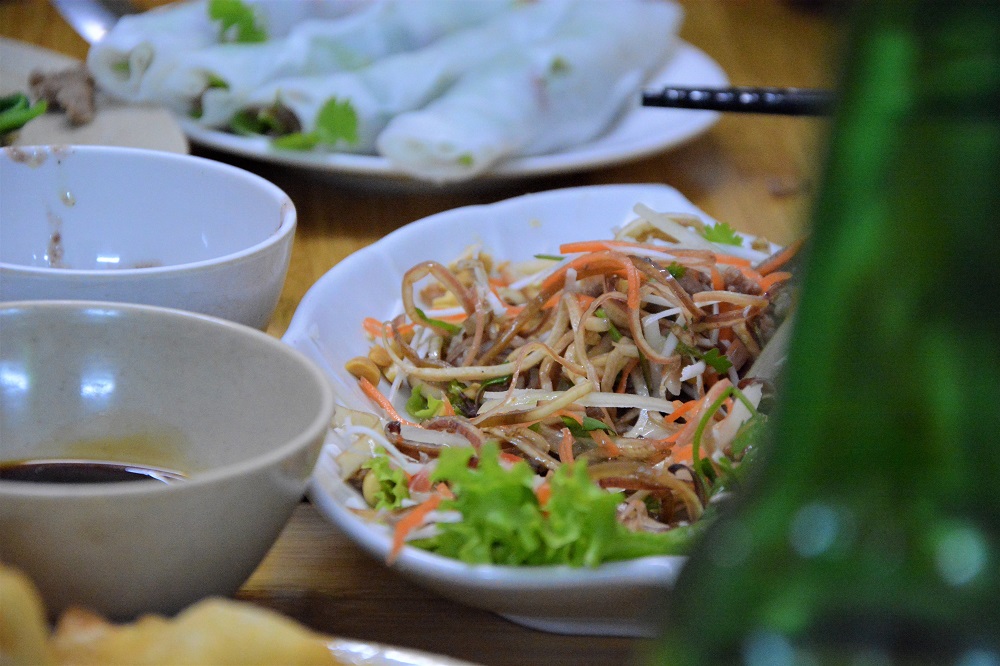
Hue is also one of Vietnam’s most important culinary destinations. The city is famous for bun bo Hue, banh beo, banh nam, banh loc, banh khoai and com hen, while its royal culinary tradition adds another dimension to the food experience. Vietnam Tourism describes Hue’s cuisine as one of the city’s defining attractions.
Hue at a Glance
Best for: History, royal architecture, culture, food, photography and slow travel.
Recommended stay: 2–3 days.
Main attraction: Hue Imperial City.
UNESCO site: Complex of Hue Monuments.
Must-see tombs: Minh Mang, Tu Duc and Khai Dinh.
Most famous pagoda: Thien Mu Pagoda.
Signature dish: Bun bo Hue.
Main river: Perfume River.
Best nearby scenic route: Hai Van Pass toward Da Nang.
1. Explore Hue Imperial City
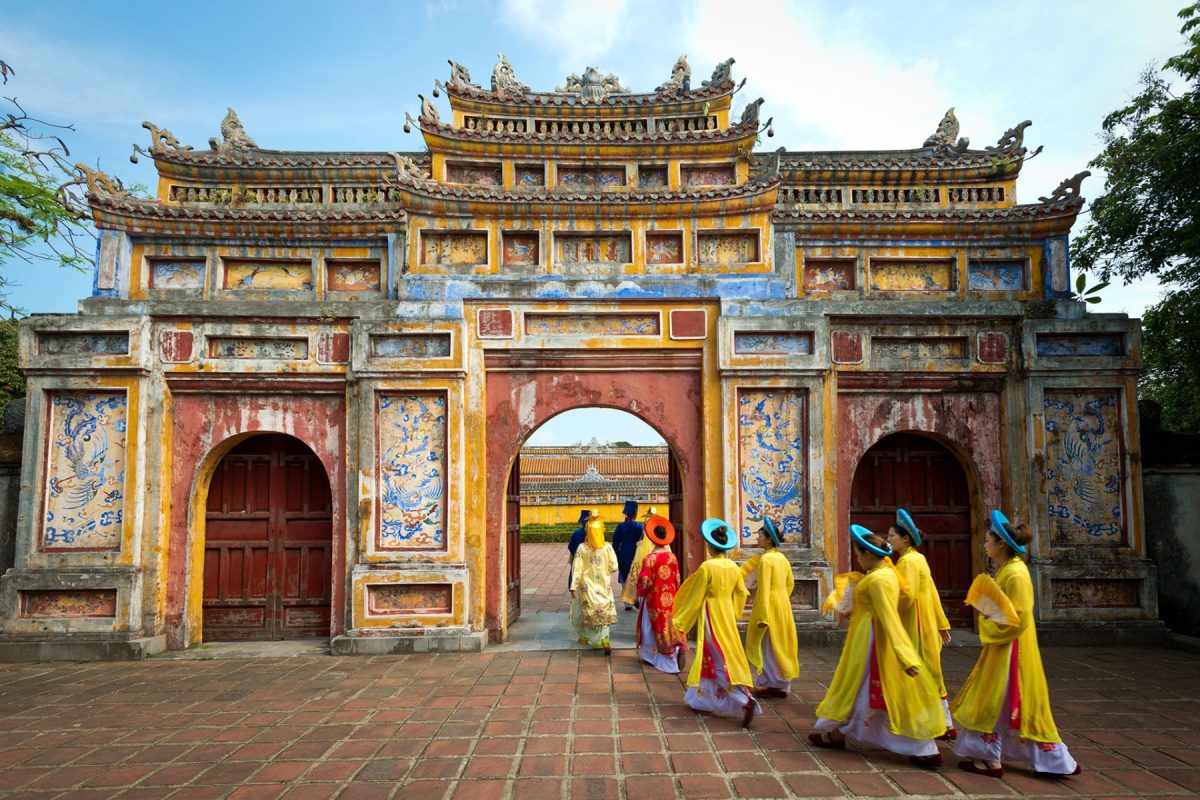
The Hue Imperial City, commonly called the Dai Noi, is the essential attraction for any first-time visitor.
Construction of the imperial capital began after Hue became the capital of unified Vietnam in 1802. Inside the larger Citadel are the Imperial City and the Forbidden Purple City, together with ceremonial buildings, palaces, temples and courtyards.
Start at Ngo Mon Gate, the impressive southern entrance to the Imperial City. From here, walk toward Thai Hoa Palace and continue through the ceremonial courtyards and temple areas.
Allow at least 2–3 hours for the Imperial City. The complex is large, and rushing through the major buildings makes it difficult to appreciate the architecture.
The Hue Monuments Conservation Centre currently lists the adult entrance fee for the Imperial City at 200,000 VND, with a separate child rate for ages 7–12.
2. See Ngo Mon Gate
Ngo Mon Gate is one of the most recognizable structures in Hue. It served as the principal southern entrance to the Imperial City and was closely associated with imperial ceremonies.
The elevated pavilion above the gate provides an excellent example of the monumental architecture used to represent royal authority.
For photographers, early morning is an excellent time to visit because the light is softer and the area is generally more comfortable before the midday heat.
3. Visit Thai Hoa Palace
Thai Hoa Palace, or the Palace of Supreme Harmony, was one of the most important ceremonial buildings inside the Imperial City.
The palace was used for major imperial ceremonies and audiences. Its architecture, wooden columns and decorative details demonstrate the importance of symbolism in Nguyen Dynasty architecture.
This is one of the places where a knowledgeable guide can make a major difference because the architectural details are closely connected to imperial rituals and hierarchy.
4. Explore the Forbidden Purple City
The Forbidden Purple City was the innermost royal area, reserved primarily for the emperor, royal family and court.
Much of the complex was damaged during decades of conflict, but restoration has brought several important areas back to life. The remaining structures and archaeological evidence help visitors understand how the imperial household was organized.
UNESCO identifies the Forbidden Purple City as an integral component of the historic capital within the Hue monument complex.
5. Walk Around the Hue Citadel
The Imperial City is only part of the larger Hue Citadel. The wider fortified area includes defensive walls, gates, canals and historic structures.
If you have time, explore beyond the most photographed palace buildings. Quiet sections of the Citadel can provide a better sense of the scale of the former capital.
The Citadel was designed as part of a larger landscape that incorporated the Perfume River and surrounding mountains. UNESCO considers the relationship between architecture and landscape one of the defining characteristics of the site.
6. Visit Minh Mang Tomb
Minh Mang Tomb is one of the most impressive royal tombs in Hue.
Located south of the city, the complex is known for its symmetrical layout, lakes, gardens, courtyards and traditional architecture. Vietnam Tourism describes Minh Mang’s tomb as particularly notable for the way architecture and natural landscape are combined.
The tomb reflects Emperor Minh Mang’s Confucian worldview and his emphasis on order and hierarchy.
Best for: Architecture, history, gardens and photography.
7. Visit Tu Duc Tomb
Tu Duc Tomb has a completely different character.
Emperor Tu Duc was a poet and designed his tomb complex as a peaceful retreat surrounded by gardens, water and pavilions. The atmosphere is more intimate than the monumental Imperial City.
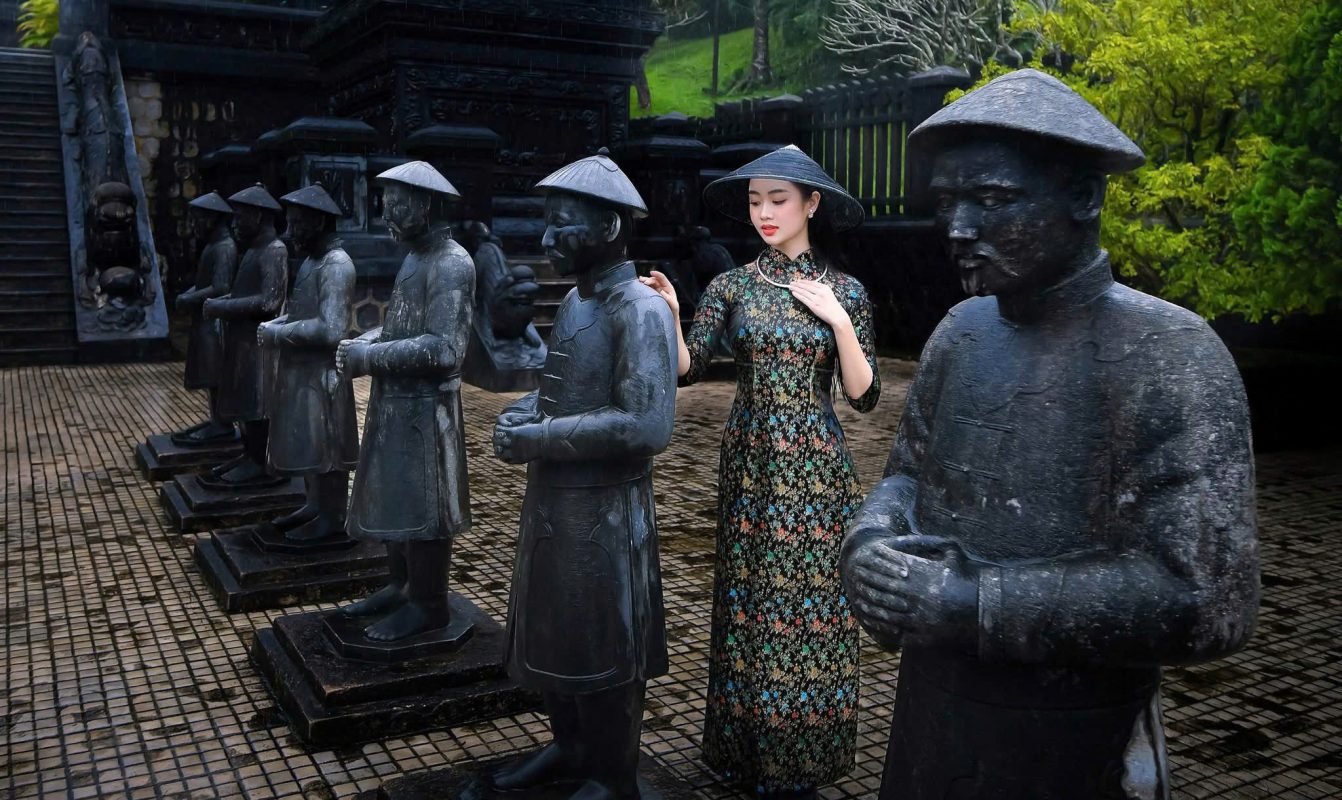
Vietnam Tourism notes that the tombs were designed by the Nguyen emperors themselves and reflect their individual personalities, philosophies and priorities.
Best for: Gardens, photography, architecture and understanding the personality of the emperor.
8. Visit Khai Dinh Tomb
Khai Dinh Tomb is perhaps the most visually dramatic of the major royal tombs.
Built into a hillside, the complex combines traditional Vietnamese elements with European architectural influences. The interior is particularly famous for elaborate mosaics made from ceramics and glass.
The contrast with Minh Mang and Tu Duc makes Khai Dinh an important part of a first-time Hue itinerary.
Best for: Photography, architecture and travelers interested in the meeting of Eastern and Western influences.
9. Should You Visit All Three Major Tombs?
If you have only one day, two tombs are enough.
For most first-time visitors, the strongest combination is Minh Mang + Khai Dinh, because they provide a striking contrast in architecture and setting.
If you have more time, add Tu Duc.
Vietnam Tourism recommends selecting the tombs that interest you rather than trying to rush through every royal mausoleum.
The Hue Monuments Conservation Centre currently lists the adult entrance fee for Minh Mang, Tu Duc and Khai Dinh tombs at 150,000 VND per site.
10. Visit Thien Mu Pagoda
Thien Mu Pagoda is one of Hue’s most recognizable religious landmarks.
The pagoda overlooks the Perfume River and is famous for its seven-story Phuoc Duyen Tower. The site forms part of the UNESCO-listed Complex of Hue Monuments.
The pagoda is particularly beautiful in the late afternoon, when the river and surrounding greenery create a peaceful setting.
A visit can easily be combined with a Perfume River boat trip or a private sightseeing route through Hue.
11. Cruise Along the Perfume River
The Perfume River is central to Hue’s identity and historic landscape. It runs through the city and connects many of the monuments associated with the Nguyen Dynasty.
A short river cruise provides a slower perspective on Hue and works particularly well around sunset.
For travelers who prefer a more private experience, a private boat combined with a guided heritage tour can create a much more relaxed afternoon.
12. Visit Dong Ba Market
Dong Ba Market is one of Hue’s best places to experience the city’s food and everyday shopping culture.
The market offers ingredients, snacks, clothing, handicrafts and regional products. It is also an excellent place to see the variety of ingredients used in Hue cuisine.
Vietnam Tourism specifically recommends Dong Ba Market as an introduction to Hue’s food culture.
13. Discover Hue’s Garden Houses
Hue is famous for its traditional garden houses, where architecture and carefully planted gardens are integrated into a single residential environment.
These houses provide a quieter experience than the Imperial City and demonstrate another aspect of Hue’s cultural heritage.
For travelers interested in architecture and traditional Vietnamese lifestyles, adding a garden house to a private city tour is worthwhile.
14. Visit Thanh Toan Bridge
Outside central Hue, Thanh Toan Bridge is an attractive countryside excursion.
The historic tiled-roof bridge crosses a small canal surrounded by agricultural landscapes. The journey to the bridge can be combined with cycling through rice fields, vegetable gardens and rural villages.
Vietnam Tourism specifically recommends the countryside around Thanh Toan Bridge for travelers who want to explore beyond the major monuments.
15. Explore Tu Hieu Pagoda
Tu Hieu Pagoda is a peaceful Buddhist site surrounded by trees and away from the busiest tourist areas.
The temple complex has strong connections with Zen Buddhism and is associated with Thich Nhat Hanh, who spent part of his early monastic life in Hue. Vietnam Tourism includes Tu Hieu among the city’s important Buddhist sites.
It is an excellent choice for travelers who want a quieter cultural experience.
16. Visit An Dinh Palace
An Dinh Palace provides a different perspective on Vietnam’s royal family.
Unlike the enormous Imperial City, this palace offers a more intimate look at the later Nguyen royal period and combines Vietnamese traditions with European architectural influences.
It is particularly interesting for travelers who want to understand the transition from the imperial era toward Vietnam’s modern history.
17. See the Royal Arena
The Royal Arena, or Ho Quyen, was historically associated with imperial entertainment and elephant-tiger fighting.
It is part of the broader Hue monument complex and offers an unusual perspective on royal life beyond palaces and tombs. UNESCO includes the Royal Arena and Voi Re Temple among the component sites of the World Heritage property.
18. Visit Nam Giao Esplanade
The Nam Giao Esplanade was the ceremonial site where Nguyen emperors performed rituals dedicated to Heaven and Earth.
The site is important for understanding the religious and political symbolism of the Nguyen imperial system.
It is less crowded than the Imperial City and can be included in a deeper heritage itinerary.
Best Food to Eat in Hue
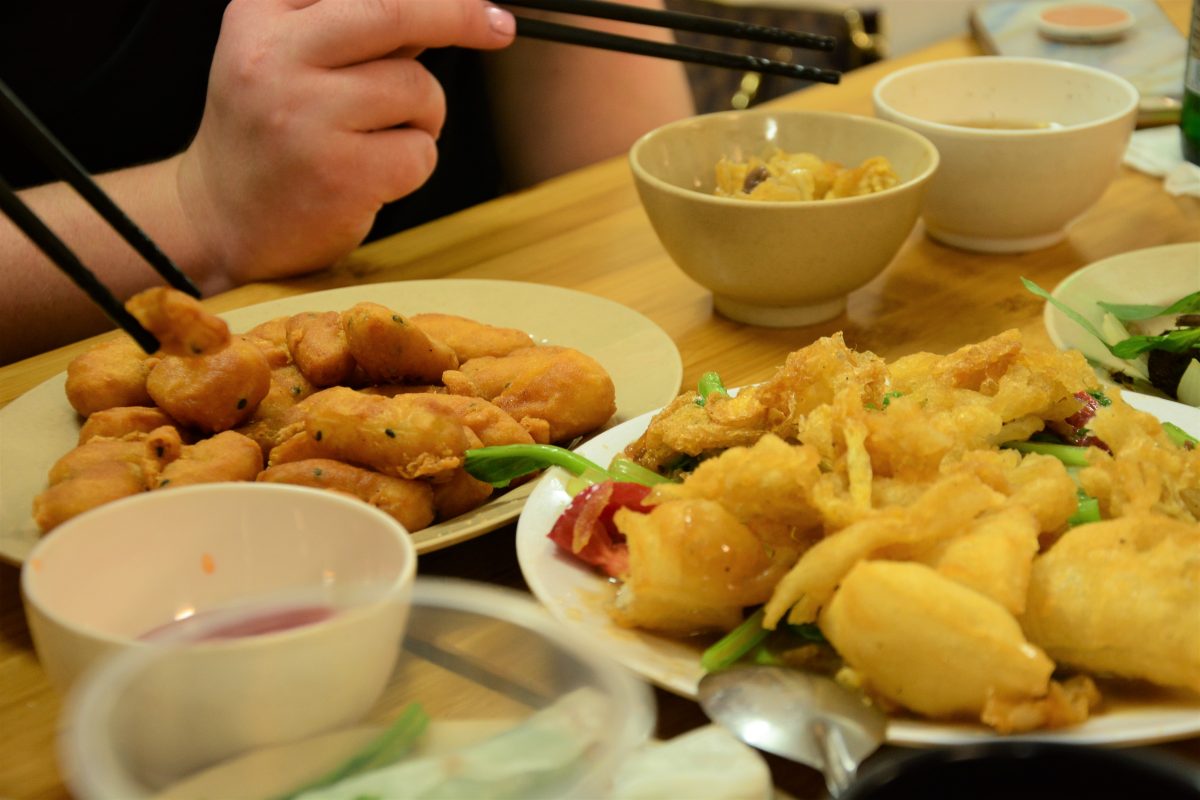
Hue’s cuisine is one of the strongest reasons to visit the city. It combines refined dishes associated with the former imperial court with inexpensive and intensely flavorful street food.
The most important dishes to try include:
Bun bo Hue – spicy beef noodle soup.
Banh beo – small steamed rice cakes topped with savory ingredients.
Banh nam – thin steamed rice-flour cakes with shrimp.
Banh loc – chewy tapioca dumplings filled with shrimp and pork.
Banh khoai – crispy Hue-style savory pancakes.
Com hen – rice topped with tiny clams, herbs, peanuts and crunchy ingredients.
Vietnam Tourism specifically highlights bun bo Hue, banh khoai and banh beo among the city’s signature foods.
19. Try Bun Bo Hue
Bun bo Hue is the dish most strongly associated with the city.
The soup combines beef, noodles, herbs and a richly seasoned broth, often with a noticeable spicy and aromatic character.
Try it for breakfast or lunch, when many traditional noodle restaurants are busiest.
20. Eat Hue’s Small Rice Cakes
Hue’s banh beo, banh nam and banh loc are ideal for travelers who want to try several dishes in one meal.
Rather than ordering one large dish, order several small plates and share them.
This is also an excellent way to experience the variety of Hue’s traditional cuisine.
21. Try Com Hen
Com hen, or clam rice, is another distinctive Hue specialty.
The dish combines rice with small clams, herbs, peanuts, crispy toppings and a savory mixture of flavors and textures.
It is particularly interesting for travelers who want to move beyond the city’s most famous noodle soup.
22. Experience Hue Royal Cuisine
Hue’s connection with the Nguyen court created a culinary tradition associated with elaborate presentation, careful preparation and refined flavors.
A royal-style meal can be an interesting cultural experience, particularly when combined with a heritage tour explaining the history behind the dishes.
Best Time to Visit Hue
Vietnam Tourism recommends February through April as one of the most attractive periods for visiting Hue. The city becomes hotter in June and July, while rainfall increases from August through January, with flooding sometimes occurring later in the year.
For outdoor sightseeing, the cooler and drier months are generally more comfortable.
If you travel during the rainy season, keep your schedule flexible and allow additional time for transportation.
How Many Days Do You Need in Hue?
Hue in 1 Day
One day is enough for a fast introduction.
Visit the Imperial City in the morning, then choose two royal tombs, followed by Thien Mu Pagoda and a Hue dinner.
This is efficient but quite busy.
Hue in 2 Days
Two days is the recommended minimum.
Day 1: Imperial City, Citadel and Hue food experience.
Day 2: Minh Mang, Khai Dinh or Tu Duc, Thien Mu Pagoda and Perfume River.
This provides a much better balance.
Hue in 3 Days
Three days allows you to slow down and add Thanh Toan Bridge, countryside cycling, garden houses, Tu Hieu Pagoda or An Dinh Palace.
You can also take a day trip toward Lang Co or combine Hue with the Hai Van Pass and Da Nang.
Perfect 3-Day Hue Itinerary
Day 1: Start at the Imperial City and Forbidden Purple City. Continue to Dong Ba Market and explore Hue’s food scene. In the evening, walk along the Perfume River and enjoy bun bo Hue.
Day 2: Visit Minh Mang Tomb and Khai Dinh Tomb in the morning. Continue to Tu Duc Tomb or Thien Mu Pagoda in the afternoon. Finish with a private Hue dinner or food tour.
Day 3: Explore a garden house, Tu Hieu Pagoda or Thanh Toan Bridge. Spend the afternoon at a relaxed café or along the Perfume River before continuing your journey toward Da Nang.
Hue to Da Nang
The journey from Hue to Da Nang is one of the most scenic transfers in Central Vietnam.
The most memorable route travels through Lang Co and Hai Van Pass, where the road climbs between the mountains and coastline.
For a premium private itinerary, a private car is the best option because you can stop at viewpoints, take photographs and spend as much time as you want along the route.
Hue to Hoi An
Travelers continuing to Hoi An can follow the route:
Hue → Lang Co → Hai Van Pass → Da Nang → Hoi An.
Rather than treating this as a simple transfer, allow enough time to stop at Hai Van Pass and enjoy the coastal scenery.
This route works especially well as part of a private Central Vietnam itinerary.
Hue for Families
Hue can be excellent for families, particularly when sightseeing is balanced with food, gardens and relaxed activities.
Children may find the Imperial City and royal tombs more interesting when a guide explains the stories of emperors, palaces and court life rather than simply listing architectural features.
Private transportation is useful because the royal tombs are spread around the countryside.
Hue for Couples
Hue has a quieter and more romantic atmosphere than some of Vietnam’s larger tourist destinations.
Couples can combine a boutique hotel, private Perfume River cruise, imperial sightseeing and a carefully selected dinner.
A sunset river experience followed by Hue cuisine is an especially pleasant way to finish a day.
Hue for Luxury Travelers
For premium travelers, Hue works particularly well with private heritage tours, luxury accommodation, private vehicles, carefully selected restaurants and a female tour leader.
Instead of trying to see every monument, focus on the Imperial City, two exceptional royal tombs, Thien Mu Pagoda, a private culinary experience and a scenic journey toward Da Nang.
This provides more time to appreciate the city rather than rushing between attractions.
Hue for History Lovers
History enthusiasts can easily spend three days or more in Hue.
Beyond the Imperial City and major tombs, consider Nam Giao Esplanade, An Dinh Palace, Royal Arena, Tu Hieu Pagoda, Dong Khanh Tomb, Gia Long Tomb and the city’s French colonial heritage.
UNESCO’s component list demonstrates how extensive the Hue heritage landscape is, with the Citadel, Thien Mu Pagoda, temples, ceremonial sites and multiple royal tombs forming part of the World Heritage property.
Hue for Food Lovers
If food is your priority, stay for at least two nights.
Plan one evening around bun bo Hue and traditional small dishes, then use another meal to explore more refined Hue cuisine.
A private food tour can be particularly useful because it allows you to try several specialties in different settings rather than relying only on hotel restaurants.
Where to Stay in Hue
For first-time visitors, staying around the city center and Perfume River provides convenient access to restaurants, cafés and major attractions.
The historic north bank is useful for travelers who want to be closer to the Citadel, while the south bank has a wider selection of hotels and dining options.
For a premium experience, choose a riverside or heritage-style hotel that allows you to enjoy Hue’s slower atmosphere after a day of sightseeing.
How to Get to Hue
Hue is accessible by domestic flight, train, bus and private car. Vietnam Tourism notes that Phu Bai Airport is around 30 minutes from the city center, while Da Nang Airport is roughly two hours away by road.
For a premium multi-city itinerary, flying into Hue and continuing by private car toward Da Nang and Hoi An is particularly convenient.
What to Wear in Hue
Wear comfortable walking shoes, lightweight clothing, sun protection and a light rain jacket.
The Imperial City and royal tombs involve substantial walking, while some monuments include steps and uneven surfaces.
When visiting pagodas, temples and religious sites, choose clothing that covers the shoulders and knees.
How to Explore Hue More Comfortably
The best strategy is to avoid putting every major monument into a single morning.
Start the Imperial City early, take a break around midday, then visit the royal tombs in the afternoon.
Because the tombs are spread around the countryside, a private car can save considerable time and make it easier to combine several sites efficiently.
Vietnam Tourism recommends selecting two or three tombs rather than attempting to see all of them in a rushed schedule.
Is Hue Worth Visiting?
Absolutely. Hue is one of the most important destinations in Vietnam for travelers interested in history and culture.
The city is not primarily about beaches or nightlife. Its appeal comes from imperial architecture, royal tombs, Buddhist sites, the Perfume River, traditional cuisine and a slower atmosphere.
The UNESCO designation confirms the exceptional heritage value of the city’s historic monuments, while the surrounding landscape adds another layer to the experience.
For travelers who want to understand Vietnam beyond its modern cities and beaches, Hue is essential.
Best Things to Do in Hue: Quick List
For a first visit, prioritize:
- Explore Hue Imperial City
- See Ngo Mon Gate
- Visit Thai Hoa Palace
- Explore the Forbidden Purple City
- Visit Minh Mang Tomb
- Visit Tu Duc Tomb
- Visit Khai Dinh Tomb
- See Thien Mu Pagoda
- Cruise the Perfume River
- Explore Dong Ba Market
- Try bun bo Hue
- Eat banh beo, banh nam and banh loc
- Visit a traditional garden house
- Explore Thanh Toan Bridge and the countryside
- Visit Tu Hieu Pagoda
- See An Dinh Palace
- Visit Nam Giao Esplanade
- Continue to Da Nang via Hai Van Pass
Final Hue Travel Tips
Stay at least two nights if possible. Begin your sightseeing early, particularly at the Imperial City and outdoor royal tombs.
Do not try to visit every tomb. Minh Mang, Tu Duc and Khai Dinh are the essential choices for most first-time visitors, while Gia Long, Dong Khanh and other tombs are excellent additions for travelers with more time.
Make food part of your itinerary rather than treating it as an afterthought. Hue’s cuisine is one of the city’s greatest cultural attractions.
Finally, connect Hue with Da Nang and Hoi An if your schedule allows. The journey over Lang Co and Hai Van Pass provides one of the most beautiful road experiences in Central Vietnam.
Vietnam Women Travel – Premium Private Tours Led by Women
Vietnam Women Travel – Premium Private Tours Led by Women can arrange a private Hue journey focused on royal heritage, Vietnamese cuisine, architecture, culture and scenic Central Vietnam travel.
A premium private itinerary can include private transportation, luxury accommodation, a female tour leader, Hue Imperial City, selected royal tombs, Thien Mu Pagoda, Perfume River experiences, garden houses, private food experiences and carefully planned visits to lesser-known heritage sites.
For travelers beginning in Hanoi, Hue can become the first stop of a wider Central Vietnam journey: Hanoi → Hue → Hai Van Pass → Da Nang → Hoi An, with private transportation and flexible sightseeing throughout.
The focus is on Vietnam Women Travel – Premium Private Tours Led by Women, creating a comfortable and highly personalized way to experience Vietnam’s imperial capital.